Loading...
Qin Shi Huang vs Yamagata Aritomo
Qin Shi Huang leads by 2.7 pts · 2 figures compared
…
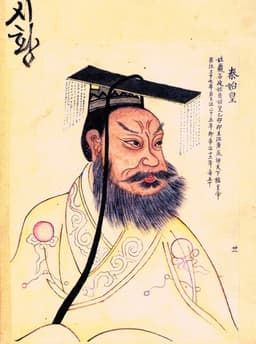
Qin Shi Huang
Emperor · Ancient
85.2Total
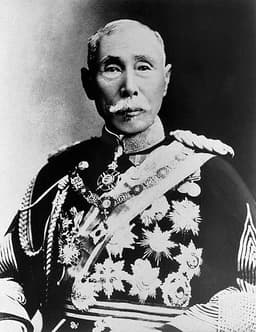
Yamagata Aritomo
General · Modern
82.5Total
Basic Information
Born
-259
1838
Died
-210
1922
Era
Ancient
Modern
Nationality
China
Japan
Occupation
Emperor
General
Civilization
Eastern
Eastern
Score Comparison
Military (10%)
80.0
78.0
Political (20%)
90.0
82.0
Influence (20%)
85.0
80.0
Legacy (20%)
90.0
90.0
Leadership (15%)
78.0
78.0
Strategy (15%)
82.0
82.0
TOTAL
85.2
82.5
Qin Shi Huang — Complete Timeline
246 BC
Construction of the Mausoleum and Terracotta ArmyOther◆ Major
Qin Shi Huang commissioned a vast mausoleum complex near Xi'an, guarded by thousands of life-sized terracotta soldiers, horses, and chariots. The project employed hundreds of thousands of workers and reflected his obsession with immortality and imperial power.
Impact: global
230 BC
Conquest of the Six Warring StatesWar
From 230 to 221 BCE, Ying Zheng led the Qin state in a series of campaigns that conquered the Han, Zhao, Wei, Chu, Yan, and Qi states. This unified China under a single ruler for the first time, ending the Warring States period.
Impact: global
221 BC
Standardization of Writing, Currency, and MeasurementsReform◆ Major
Qin Shi Huang ordered the standardization of Chinese script, currency, and weights and measures across the unified empire. This facilitated administration, trade, and cultural integration, laying a foundation for future dynasties.
Impact: globalconstructive
Proclamation of the Qin DynastyPolitical Action
After conquering the last independent state, Ying Zheng declared himself Shi Huangdi (First Emperor), founding the Qin Dynasty. He adopted a new title to signify his supreme authority and initiated centralized imperial rule.
Impact: global
214 BC
Initiation of the Great Wall ConstructionOther◆ Major
Qin Shi Huang ordered the connection and extension of existing northern fortifications to create a unified defensive wall against nomadic Xiongnu raids. This project involved massive conscripted labor and became the precursor to the later Great Wall.
Impact: regional
213 BC
Burning of Books and Burying of ScholarsPolitical Action◆ Major
On the advice of Li Si, Qin Shi Huang ordered the burning of historical records and philosophical texts not aligned with Legalist doctrine. He also had 460 Confucian scholars buried alive to suppress dissent and consolidate ideological control.
Impact: nationaldestructive
Yamagata Aritomo — Complete Timeline
1873 AD
Establishment of the Imperial Japanese ArmyReform
Yamagata Aritomo, as War Minister, oversaw the creation of the Imperial Japanese Army based on the Prussian model. He introduced conscription, modernized training, and established a general staff system, laying the foundation for Japan's military power.
Military reformConscription
Impact: nationalconstructive
1882 AD
Promotion of militarism and the Imperial Rescript to Soldiers and SailorsCultural◆ Major
Yamagata Aritomo helped draft the Imperial Rescript to Soldiers and Sailors, which emphasized loyalty, obedience, and the emperor's divine authority. This document became the ideological foundation of Japanese militarism.
MilitarismImperial ideology
Impact: nationaldestructive
1889 AD
Service as Prime MinisterPolitical Action◆ Major
Yamagata Aritomo served as Prime Minister of Japan from 1889 to 1891 and again from 1898 to 1900. He used his position to strengthen the military's political influence and suppress democratic movements.
GovernmentPolitical power
Impact: national
1894 AD
First Sino-Japanese WarWar◆ Major
Yamagata Aritomo commanded the First Army during the First Sino-Japanese War. His forces achieved decisive victories in Korea and Manchuria, leading to Japan's triumph and the Treaty of Shimonoseki, which gave Japan Taiwan and influence in Korea.
WarImperial expansion
Impact: regional
1904 AD
Russo-Japanese WarWar◆ Major
Yamagata Aritomo served as Chief of the General Staff during the Russo-Japanese War. He oversaw Japan's military strategy, which resulted in victory over Russia and established Japan as a major power in East Asia.
WarGreat power
Impact: global
Expert Analysis
Origins
**Qin Shi Huang** was born Ying Zheng in 259 BC, the son of King Zhuangxiang of Qin. His early life was marked by political intrigue and hostage situations, shaping his ruthless ambition. He ascended the throne at 13 and, with the help of advisors like Li Si, plotted the conquest of the six Warring States.
**Yamagata Aritomo** was born in 1838 into a lower-ranking samurai family in Hagi, Choshu. He witnessed the decline of the Tokugawa shogunate and the Meiji Restoration, which inspired his drive to modernize Japan. He studied Western military tactics and became a key figure in the Imperial Restoration.
Rise to Power
**Qin Shi Huang** systematically conquered the six states between 230 and 221 BC, using superior military strategy, bribery, and diplomacy. He then proclaimed himself the First Emperor, establishing the Qin Dynasty. His centralization of power was unprecedented, abolishing feudalism and dividing the empire into commanderies.
**Yamagata Aritomo** rose through the ranks during the Boshin War, helping to defeat the shogunate. He studied in Europe and returned to establish the Imperial Japanese Army on Prussian lines. He served as War Minister, Chief of Staff, and later Prime Minister, becoming the architect of Japan's modern military state.
Leadership & Governance
**Qin Shi Huang** ruled with absolute authority, enforcing Legalist principles of harsh punishment and strict laws. He standardized writing, currency, weights, and measures, facilitating trade and administration. He also connected defensive walls into the Great Wall and built a massive road network. However, his oppression of intellectual dissent, such as the Burning of Books and Burying of Scholars, was draconian.
**Yamagata Aritomo** governed as a conservative nationalist, emphasizing militarism and loyalty to the emperor. He authored the Imperial Rescript to Soldiers and Sailors, which became the ethical code for the military. As Prime Minister, he strengthened the bureaucracy and the military's independence from civilian control, laying the groundwork for Japan's expansionist policies.
Triumph & Tragedy
**Qin Shi Huang** successfully unified China, a feat that defined Chinese history. His standardization created a cohesive civilization, and the Great Wall protected against northern nomads. However, his tyranny caused immense suffering; his obsession with immortality led to cruel experiments, and his tomb remains a mystery. The Qin Dynasty collapsed shortly after his death due to rebellions.
**Yamagata Aritomo** led Japan to victories in the First Sino-Japanese War (1894-1895) and the Russo-Japanese War (1904-1905), establishing Japan as a world power. He also suppressed the Freedom and People's Rights Movement. His militaristic legacy, however, contributed to Japan's aggressive expansion in the 20th century, culminating in World War II.
Character & Destiny
**Qin Shi Huang** was paranoid, megalomaniacal, and driven by a desire for control and immortality. He feared death and surrounded himself with alchemists. His destiny was to be both the unifier and the tyrant, whose excesses led to his dynasty's rapid fall. He is remembered as a brilliant founder but a brutal dictator.
**Yamagata Aritomo** was calculating, disciplined, and fiercely loyal to the emperor. He believed that a strong military was essential for Japan's survival. His destiny was to shape Japan's modern identity, but his emphasis on militarism ultimately led to disaster. He is honored as a father of the army but criticized for his authoritarianism.
Legacy
**Qin Shi Huang** left a mixed legacy: he created the template for imperial China, but his methods were harsh. The Great Wall and the Terracotta Army are enduring symbols. His unification and standardization are foundational to Chinese civilization. Score: 85/100.
**Yamagata Aritomo** is remembered as the architect of Japan's military ascendancy. His influence on the Meiji state and the Imperial Army was profound. However, his legacy is tainted by the militarism that led to war. Score: 82/100.
Conclusion
Qin Shi Huang edges out Yamagata Aritomo due to his more transformative and enduring impact on civilization. While Yamagata modernized Japan, Qin Shi Huang's unification of China created a legacy that lasted millennia. Both were ruthless, but Qin Shi Huang's innovations were more foundational. Final verdict: Qin Shi Huang triumphs with a score gap of 2.7.
Rankings
🥇
Qin Shi HuangLeader
Mil: 80.0Pol: 90.0Inf: 85.0
85.2
🥈
Yamagata Aritomo
Mil: 78.0Pol: 82.0Inf: 80.0
82.5
+2.7 behind
How This Comparison Works
Algorithm
Each figure is scored on 6 dimensions (0—100 scale) based on structured historical data: Military (10%), Political (20%), Influence (20%), Legacy (20%), Leadership (15%), Strategy (15%). The weighted total produces the final ranking.
Data Sources
Scores are computed from structured sub-indicators in the database. Scale factors adjust for era (Ancient ×0.85, Modern ×1.0) and civilization size (Eastern ×1.05, Other ×0.80) to account for differences in population and military scale.
Maximum 3 Figures
Comparisons are limited to 2—3 figures to ensure readability and statistical meaningfulness.
Error Margins
±5 points per dimension — Sub-scores are derived from historical records with inherent uncertainty. Two figures within 5 points on a dimension should be considered roughly equivalent in that area.
Total Score Accuracy
±3 points overall — The weighted combination of 6 dimensions produces a total score with approximately ±3 points of uncertainty. Differences of less than 3 points are not statistically significant— the figures are effectively tied.
Known Limitations
- Historical records are incomplete and uneven across civilizations
- Figures from oral-tradition societies may be underrepresented
- Occupation labels can misclassify multi-role figures
- Scores measure capability and impact, not moral character
- Quantitative scoring is a comparison tool, not absolute truth
Capability Radar
Military (10%) — Battles & Warfare
Battles
85
75
Win Rate
90
70
Expansion
90
80
Political (20%) — Governance & Reform
Reform
95
90
Diplomacy
75
75
Economy
90
70
Influence (20%) — Cultural & Global Reach
Cultural
95
80
Global
85
70
Legacy (20%) — Historical Impact
Historical
95
85
Longevity
95
75
Leadership (15%) — Power & Stability
Tenure
70
85
Stability
65
65
Strategy (15%) — Tactics & Innovation
Strategy
85
85
Tactics
80
80
Reform
95
95
Similar Comparisons
Comments & Discussion
No comments yet. Be the first to share your thoughts!