Loading...
Duke Mu of Qin vs Queen Seondeok of Silla
Queen Seondeok of Silla leads by 1.3 pts · 2 figures compared
…
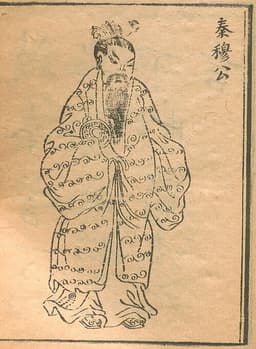
Duke Mu of Qin
Emperor · Ancient
52.9Total

Queen Seondeok of Silla
Emperor · Ancient
54.2Total
Basic Information
Born
-683
-606
Died
-621
—
Era
Ancient
Ancient
Nationality
China
Korea
Occupation
Emperor
Emperor
Civilization
Eastern
Eastern
Score Comparison
Military (10%)
52.5
25.9
Political (20%)
48.0
68.0
Influence (20%)
49.4
56.4
Legacy (20%)
44.2
50.0
Leadership (15%)
74.0
74.0
Strategy (15%)
60.0
36.8
TOTAL
52.9
54.2
Duke Mu of Qin — Complete Timeline
650 BC
Expanded Qin into Western TerritoriesWar◆ Major
Duke Mu of Qin led campaigns against the Rong and Di barbarian tribes to the west, conquering twelve minor states and opening up 1,000 li of territory. This expansion strengthened Qin and secured its western flank.
ExpansionBarbariansQin
Impact: regionalconstructive
645 BC
Allied with Jin StatePolitical Action◆ Major
Duke Mu formed an alliance with the state of Jin, marrying his daughter to Duke Hui of Jin. However, when Jin reneged on promises, Duke Mu attacked and defeated Jin at the Battle of Han, capturing Duke Hui.
AllianceJinBattle of Han
Impact: regional
636 BC
Aided Chong'er to Become Duke Wen of JinPolitical Action◆ Major
Duke Mu supported the exiled prince Chong'er, sending troops to help him return to Jin and become Duke Wen. This act created a powerful ally but also a future rival who would challenge Qin's dominance.
SupportJinDuke Wen
Impact: regionalconstructive
627 BC
Failed to Expand EastwardWar◆ Major
Duke Mu's attempt to expand eastward was thwarted by Jin at the Battle of Yao. Qin forces were ambushed and destroyed in a narrow pass, forcing Duke Mu to abandon eastern ambitions and focus on the west.
DefeatJinBattle of Yao
Impact: regionaldestructive
Queen Seondeok of Silla — Complete Timeline
632 AD
First female ruler of SillaPolitical Action
Seondeok ascended the throne as the first reigning queen of Silla, following her father King Jinpyeong's death without a male heir. Her accession challenged traditional gender norms and established a precedent for female leadership in Korean history.
GenderLeadershipSilla
Impact: nationalprogressive
634 AD
Construction of CheomseongdaeInvention◆ Major
Queen Seondeok ordered the construction of Cheomseongdae, an astronomical observatory in Gyeongju. The stone structure was used for observing stars and predicting celestial events, reflecting Silla's advanced scientific knowledge and the queen's interest in astronomy.
AstronomyObservatorySilla
Impact: regionalconstructive
Diplomatic alliance with Tang ChinaPolitical Action◆ Major
Seondeok sent envoys to the Tang court, establishing a formal alliance. This diplomatic move secured Chinese support against Silla's rivals, Baekje and Goguryeo, and laid the groundwork for the later Silla-Tang alliance that unified Korea.
DiplomacyTang ChinaSilla
Impact: regionalconstructive
635 AD
Promotion of Buddhist cultureCultural
Seondeok sponsored the construction of several Buddhist temples, including Bunhwangsa and Yeongmyosa. She also supported the creation of Buddhist art and scriptures, contributing to the flourishing of Buddhist culture in Silla during her reign.
BuddhismPatronageSilla
Impact: nationalconstructive
647 AD
Suppression of the Bidam rebellionWar◆ Major
Seondeok faced a rebellion led by General Bidam, who opposed female rule. The queen's forces, led by General Kim Yushin, crushed the revolt. This victory solidified her authority and demonstrated the effectiveness of the Hwarang military system.
RebellionCivil WarSilla
Impact: nationaldestructive
Expert Analysis
Origins
Duke Mu of Qin (r. 659–621 BCE) was born Ying Renhao, a prince of the Qin state in ancient China. His early life was shaped by the rugged frontier of the Western Zhou dynasty, where Qin served as a buffer against barbarian tribes. His father, Duke Cheng, left him a state that was militarily capable but culturally marginalized by central plains states. Duke Mu received a traditional education in statecraft and warfare, and his formative years were marked by the need to assert Qin's legitimacy among the warring states.
Queen Seondeok of Silla (r. 632–647 CE) was born Princess Deokman, daughter of King Jinpyeong of Silla, one of the Three Kingdoms of Korea. As a woman, her education was unusual; she was trained in politics and philosophy, likely because her father lacked a male heir. Silla was a hierarchical society with strong Buddhist influences, and Seondeok's upbringing in the royal court exposed her to diplomacy and governance. Her intelligence was noted in historical records, including a story where she predicted a peony painting lacked fragrance.
Rise to Power
Duke Mu ascended the Qin throne in 659 BCE after his father's death. His early reign focused on consolidating power and expanding westward into barbarian territories. A key turning point was his alliance with the state of Jin, sealed by his marriage to a Jin princess. However, when Jin reneged on promises, Duke Mu attacked and captured the Jin prince, later releasing him. In 636 BCE, he supported the exiled prince Chong'er to become Duke Wen of Jin, a move that created a powerful ally but also a rival for dominance in the Central Plains.
Queen Seondeok became Silla's first reigning queen in 632 CE after her father died without a male heir. Her accession challenged the patriarchal norms of Silla society. She quickly solidified her rule by forming a diplomatic alliance with Tang China in 634 CE, sending envoys to secure support against rival kingdoms Baekje and Goguryeo. This move enhanced her legitimacy and provided military backing. Her rise was also marked by the construction of Cheomseongdae in 647 CE, an astronomical observatory that symbolized her wisdom and connected her to celestial authority.
Leadership & Governance
Duke Mu's leadership style was direct and militaristic. He personally led campaigns against the Rong and Di tribes, conquering twelve minor states and opening up 1,000 li of territory. His governance focused on strengthening Qin's military and expanding its borders. He implemented reforms to integrate conquered peoples, but his approach was often brutal—he executed prisoners and destroyed rival states. Politically, he scored 48.0, reflecting his limited administrative innovations. His strategy score of 60.0 shows he was competent but not exceptional in planning, as seen in the disastrous Battle of Yao.
Queen Seondeok ruled through diplomacy and culture. She scored 68.0 in political skill, using alliances and Buddhist patronage to unify Silla. She sponsored temple construction, including Bunhwangsa and Yeongmyosa, and promoted Buddhist art, which helped consolidate her authority. Her leadership score of 74.0 matches Duke Mu's, but her approach was more inclusive. She suppressed the Bidam rebellion in 647 CE through her general Kim Yushin, demonstrating military decisiveness. However, her military score of 25.9 indicates she relied on generals rather than personal command.
Triumph & Tragedy
Duke Mu's greatest triumph was his western expansion, which transformed Qin from a marginal state into a major power. This expansion provided resources and a secure flank for future conquests. However, his attempt to expand eastward ended in tragedy at the Battle of Yao in 627 BCE, where Qin forces were ambushed by Jin in a narrow pass, resulting in total defeat. This failure prevented Qin from dominating the Central Plains and forced Duke Mu to focus west. His legacy score of 44.2 reflects the temporary nature of his gains.
Queen Seondeok's triumph was her successful reign as a female ruler in a patriarchal society. She established a diplomatic alliance with Tang China that would later help unify Korea. The construction of Cheomseongdae remains a symbol of her scientific patronage. Her tragedy was the Bidam rebellion, which challenged her legitimacy. Though crushed, it highlighted the fragility of her rule. She died in 647 CE without a direct heir, leading to a succession crisis. Her influence score of 56.4 and legacy score of 50.0 show she had moderate but lasting impact.
Character & Destiny
Duke Mu was ambitious and ruthless, but also pragmatic. He could forgive enemies (releasing the Jin prince) but also hold grudges (attacking Jin when betrayed). His character drove him to expand Qin at all costs, but his overconfidence led to the Yao disaster. Historians note he was a capable frontier lord but not a visionary state-builder. His total score of 52.9 reflects a leader who achieved regional dominance but failed to reshape the political order.
Queen Seondeok was intelligent and diplomatic, with a talent for navigating gender barriers. She used Buddhism and science to legitimize her rule, showing foresight. Her character was more cautious than Duke Mu's, relying on alliances rather than conquest. Her total score of 54.2 edges out Duke Mu, partly due to her political and influence scores. Her destiny was to be remembered as a pioneer for female rulers in Korean history.
Legacy
Duke Mu's legacy is mixed. He expanded Qin's territory and laid the groundwork for future unification, but his failures prevented Qin from becoming a hegemonic power during his lifetime. His conquests were later built upon by Duke Xiao and Shang Yang. He is remembered as a competent but not great ruler, with a legacy score of 44.2. The Qin state's later success owes more to his successors.
Queen Seondeok's legacy is more enduring. She is celebrated as the first female ruler of Silla and a patron of science and Buddhism. Cheomseongdae stands as one of East Asia's oldest surviving astronomical observatories. Her diplomatic alliance with Tang China set the stage for Silla's unification of Korea in 668 CE. Her legacy score of 50.0 reflects her symbolic importance, though her direct political impact was limited by her short reign.
Conclusion
Queen Seondeok had greater impact than Duke Mu of Qin. While Duke Mu scored 52.9 overall and Seondeok 54.2, the gap is small, but Seondeok's political and influence scores outweigh Duke Mu's military achievements. Duke Mu's expansion was temporary and did not fundamentally alter China's power structure, whereas Seondeok's diplomatic and cultural initiatives had lasting effects on Korean history. Her role as a female ruler broke gender barriers, and her alliance with Tang facilitated Korean unification. Duke Mu was a capable frontier lord, but Seondeok was a transformative figure. Therefore, Queen Seondeok of Silla stands as the more impactful ruler.
Rankings
🥇
Queen Seondeok of SillaLeader
Mil: 25.9Pol: 68.0Inf: 56.4
54.2
🥈
Duke Mu of Qin
Mil: 52.5Pol: 48.0Inf: 49.4
52.9
+1.3 behind
How This Comparison Works
Algorithm
Each figure is scored on 6 dimensions (0—100 scale) based on structured historical data: Military (10%), Political (20%), Influence (20%), Legacy (20%), Leadership (15%), Strategy (15%). The weighted total produces the final ranking.
Data Sources
Scores are computed from structured sub-indicators in the database. Scale factors adjust for era (Ancient ×0.85, Modern ×1.0) and civilization size (Eastern ×1.05, Other ×0.80) to account for differences in population and military scale.
Maximum 3 Figures
Comparisons are limited to 2—3 figures to ensure readability and statistical meaningfulness.
Error Margins
±5 points per dimension — Sub-scores are derived from historical records with inherent uncertainty. Two figures within 5 points on a dimension should be considered roughly equivalent in that area.
Total Score Accuracy
±3 points overall — The weighted combination of 6 dimensions produces a total score with approximately ±3 points of uncertainty. Differences of less than 3 points are not statistically significant— the figures are effectively tied.
Known Limitations
- Historical records are incomplete and uneven across civilizations
- Figures from oral-tradition societies may be underrepresented
- Occupation labels can misclassify multi-role figures
- Scores measure capability and impact, not moral character
- Quantitative scoring is a comparison tool, not absolute truth
Capability Radar
Military (10%) — Battles & Warfare
Battles
45
10
Win Rate
50
10
Expansion
60
10
Political (20%) — Governance & Reform
Reform
40
50
Diplomacy
50
60
Economy
45
50
Influence (20%) — Cultural & Global Reach
Cultural
30
60
Global
25
40
Legacy (20%) — Historical Impact
Historical
45
60
Longevity
40
60
Leadership (15%) — Power & Stability
Tenure
55
60
Stability
50
50
Strategy (15%) — Tactics & Innovation
Strategy
55
10
Tactics
40
10
Reform
35
10
Similar Comparisons
Comments & Discussion
No comments yet. Be the first to share your thoughts!