Loading...
Qutuz vs Vlad the Impaler
Qutuz leads by 9.0 pts · 2 figures compared
…
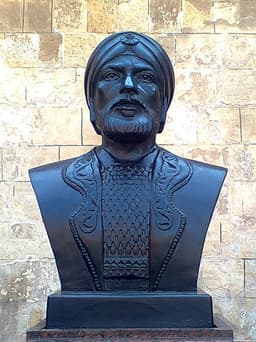
Qutuz
Emperor · Medieval
62.4Total
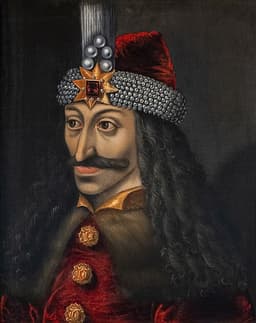
Vlad the Impaler
Emperor · Medieval
53.4Total
Basic Information
Born
1220
1431
Died
1260
1476
Era
Medieval
Medieval
Nationality
Egypt
Wallachia
Occupation
Emperor
Emperor
Civilization
Middle Eastern
Western
Score Comparison
Military (10%)
82.0
40.0
Political (20%)
68.0
27.9
Influence (20%)
55.0
82.0
Legacy (20%)
55.0
55.0
Leadership (15%)
64.0
38.1
Strategy (15%)
68.5
52.5
TOTAL
62.4
53.4
Qutuz — Complete Timeline
1257 AD
Regency for Al-Mansur Ali (1257-1259)Political Action◆ Major
After Aybak's murder, Qutuz became regent for Aybak's young son Al-Mansur Ali. He effectively ruled Egypt as the power behind the throne. This period saw the consolidation of Mamluk power and preparation for the Mongol threat.
RegencyMamluk SultanatePower Consolidation
Impact: regional
1259 AD
Accession as Sultan (1259)Political Action◆ Major
Qutuz deposed Al-Mansur Ali and proclaimed himself Sultan of Egypt. He justified this by the need for strong leadership against the impending Mongol invasion. His accession was accepted by the Mamluk commanders, uniting Egypt under his rule.
SuccessionMamluk SultanateMongol Threat
Impact: regional
1260 AD
Battle of Ain Jalut (1260)War
Qutuz led the Mamluk army to victory against the Mongols at Ain Jalut in Palestine. This was the first major defeat of the Mongol Empire. The battle halted Mongol expansion into the Middle East and secured Mamluk control over Syria.
Mongol InvasionBattleMamluk Victory
Impact: globalconstructive
Assassination of Qutuz (1260)Other◆ Major
Shortly after the victory at Ain Jalut, Qutuz was assassinated by Baybars and other Mamluk commanders during a hunting expedition. Baybars then seized the sultanate. Qutuz's death ended his brief but decisive reign and elevated Baybars to power.
AssassinationSuccessionMamluk Sultanate
Impact: regionaltragic
Vlad the Impaler — Complete Timeline
1448 AD
First Reign as Voivode of WallachiaPolitical Action
Vlad III assumed the throne of Wallachia for the first time, with Ottoman support, after the death of his father Vlad Dracul. His reign lasted only two months before he was deposed by John Hunyadi of Hungary.
ReignWallachiaOttoman
Impact: national
1457 AD
Impalement Campaign in WallachiaPolitical Action◆ Major
Vlad executed thousands of boyars, merchants, and peasants through impalement to consolidate power and eliminate opposition. This brutal method became his hallmark, earning him the posthumous name 'the Impaler' and inspiring the Dracula legend.
RepressionBrutalityDracula
Impact: nationaldestructive
1462 AD
Night Attack at TârgovișteWar◆ Major
Vlad launched a surprise night attack on the Ottoman camp of Sultan Mehmed II near T
BattleOttomanWallachia
Impact: regional
Imprisonment by Matthias CorvinusPolitical Action◆ Major
After being captured by Hungarian forces, Vlad was imprisoned by King Matthias Corvinus of Hungary for about 12 years. He was held in captivity at Visegr
ImprisonmentHungaryPropaganda
Impact: nationaltragic
1476 AD
Death in Battle against the OttomansWar◆ Major
Vlad was killed in combat near Bucharest while fighting against Ottoman forces, possibly betrayed by his own men. His head was sent to Constantinople as a trophy, ending his third and final reign as Voivode of Wallachia.
DeathBattleOttoman
Impact: nationaltragic
Expert Analysis
Origins
Qutuz, born around 1220, was a Mamluk of Turkic origin, likely from the Qipchak steppes. Captured and sold into slavery, he rose through the Mamluk hierarchy in Egypt. His early life was shaped by the military slave system that produced the Bahri Mamluks. He served under Sultan Aybak and later became regent for Aybak's son, Al-Mansur Ali.
Vlad III, born in 1431 in Sighișoara, Transylvania, was the son of Vlad II Dracul, a member of the Order of the Dragon. His family ruled Wallachia, a principality caught between Hungary and the Ottoman Empire. As a child, Vlad and his brother Radu were held as hostages by the Ottomans, an experience that influenced his later hostility toward them.
Rise to Power
Qutuz's rise was gradual. After Aybak's murder in 1257, Qutuz became regent for the underage Al-Mansur Ali. He consolidated power within the Mamluk state, suppressing rival factions. In 1259, facing the Mongol threat, he deposed Al-Mansur Ali and declared himself Sultan, arguing that strong leadership was necessary for survival. His accession was a coup that set the stage for the confrontation at Ain Jalut.
Vlad the Impaler first became Voivode of Wallachia in 1448 with Ottoman support, but he was deposed after two months. He regained the throne in 1456, backed by Hungarian forces. His rise was marked by internal conflict with the boyars (nobility) whom he suspected of plotting against him. He used terror to secure his position, most famously through mass impalements.
Leadership & Governance
Qutuz governed Egypt as a military sultan. He maintained the Mamluk system, where military commanders held key posts. His leadership was pragmatic: he allied with the Crusader states to secure passage through their territory for his campaign against the Mongols. Qutuz's governance focused on military preparation, raising taxes to fund the army, and coordinating with local Bedouins for intelligence. He exhibited a centralized command, personally leading his troops at Ain Jalut.
Vlad's governance was brutal and autocratic. He executed thousands of boyars to break their power, redistributing their lands to loyalists. He also enforced strict laws against crime, using impalement as a deterrent. His methods reduced crime but created a climate of fear. Vlad's economic policies included heavy taxation to support his military campaigns. He often used scorched-earth tactics against Ottoman forces, destroying villages and poisoning wells.
Triumph & Tragedy
Qutuz's greatest triumph was the Battle of Ain Jalut (September 3, 1260). His army of about 20,000 Mamluks defeated a Mongol force of similar size under Kitbuqa. This victory halted the Mongol expansion into the Levant and preserved Mamluk rule. Qutuz's military score of 82.0 reflects this achievement. However, his tragedy came shortly after: he was assassinated by Baybars and other commanders while hunting, likely due to political rivalries. His reign lasted only a year, and he never fully consolidated power.
Vlad's triumph was the Night Attack at Târgoviște (1462). He led a surprise assault on the Ottoman camp of Sultan Mehmed II, causing heavy casualties and forcing the Ottomans to retreat. This showed his tactical boldness. His military score of 40.0, however, is lower due to his ultimate failure to maintain power. His tragedy was his imprisonment by Matthias Corvinus of Hungary for about 12 years, and his death in battle around 1476, possibly betrayed. His brutal methods also alienated potential allies.
Character & Destiny
Qutuz was decisive and ambitious, willing to seize power and risk battle. His assassination suggests he was ruthless but also politically naive, failing to secure loyalty among his subordinates. Historical assessments note his charisma and ability to unite Mamluks against a common enemy. His destiny was cut short by internal factionalism.
Vlad was vengeful and paranoid, shaped by his Ottoman captivity. His reliance on terror created many enemies. He was also a capable military commander, but his cruelty undermined his political strategy. His destiny was one of constant struggle for power, ending in betrayal and death. His character made him a legend, but also a cautionary tale.
Legacy
Qutuz's legacy is tied to the Mongol defeat at Ain Jalut, which saved the Islamic world from Mongol domination. He is remembered as a national hero in Egypt and the Arab world. His victory influenced the course of history by preserving Mamluk power for centuries. However, his short reign and assassination limited his direct impact. His influence score of 55.0 reflects this.
Vlad's legacy is immense in popular culture as the inspiration for Bram Stoker's Dracula. His reputation as a brutal ruler led to his nickname "the Impaler." In Romanian history, he is seen as a defender of Christendom against Ottoman expansion. His influence score of 82.0 is high due to his cultural impact, but his military and political achievements are modest.
Conclusion
Qutuz had a greater historical impact than Vlad the Impaler. His victory at Ain Jalut was a turning point in world history, halting the Mongol advance and reshaping the balance of power in the Middle East. Vlad's terror tactics, while culturally significant, did not alter the course of history. Qutuz's total score of 62.4 versus Vlad's 53.4 reflects his superior military and political effectiveness. While Vlad's legend endures, Qutuz's actions had more concrete and lasting consequences.
Rankings
🥇
QutuzLeader
Mil: 82.0Pol: 68.0Inf: 55.0
62.4
🥈
Vlad the Impaler
Mil: 40.0Pol: 27.9Inf: 82.0
53.4
+9.0 behind
How This Comparison Works
Algorithm
Each figure is scored on 6 dimensions (0—100 scale) based on structured historical data: Military (10%), Political (20%), Influence (20%), Legacy (20%), Leadership (15%), Strategy (15%). The weighted total produces the final ranking.
Data Sources
Scores are computed from structured sub-indicators in the database. Scale factors adjust for era (Ancient ×0.85, Modern ×1.0) and civilization size (Eastern ×1.05, Other ×0.80) to account for differences in population and military scale.
Maximum 3 Figures
Comparisons are limited to 2—3 figures to ensure readability and statistical meaningfulness.
Error Margins
±5 points per dimension — Sub-scores are derived from historical records with inherent uncertainty. Two figures within 5 points on a dimension should be considered roughly equivalent in that area.
Total Score Accuracy
±3 points overall — The weighted combination of 6 dimensions produces a total score with approximately ±3 points of uncertainty. Differences of less than 3 points are not statistically significant— the figures are effectively tied.
Known Limitations
- Historical records are incomplete and uneven across civilizations
- Figures from oral-tradition societies may be underrepresented
- Occupation labels can misclassify multi-role figures
- Scores measure capability and impact, not moral character
- Quantitative scoring is a comparison tool, not absolute truth
Capability Radar
Military (10%) — Battles & Warfare
Battles
75
45
Win Rate
80
40
Expansion
70
25
Political (20%) — Governance & Reform
Reform
50
20
Diplomacy
70
30
Economy
55
15
Influence (20%) — Cultural & Global Reach
Cultural
60
75
Global
70
65
Legacy (20%) — Historical Impact
Historical
75
70
Longevity
65
75
Leadership (15%) — Power & Stability
Tenure
45
35
Stability
50
10
Strategy (15%) — Tactics & Innovation
Strategy
82
55
Tactics
85
70
Reform
60
30
Similar Comparisons
Comments & Discussion
No comments yet. Be the first to share your thoughts!