Loading...
James I of Scotland vs Qutuz
Qutuz leads by 17.8 pts · 2 figures compared
…
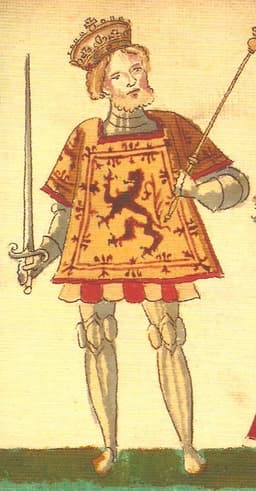
James I of Scotland
Emperor · Medieval
44.6Total
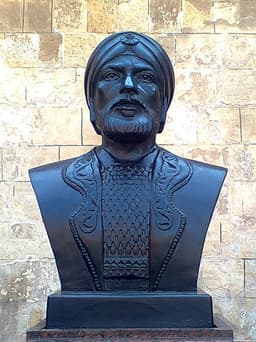
Qutuz
Emperor · Medieval
62.4Total
Basic Information
Born
1394
1220
Died
1437
1260
Era
Medieval
Medieval
Nationality
Scotland
Egypt
Occupation
Emperor
Emperor
Civilization
Western
Middle Eastern
Score Comparison
Military (10%)
21.2
82.0
Political (20%)
43.7
68.0
Influence (20%)
54.9
55.0
Legacy (20%)
45.0
55.0
Leadership (15%)
48.4
64.0
Strategy (15%)
36.8
68.5
TOTAL
44.6
62.4
James I of Scotland — Complete Timeline
1406 AD
Capture by English PiratesOther
James I was captured by English pirates while traveling to France for safety. He was handed over to Henry IV of England and imprisoned in the Tower of London, remaining a captive for 18 years. His father Robert III died soon after, leaving Scotland without a king.
CaptureImprisonmentRegency
Impact: nationaltragic
1424 AD
Release and Return to ScotlandPolitical Action◆ Major
James I was released from English captivity after the Treaty of London, which required a ransom of 40,000 pounds. He returned to Scotland and was crowned at Scone, beginning his personal rule after 18 years of regency.
ReleaseCoronationRansom
Impact: nationalconstructive
Publication of The Kingis QuairCultural
James I wrote The Kingis Quair, a poetic allegory of his imprisonment and love for Joan Beaufort. The poem is considered a major work of Middle Scots literature and reflects the influence of Chaucer on Scottish poetry.
PoetryLiteratureImprisonment
Impact: nationalconstructive
1425 AD
Execution of Albany StewartsPolitical Action◆ Major
James I executed Murdoch Stewart, Duke of Albany, and his sons at Stirling Castle for treason. The executions eliminated the powerful Albany family, who had ruled as regents during James's captivity, and consolidated royal power.
ExecutionNoble PurgeCentralization
Impact: nationaldestructive
1437 AD
Assassination at PerthPolitical Action
James I was assassinated by a group of nobles led by Sir Robert Graham at the Blackfriars monastery in Perth. The murder was a response to James's centralizing policies and harsh treatment of the nobility. His death plunged Scotland into another period of regency.
AssassinationNoble RevoltRegency
Impact: nationaltragic
Qutuz — Complete Timeline
1257 AD
Regency for Al-Mansur Ali (1257-1259)Political Action◆ Major
After Aybak's murder, Qutuz became regent for Aybak's young son Al-Mansur Ali. He effectively ruled Egypt as the power behind the throne. This period saw the consolidation of Mamluk power and preparation for the Mongol threat.
RegencyMamluk SultanatePower Consolidation
Impact: regional
1259 AD
Accession as Sultan (1259)Political Action◆ Major
Qutuz deposed Al-Mansur Ali and proclaimed himself Sultan of Egypt. He justified this by the need for strong leadership against the impending Mongol invasion. His accession was accepted by the Mamluk commanders, uniting Egypt under his rule.
SuccessionMamluk SultanateMongol Threat
Impact: regional
1260 AD
Battle of Ain Jalut (1260)War
Qutuz led the Mamluk army to victory against the Mongols at Ain Jalut in Palestine. This was the first major defeat of the Mongol Empire. The battle halted Mongol expansion into the Middle East and secured Mamluk control over Syria.
Mongol InvasionBattleMamluk Victory
Impact: globalconstructive
Assassination of Qutuz (1260)Other◆ Major
Shortly after the victory at Ain Jalut, Qutuz was assassinated by Baybars and other Mamluk commanders during a hunting expedition. Baybars then seized the sultanate. Qutuz's death ended his brief but decisive reign and elevated Baybars to power.
AssassinationSuccessionMamluk Sultanate
Impact: regionaltragic
Expert Analysis
Origins
James I of Scotland was born in 1394 to King Robert III and Annabella Drummond. His early life was marked by political turmoil: in 1406, while traveling to France for safety, he was captured by English pirates and handed over to Henry IV of England. James spent 18 years in captivity in the Tower of London and other English castles, where he received a thorough education in literature and governance. This imprisonment shaped his worldview and later policies.
Qutuz, born around 1200, was a Mamluk of Turkic origin. He was purchased as a slave and rose through the ranks of the Mamluk military hierarchy in Egypt. His early life is obscure, but he became a trusted commander under Sultan Aybak. The Mamluks were a warrior caste, and Qutuz's training focused on military strategy and statecraft.
Rise to Power
James I's release came in 1424 after the Treaty of London, which required a ransom of 40,000 pounds. He returned to Scotland and was crowned at Scone. His rise was not due to military prowess but to diplomatic negotiation and the payment of a massive ransom. Once king, he moved swiftly to consolidate power, executing Murdoch Stewart, Duke of Albany, and his sons for treason in 1425, eliminating the powerful Albany family that had dominated Scotland during his absence.
Qutuz rose to power in a more direct manner. After Aybak's murder in 1257, he became regent for Aybak's young son Al-Mansur Ali, effectively ruling Egypt as the power behind the throne. In 1259, facing the Mongol invasion, Qutuz deposed Al-Mansur Ali and proclaimed himself Sultan, justifying the coup as necessary for strong leadership. His rise was a pragmatic seizure of power in a time of existential threat.
Leadership & Governance
James I's leadership style was centralized and authoritarian. He sought to strengthen the monarchy by reducing the power of the nobility, reforming the judicial system, and improving royal finances. He personally oversaw the collection of taxes and enforced laws against lawlessness. His governance was effective in the short term but created many enemies among the nobles. He also had a cultural side: he wrote 'The Kingis Quair', a poetic allegory of his imprisonment and love for Joan Beaufort, which is considered a major work of Middle Scots literature. In terms of scores, James I scored 48.4 in leadership and 36.8 in strategy, reflecting his focus on internal consolidation rather than military expansion.
Qutuz's leadership was military-oriented and decisive. He immediately prepared for war against the Mongols, who had already conquered much of the Islamic world. He unified the Mamluk factions, suppressed dissent, and mobilized the army. His governance was wartime governance: pragmatic, ruthless, and focused on survival. He scored 64.0 in leadership and 68.5 in strategy, indicating a more effective military command. His political score of 68.0 reflects his ability to navigate the treacherous Mamluk court.
Triumph & Tragedy
James I's greatest success was his internal reforms: he restored royal authority, curbed noble power, and improved the economy. He also secured the release of Scottish prisoners and maintained peace with England. However, his greatest failure was his inability to manage the nobility's resentment. His policies were seen as tyrannical, leading to a conspiracy. In 1437, he was assassinated at Blackfriars monastery in Perth by a group led by Sir Robert Graham. His murder highlighted the limits of his authoritarian approach.
Qutuz's triumph was the Battle of Ain Jalut in 1260, where he led the Mamluk army to a decisive victory against the Mongols. This was the first major defeat of the Mongol Empire and saved Egypt and Syria from conquest. His strategy of using a feigned retreat and then encircling the Mongols was brilliant. However, his tragedy was his assassination shortly after the victory. While on a hunting expedition, he was killed by Baybars and other Mamluk commanders, who then seized power. His death was a direct result of the internal rivalries he had tried to suppress.
Character & Destiny
James I was an intellectual and a reformer, but also vengeful and inflexible. His long captivity made him determined to assert royal power, but he lacked the political subtlety to build lasting alliances. His character—proud, literary, and uncompromising—directly led to his downfall. Historical assessments note that his murder was a response to his centralizing policies, which threatened noble privileges.
Qutuz was a pragmatic and daring military leader. He was willing to take risks, as shown by his preemptive strike against the Mongols. He was also ruthless, as seen in his deposition of Al-Mansur Ali. His character combined strategic foresight with a willingness to act decisively. His destiny was cut short by the very ambition that made him successful: his assassination by Baybars, who saw Qutuz as an obstacle to his own rise.
Legacy
James I's legacy is mixed. He is remembered as a poet king and a reformer, but his assassination showed the fragility of his achievements. His literary work 'The Kingis Quair' endures as a classic, but his political reforms were largely reversed after his death. He scored 45.0 in legacy, indicating a modest but lasting cultural impact.
Qutuz's legacy is more substantial. His victory at Ain Jalut halted the Mongol advance into the Middle East and preserved Islamic civilization. He is celebrated as a national hero in Egypt and the broader Islamic world. The Mamluk Sultanate continued for centuries after his death, and his military tactics influenced subsequent campaigns. He scored 55.0 in legacy, reflecting his historical importance. His total score of 62.4 versus James I's 44.6 underscores his greater impact.
Conclusion
Qutuz had a greater impact on world history. His military victory at Ain Jalut changed the course of the Mongol invasions and saved the Islamic world from destruction. James I's reforms, while notable, were largely contained within Scotland and were reversed after his death. The score gap of 17.8 points reflects Qutuz's superior achievements in military, political, and strategic domains. While James I contributed to Scottish literature, Qutuz's actions shaped the geopolitical landscape for centuries.
Rankings
🥇
QutuzLeader
Mil: 82.0Pol: 68.0Inf: 55.0
62.4
🥈
James I of Scotland
Mil: 21.2Pol: 43.7Inf: 54.9
44.6
+17.8 behind
How This Comparison Works
Algorithm
Each figure is scored on 6 dimensions (0—100 scale) based on structured historical data: Military (10%), Political (20%), Influence (20%), Legacy (20%), Leadership (15%), Strategy (15%). The weighted total produces the final ranking.
Data Sources
Scores are computed from structured sub-indicators in the database. Scale factors adjust for era (Ancient ×0.85, Modern ×1.0) and civilization size (Eastern ×1.05, Other ×0.80) to account for differences in population and military scale.
Maximum 3 Figures
Comparisons are limited to 2—3 figures to ensure readability and statistical meaningfulness.
Error Margins
±5 points per dimension — Sub-scores are derived from historical records with inherent uncertainty. Two figures within 5 points on a dimension should be considered roughly equivalent in that area.
Total Score Accuracy
±3 points overall — The weighted combination of 6 dimensions produces a total score with approximately ±3 points of uncertainty. Differences of less than 3 points are not statistically significant— the figures are effectively tied.
Known Limitations
- Historical records are incomplete and uneven across civilizations
- Figures from oral-tradition societies may be underrepresented
- Occupation labels can misclassify multi-role figures
- Scores measure capability and impact, not moral character
- Quantitative scoring is a comparison tool, not absolute truth
Capability Radar
Military (10%) — Battles & Warfare
Battles
10
75
Win Rate
10
80
Expansion
10
70
Political (20%) — Governance & Reform
Reform
50
50
Diplomacy
30
70
Economy
40
55
Influence (20%) — Cultural & Global Reach
Cultural
50
60
Global
20
70
Legacy (20%) — Historical Impact
Historical
40
75
Longevity
30
65
Leadership (15%) — Power & Stability
Tenure
40
45
Stability
20
50
Strategy (15%) — Tactics & Innovation
Strategy
10
82
Tactics
10
85
Reform
10
60
Similar Comparisons
Comments & Discussion
No comments yet. Be the first to share your thoughts!