Loading...
Alfonso III of Asturias vs Vlad the Impaler
Alfonso III of Asturias leads by 1.2 pts · 2 figures compared
…
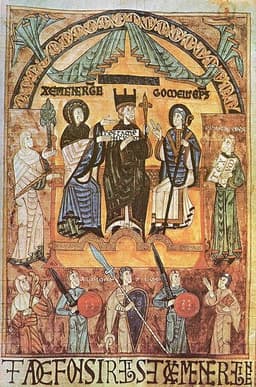
Alfonso III of Asturias
Emperor · Medieval
54.6Total
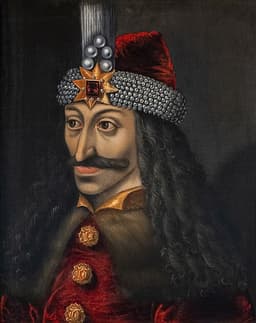
Vlad the Impaler
Emperor · Medieval
53.4Total
Basic Information
Born
852
1431
Died
910
1476
Era
Medieval
Medieval
Nationality
Asturias
Wallachia
Occupation
Emperor
Emperor
Civilization
Western
Western
Score Comparison
Military (10%)
70.0
40.0
Political (20%)
48.0
27.9
Influence (20%)
54.9
82.0
Legacy (20%)
47.5
55.0
Leadership (15%)
64.0
38.1
Strategy (15%)
52.5
52.5
TOTAL
54.6
53.4
Alfonso III of Asturias — Complete Timeline
868 AD
Expansion to the Duero RiverWar◆ Major
Alfonso III led military campaigns that pushed the Asturian frontier south to the Duero River, capturing key fortresses such as Zamora and Toro. This expansion doubled the size of the kingdom and established a defensible border against the Emirate of Cordoba.
ReconquistaTerritorial ExpansionDuero
Impact: regionalconstructive
870 AD
Repopulation of Braga and PortoReform◆ Major
Alfonso III ordered the repopulation of the abandoned cities of Braga and Porto in northern Portugal, granting land and privileges to settlers from Galicia and Asturias. This initiative strengthened Christian control over the region and laid the groundwork for the future Kingdom of Portugal.
RepopulationPortugalSettlement
Impact: regionalconstructive
883 AD
Chronicle of Alfonso IIICultural◆ Major
Alfonso III commissioned the Chronicle of Alfonso III, a historical work that chronicled the kings of Asturias from Pelagius to his own reign. The chronicle served as a foundational text for Asturian and Leonese historiography, shaping the narrative of the Reconquista.
ChronicleHistoriographyReconquista
Impact: regionalconstructive
910 AD
Deposition by SonsPolitical Action◆ Major
Alfonso III was deposed by his three sons, Garcia, Ordo
DepositionDivision of KingdomSuccession Crisis
Impact: nationaltragic
Vlad the Impaler — Complete Timeline
1448 AD
First Reign as Voivode of WallachiaPolitical Action
Vlad III assumed the throne of Wallachia for the first time, with Ottoman support, after the death of his father Vlad Dracul. His reign lasted only two months before he was deposed by John Hunyadi of Hungary.
ReignWallachiaOttoman
Impact: national
1457 AD
Impalement Campaign in WallachiaPolitical Action◆ Major
Vlad executed thousands of boyars, merchants, and peasants through impalement to consolidate power and eliminate opposition. This brutal method became his hallmark, earning him the posthumous name 'the Impaler' and inspiring the Dracula legend.
RepressionBrutalityDracula
Impact: nationaldestructive
1462 AD
Night Attack at TârgovișteWar◆ Major
Vlad launched a surprise night attack on the Ottoman camp of Sultan Mehmed II near T
BattleOttomanWallachia
Impact: regional
Imprisonment by Matthias CorvinusPolitical Action◆ Major
After being captured by Hungarian forces, Vlad was imprisoned by King Matthias Corvinus of Hungary for about 12 years. He was held in captivity at Visegr
ImprisonmentHungaryPropaganda
Impact: nationaltragic
1476 AD
Death in Battle against the OttomansWar◆ Major
Vlad was killed in combat near Bucharest while fighting against Ottoman forces, possibly betrayed by his own men. His head was sent to Constantinople as a trophy, ending his third and final reign as Voivode of Wallachia.
DeathBattleOttoman
Impact: nationaltragic
Expert Analysis
Origins
Alfonso III of Asturias was born around 848 AD, the son of King Ordoño I of Asturias. He was raised in the royal court of Oviedo, receiving education in governance and military tactics from a young age. His family had ruled Asturias since the early 8th century, and Alfonso was groomed to continue the Reconquista against the Moors.
Vlad the Impaler, born in 1431 in Sighișoara, Transylvania, was the second son of Vlad Dracul, Voivode of Wallachia. His early life was marked by hostage captivity under the Ottoman Empire, where he was held alongside his younger brother Radu. This experience shaped his later ruthlessness and deep knowledge of Ottoman military tactics.
Rise to Power
Alfonso III ascended to the throne in 866 AD after the death of his father. His early reign was challenged by a revolt led by Count Fruela of Galicia, but Alfonso suppressed it swiftly. He then turned his attention to the southern frontier, launching campaigns against the Emirate of Córdoba. By 868, he had captured the fortress of Zamora, a key step in his expansion to the Duero River.
Vlad first became Voivode of Wallachia in 1448, with Ottoman support, but was deposed after only two months. He regained the throne in 1456, this time with Hungarian backing. His rise was characterized by brutal consolidation: he executed boyars who had conspired against his father and brother, impaling them in a famous act of terror. His military score of 40.0 reflects his tactical limitations, but his political score of 27.9 indicates his reliance on fear rather than diplomacy.
Leadership & Governance
Alfonso III ruled as a traditional medieval king, focusing on territorial expansion and Christian consolidation. He led campaigns personally, using a combination of siege warfare and cavalry raids. He also encouraged repopulation of conquered lands, granting fueros (charters) to settlers in cities like Braga and Porto. His leadership score of 64.0 reflects his ability to command loyalty and maintain stability.
Vlad's governance was defined by terror. He centralized power by eliminating the boyar class through mass impalements, executing thousands. He also enforced strict laws against theft and dishonesty, earning a reputation for justice among commoners, but his methods were extreme. His leadership score of 38.1 indicates his inability to build lasting institutions, relying instead on fear.
Triumph & Tragedy
Alfonso III's greatest success was expanding the Asturian kingdom to the Duero River, capturing strategic fortresses like Zamora and Toro. This laid the foundation for the Kingdom of León. He also commissioned the Chronicle of Alfonso III, a key historical source. However, his tragic flaw was his inability to manage his succession: his sons deposed him in 910, dividing the kingdom into three parts. This fragmentation weakened Asturias, leading to the eventual rise of León as a separate entity.
Vlad's most famous triumph was the Night Attack at Târgoviște in 1462, where he launched a surprise assault on the Ottoman camp of Sultan Mehmed II, causing panic and heavy casualties. This event, though failing to kill the Sultan, became legendary. However, his tragedy was his eventual defeat and imprisonment by Matthias Corvinus for 12 years, after which he died in battle in 1476. His impalement campaign, while terrifying, alienated potential allies and led to his isolation.
Character & Destiny
Alfonso III was a capable military leader and patron of history, but his political miscalculation regarding his sons led to his downfall. His strategy score of 52.5 indicates a competent but not exceptional planner. His destiny was to be remembered as a key figure in the Reconquista, but his kingdom's division limited his long-term impact.
Vlad's character was shaped by his traumatic youth; he was paranoid, cruel, and methodical. His strategy score of 52.5 matches Alfonso's, but his political score of 27.9 shows his inability to form lasting alliances. His destiny was to become a symbol of horror, inspiring the Dracula legend, but his actual reign was brief and ultimately failed to secure Wallachia's independence.
Legacy
Alfonso III's legacy is mixed. He expanded Asturias significantly, but his kingdom's division after his deposition meant that his achievements were partly undone. However, his repopulation efforts and the Chronicle he commissioned had lasting cultural impact. His total score of 54.6 reflects a moderate historical footprint.
Vlad's legacy is far more iconic. With an influence score of 82.0, he is one of the most recognized medieval figures, thanks to Bram Stoker's novel. However, his actual political and military achievements were limited; his legacy score of 55.0 is similar to Alfonso's. His brutal methods are studied as an example of terror tactics, but his impact on Wallachia's history was minimal.
Conclusion
While Alfonso III scored slightly higher overall (54.6 vs 53.4), Vlad the Impaler's influence is vastly greater due to his cultural impact. However, in terms of concrete historical achievement—territorial expansion, state-building, and long-term governance—Alfonso III had a more substantial impact. Alfonso's expansion to the Duero River set the stage for the Christian reconquest of Iberia, whereas Vlad's reign was a brutal but failed attempt to maintain independence. Therefore, Alfonso III of Asturias had the greater historical impact.
Rankings
🥇
Alfonso III of AsturiasLeader
Mil: 70.0Pol: 48.0Inf: 54.9
54.6
🥈
Vlad the Impaler
Mil: 40.0Pol: 27.9Inf: 82.0
53.4
+1.2 behind
How This Comparison Works
Algorithm
Each figure is scored on 6 dimensions (0—100 scale) based on structured historical data: Military (10%), Political (20%), Influence (20%), Legacy (20%), Leadership (15%), Strategy (15%). The weighted total produces the final ranking.
Data Sources
Scores are computed from structured sub-indicators in the database. Scale factors adjust for era (Ancient ×0.85, Modern ×1.0) and civilization size (Eastern ×1.05, Other ×0.80) to account for differences in population and military scale.
Maximum 3 Figures
Comparisons are limited to 2—3 figures to ensure readability and statistical meaningfulness.
Error Margins
±5 points per dimension — Sub-scores are derived from historical records with inherent uncertainty. Two figures within 5 points on a dimension should be considered roughly equivalent in that area.
Total Score Accuracy
±3 points overall — The weighted combination of 6 dimensions produces a total score with approximately ±3 points of uncertainty. Differences of less than 3 points are not statistically significant— the figures are effectively tied.
Known Limitations
- Historical records are incomplete and uneven across civilizations
- Figures from oral-tradition societies may be underrepresented
- Occupation labels can misclassify multi-role figures
- Scores measure capability and impact, not moral character
- Quantitative scoring is a comparison tool, not absolute truth
Capability Radar
Military (10%) — Battles & Warfare
Battles
55
45
Win Rate
60
40
Expansion
70
25
Political (20%) — Governance & Reform
Reform
45
20
Diplomacy
50
30
Economy
40
15
Influence (20%) — Cultural & Global Reach
Cultural
40
75
Global
30
65
Legacy (20%) — Historical Impact
Historical
50
70
Longevity
35
75
Leadership (15%) — Power & Stability
Tenure
65
35
Stability
30
10
Strategy (15%) — Tactics & Innovation
Strategy
65
55
Tactics
50
70
Reform
40
30
Similar Comparisons
Comments & Discussion
No comments yet. Be the first to share your thoughts!