Loading...
Raymond of Toulouse vs Zhong Shidao
Raymond of Toulouse leads by 14.4 pts · 2 figures compared
…
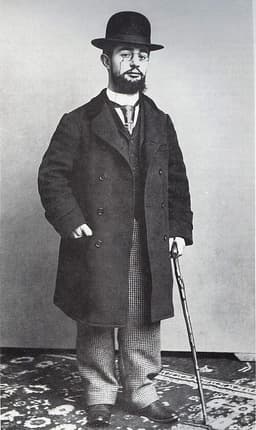
Raymond of Toulouse
General · Medieval
51.5Total

Zhong Shidao
General · Medieval
37.1Total
Basic Information
Born
1041
1051
Died
1105
1126
Era
Medieval
Medieval
Nationality
France
China
Occupation
General
General
Civilization
Western
Eastern
Score Comparison
Military (10%)
70.0
35.0
Political (20%)
40.8
35.0
Influence (20%)
51.0
41.6
Legacy (20%)
44.2
34.2
Leadership (15%)
62.0
33.5
Strategy (15%)
52.5
43.3
TOTAL
51.5
37.1
Raymond of Toulouse — Complete Timeline
1096 AD
Leadership of the First CrusadeWar◆ Major
Raymond of Toulouse was a principal leader of the First Crusade, commanding a large army from southern France. He participated in the siege of Nicaea and the Battle of Dorylaeum, and was a key figure in the capture of Antioch in 1098.
CrusadeMilitary Campaign
Impact: regional
1098 AD
Siege of AntiochWar◆ Major
Raymond played a leading role in the siege of Antioch, which lasted from October 1097 to June 1098. After the city's capture, he claimed the citadel but was outmaneuvered by Bohemond, who became Prince of Antioch.
CrusadeSiege
Impact: regional
1099 AD
Refusal of the Crown of JerusalemPolitical Action◆ Major
After the capture of Jerusalem in July 1099, Raymond was offered the crown but refused, reportedly out of piety. Godfrey of Bouillon was elected instead, taking the title 'Advocate of the Holy Sepulchre.'
Crusader StatesPolitics
Impact: regional
1102 AD
Siege of TripoliWar◆ Major
Raymond began the siege of Tripoli in 1102, establishing a fortified camp called Mount Pilgrim. He died in 1105 before the city fell, but his efforts laid the groundwork for the creation of the County of Tripoli under his son.
CrusadeSiegeCrusader States
Impact: regional
Zhong Shidao — Complete Timeline
1122 AD
Defeated the Liao at the Battle of YanjingWar◆ Major
Zhong Shidao commanded Song forces that captured Yanjing (modern Beijing) from the Liao dynasty. The victory was short-lived as the Jin later took the city, but it demonstrated Song military capability.
Liao CampaignBattleSong Dynasty
Impact: regional
1125 AD
Advised Against Appeasing the JinPolitical Action◆ Major
Zhong Shidao warned Emperor Huizong against ceding territory to the Jin dynasty, arguing it would embolden them. His advice was ignored, and the Jin invaded shortly after, leading to the fall of Kaifeng.
AdviceJin RelationsSong Dynasty
Impact: national
1126 AD
Died During the Jin Siege of KaifengWar◆ Major
Zhong Shidao died during the Jin siege of Kaifeng, possibly from illness or wounds. His death removed a key military leader, weakening the Song defense and contributing to the capital's fall.
Jin InvasionDeathSong Dynasty
Impact: nationaltragic
Expert Analysis
Origins
Raymond of Toulouse, born around 1041, was the count of Toulouse, a powerful noble in southern France. He inherited a vast territory and was deeply religious, shaped by the Gregorian Reform movement. His early military experience came from conflicts with neighboring lords and involvement in the Reconquista in Spain.
Zhong Shidao, born in the late 11th century, was a Chinese general during the Song dynasty. Details of his early life are sparse, but he rose through the ranks of the Song military, likely from a military family. He gained experience in campaigns against the Liao dynasty, which dominated northern China.
Rise to Power
Raymond's rise to prominence came with the First Crusade in 1096. He was one of the few leaders who brought a substantial army from southern France. His wealth and piety made him a natural leader. He played a key role at the Siege of Nicaea in 1097 and the Siege of Antioch in 1098, where he claimed the citadel after its capture.
Zhong Shidao rose to fame by defeating the Liao at the Battle of Yanjing in 1122. He commanded Song forces that captured Yanjing (modern Beijing) from the Liao, a significant victory. This made him a leading general in the Song court. However, the Jin dynasty soon took the city, and Zhong advised against ceding territory to the Jin, warning Emperor Huizong that appeasement would embolden them.
Leadership & Governance
Raymond demonstrated leadership by commanding the largest contingent on the Crusade. He was known for his piety and refusal to compromise, which sometimes caused friction with other leaders. For instance, after the capture of Antioch, he refused to hand over the citadel to Bohemond, leading to conflict. His governance style was feudal, relying on vassals and personal loyalty.
Zhong Shidao's leadership was marked by strategic caution and loyalty to the Song dynasty. He advocated for a strong military stance against the Jin, but his advice was ignored. He died during the Jin siege of Kaifeng in 1126, possibly from illness or wounds. His death removed a key military leader, weakening the Song defense.
Triumph & Tragedy
Raymond's greatest triumph was his role in the capture of Jerusalem in 1099. He refused the crown, which some saw as piety, but others as a mistake. His failure was his inability to secure a stable foothold in the East; he died before completing the Siege of Tripoli in 1105. His refusal of the crown may have limited his political legacy.
Zhong's triumph was the victory at Yanjing, but it was short-lived. His tragedy was his death during the fall of Kaifeng, a disaster that led to the capture of the Song emperor and the collapse of the Northern Song. His warnings against appeasement were prophetic, but he could not prevent the Jin invasion.
Character & Destiny
Raymond was religious, stubborn, and ambitious. His piety influenced his decisions, such as refusing the crown. His stubbornness alienated other Crusader leaders, limiting his influence. He scored 62.0 in leadership and 52.5 in strategy, reflecting his competence but also his flaws.
Zhong was cautious and loyal but lacked the political influence to sway the court. His strategy score of 43.3 indicates he was a competent general, but his military score of 35.0 shows he was not exceptional. His destiny was tied to the Song's decline, and his death during the siege sealed his fate.
Legacy
Raymond's legacy is as a founder of the Crusader states. His efforts at Tripoli laid the groundwork for the County of Tripoli, established after his death. He is remembered as a key figure in the First Crusade, scoring 51.0 in influence and 44.2 in legacy.
Zhong Shidao is remembered as a loyal general who warned against appeasement, but his legacy is overshadowed by the fall of the Northern Song. He scores 41.6 in influence and 34.2 in legacy. His advice was vindicated, but he remains a minor figure in Chinese history.
Conclusion
Raymond of Toulouse, with a total score of 51.5, had a greater impact than Zhong Shidao, who scored 37.1. Raymond's role in the First Crusade shaped the course of medieval history, establishing Crusader states that lasted for centuries. Zhong's military achievements were significant but short-lived, and his death during the Jin invasion prevented him from altering the Song's fate. While both faced tragic ends, Raymond's contributions had a more enduring legacy. Therefore, Raymond of Toulouse is the more impactful figure.
Rankings
🥇
Raymond of ToulouseLeader
Mil: 70.0Pol: 40.8Inf: 51.0
51.5
🥈
Zhong Shidao
Mil: 35.0Pol: 35.0Inf: 41.6
37.1
+14.4 behind
How This Comparison Works
Algorithm
Each figure is scored on 6 dimensions (0—100 scale) based on structured historical data: Military (10%), Political (20%), Influence (20%), Legacy (20%), Leadership (15%), Strategy (15%). The weighted total produces the final ranking.
Data Sources
Scores are computed from structured sub-indicators in the database. Scale factors adjust for era (Ancient ×0.85, Modern ×1.0) and civilization size (Eastern ×1.05, Other ×0.80) to account for differences in population and military scale.
Maximum 3 Figures
Comparisons are limited to 2—3 figures to ensure readability and statistical meaningfulness.
Error Margins
±5 points per dimension — Sub-scores are derived from historical records with inherent uncertainty. Two figures within 5 points on a dimension should be considered roughly equivalent in that area.
Total Score Accuracy
±3 points overall — The weighted combination of 6 dimensions produces a total score with approximately ±3 points of uncertainty. Differences of less than 3 points are not statistically significant— the figures are effectively tied.
Known Limitations
- Historical records are incomplete and uneven across civilizations
- Figures from oral-tradition societies may be underrepresented
- Occupation labels can misclassify multi-role figures
- Scores measure capability and impact, not moral character
- Quantitative scoring is a comparison tool, not absolute truth
Capability Radar
Military (10%) — Battles & Warfare
Battles
55
20
Win Rate
50
25
Expansion
50
5
Political (20%) — Governance & Reform
Reform
30
10
Diplomacy
55
20
Economy
40
5
Influence (20%) — Cultural & Global Reach
Cultural
40
10
Global
35
5
Legacy (20%) — Historical Impact
Historical
55
20
Longevity
40
15
Leadership (15%) — Power & Stability
Tenure
60
30
Stability
45
15
Strategy (15%) — Tactics & Innovation
Strategy
60
35
Tactics
45
30
Reform
20
10
Similar Comparisons
Comments & Discussion
No comments yet. Be the first to share your thoughts!