Loading...
Samuel of Bulgaria vs Timur
Timur leads by 6.9 pts · 2 figures compared
…
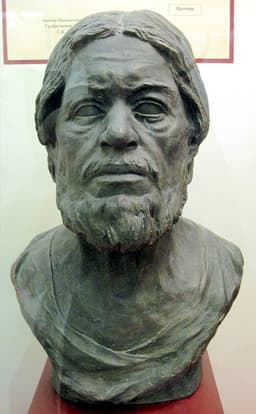
Samuel of Bulgaria
Emperor · Medieval
58.7Total
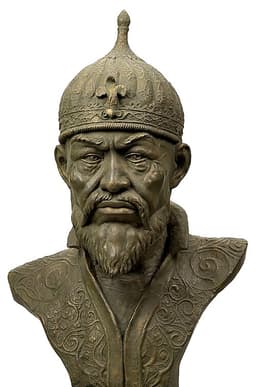
Timur
Emperor · Medieval
65.6Total
Basic Information
Born
958
1336
Died
1014
1405
Era
Medieval
Medieval
Nationality
Bulgaria
Timurid Empire
Occupation
Emperor
Emperor
Civilization
Western
Middle Eastern
Score Comparison
Military (10%)
74.7
79.0
Political (20%)
45.0
70.0
Influence (20%)
58.3
70.0
Legacy (20%)
52.0
40.0
Leadership (15%)
66.0
79.8
Strategy (15%)
70.0
77.6
TOTAL
58.7
65.6
Samuel of Bulgaria — Complete Timeline
986 AD
Battle of the Gates of TrajanWar
Samuel's forces ambushed and defeated a Byzantine army under Emperor Basil II at the Trajan's Gate pass. The victory halted Byzantine expansion into Bulgaria and established Samuel as the dominant power in the Balkans.
Byzantine-Bulgarian WarsBattleAmbush
Impact: regional
997 AD
Coronation as TsarPolitical Action◆ Major
Samuel was crowned Tsar of Bulgaria after the death of his predecessor Roman. He established his capital at Ohrid and ruled over a large territory, continuing resistance against Byzantine conquest.
CoronationOhridBulgarian Empire
Impact: regionalconstructive
1014 AD
Battle of KleidionWar
Emperor Basil II defeated Samuel's army at Kleidion. After the battle, Basil blinded 14,000 Bulgarian prisoners, leaving one in every hundred with one eye to lead them home. Samuel died of shock upon seeing them.
Byzantine-Bulgarian WarsBattleMass Blinding
Impact: regionaltragic
Death after KleidionOther◆ Major
Samuel died of a heart attack reportedly caused by the sight of his blinded soldiers returning from Kleidion. His death marked the end of effective Bulgarian resistance, leading to Byzantine conquest by 1018.
DeathByzantine ConquestEnd of Empire
Impact: regionaltragic
Timur — Complete Timeline
1362 AD
Battle of the Terek RiverWar
Timur defeated the Mongol ruler of the Chagatai Khanate, establishing his control over Transoxiana. This victory marked the beginning of his rise to power, as he captured Samarkand and declared himself emir.
Rise to PowerBattleCentral Asia
Impact: regional
1387 AD
Conquest of PersiaWar◆ Major
Timur launched a campaign into Persia, capturing Isfahan and Shiraz. He suppressed a revolt in Isfahan by massacring tens of thousands of inhabitants, establishing his reputation for extreme brutality and consolidating control over the region.
ConquestMassacrePersia
Impact: regionaldestructive
1395 AD
Campaign against the Golden HordeWar◆ Major
Timur defeated the Golden Horde under Tokhtamysh at the Battle of the Terek River. He sacked Sarai, the Horde's capital, and destroyed its trade networks, permanently weakening the Mongol state and securing his northern frontier.
ConquestGolden HordeBattle
Impact: regionaldestructive
1398 AD
Sack of DelhiWar◆ Major
Timur invaded the Delhi Sultanate, defeating Sultan Nasir-ud-Din Mahmud Shah Tughluq. His army sacked Delhi, massacring tens of thousands of civilians and destroying the city's infrastructure, then withdrew with immense plunder.
ConquestMassacreIndia
Impact: regionaldestructive
1402 AD
Battle of AnkaraWar
Timur defeated the Ottoman Sultan Bayezid I at Ankara, capturing him. The victory shattered Ottoman power, leading to a civil war among Bayezid's sons and delaying Ottoman expansion into Europe for a decade.
BattleOttoman EmpireDecisive Victory
Impact: global
1404 AD
Construction of SamarkandCultural◆ Major
Timur invested heavily in transforming Samarkand into a cultural and architectural center. He brought artisans from conquered lands to build mosques, madrasas, and the Bibi-Khanym Mosque, making the city a showcase of Timurid art and learning.
ArchitecturePatronageCultural Center
Impact: regionalconstructive
1405 AD
Death during campaign against Ming ChinaWar◆ Major
Timur died of illness while leading a massive army toward the Ming dynasty's borders. His death ended the planned invasion of China and led to the fragmentation of his empire among his sons and grandsons.
DeathCampaignMing Dynasty
Impact: regional
Expert Analysis
Origins
Samuel of Bulgaria was born around 958 into the Cometopuli dynasty, a noble family in the Bulgarian Empire. His early life coincided with the decline of the First Bulgarian Empire under Byzantine pressure. Samuel and his brothers led a rebellion after the Byzantine conquest of the Bulgarian capital Preslav in 971. They established a new power base in the Macedonian region, with Samuel eventually emerging as the sole ruler. His formative experiences were shaped by guerrilla warfare against the Byzantines, honing his tactical skills.
Timur was born in 1336 near Kesh (modern Shahrisabz, Uzbekistan) into the Barlas tribe, a Mongol clan. His early life was marked by political instability in the Chagatai Khanate. He suffered a wound to his leg and hand as a young man, earning him the nickname Timur-e Lang (Timur the Lame). Despite this disability, he became a skilled military leader and strategist. He was educated in both Mongol and Islamic traditions, which later influenced his governance.
Rise to Power
Samuel rose to power after the death of his brother David in 976. He became the de facto ruler of the Bulgarian state in the west. His first major success was the Battle of the Gates of Trajan in 986, where his forces ambushed the Byzantine army of Emperor Basil II in the Trajan's Gate pass. The victory halted Byzantine expansion and established Samuel as a major threat. He was crowned Tsar in 997 after the death of the last legitimate Bulgarian emperor, Roman. By 1000, his empire stretched from the Adriatic to the Black Sea.
Timur's rise began in the 1360s when he allied with the Mongol ruler Tughlugh Timur, but later rebelled. After a series of defeats and captures, he eventually defeated his rivals in the Chagatai Khanate at the Battle of the Terek River in 1395. He then consolidated power in Transoxiana, with Samarkand as his capital. His campaigns expanded rapidly: he conquered Persia (1380s), Mesopotamia (1393), and the Golden Horde (1395). His defeat of the Ottoman Sultan Bayezid I at Ankara in 1402 shattered Ottoman power and made him the dominant force in the Islamic world.
Leadership & Governance
Samuel's leadership was characterized by a decentralized approach. He relied on local nobles and maintained a mobile army that used guerrilla tactics. His governance focused on preserving Bulgarian identity and Orthodox Christianity. He moved the capital to Ohrid, which became a cultural and religious center. However, his political score of 45.0 reflects his inability to create lasting institutions or a stable succession.
Timur, scoring 79.8 in leadership and 77.6 in strategy, was a centralized autocrat. He built a vast bureaucracy and used terror as a tool of control. He invested heavily in Samarkand, bringing artisans from conquered lands to build grand structures. He also promoted trade and culture, but his empire was held together by his personal authority. His political score of 70.0 indicates more effective state-building than Samuel, but still fragile.
Triumph & Tragedy
Samuel's greatest triumph was the Battle of the Gates of Trajan, scoring 74.7 in military, which showcased his tactical brilliance. His greatest tragedy was the Battle of Kleidion in 1014, where Basil II defeated him. After the battle, Basil blinded 14,000 Bulgarian prisoners, leaving one in every hundred with one eye to lead them home. Samuel reportedly died of a heart attack upon seeing the blinded soldiers. This defeat ended his effective resistance.
Timur's triumphs include the Battle of Ankara (1402), where he captured Bayezid I, and the sack of Delhi (1398), where his army massacred tens of thousands. His military score of 79.0 reflects his unmatched conquests. His tragedy was his death in 1405 during a campaign against Ming China, which prevented the invasion and led to the fragmentation of his empire. His legacy score of 40.0 indicates that his empire did not long outlast him.
Character & Destiny
Samuel was a resilient and adaptive leader, but his character showed a fatalistic streak. His decision to engage at Kleidion, despite being outnumbered, may have been driven by overconfidence. His death from shock reveals a sensitive nature. Historians note his devotion to his people and faith.
Timur was ruthless and ambitious, with a strategic mind. His disability did not hinder his drive. He was a patron of arts but also a mass murderer. His character—calculating and merciless—shaped his destiny: he built a vast empire but left no stable succession. His death on campaign was ironic, as he died of illness rather than battle.
Legacy
Samuel's legacy is mixed. He is remembered as a national hero in Bulgaria, but his empire fell to Byzantium in 1018. His resistance delayed Byzantine expansion and preserved Bulgarian identity. His military tactics influenced later Balkan warfare. His legacy score of 52.0 reflects his cultural impact but limited political endurance.
Timur's legacy is more complex. He is remembered as a great conqueror and patron of arts, but also as a destroyer. His empire fragmented, but the Timurid dynasty continued in Persia and India (including the Mughal Empire). His architectural projects in Samarkand are UNESCO World Heritage sites. His influence on military tactics and statecraft was significant, but his legacy score of 40.0 is lower due to the transience of his empire.
Conclusion
Timur had greater impact than Samuel. His military score of 79.0 versus 74.7, political score of 70.0 versus 45.0, and strategy score of 77.6 versus 70.0 demonstrate his superiority in conquest and state-building. Samuel's resistance was heroic but ultimately failed, while Timur reshaped the political map of Asia and influenced dynasties for centuries. Although Timur's empire did not last, his campaigns altered the course of history in the Middle East, India, and Central Asia. Samuel's legacy is more symbolic than substantive. Therefore, Timur is the more significant historical figure.
Rankings
🥇
TimurLeader
Mil: 79.0Pol: 70.0Inf: 70.0
65.6
🥈
Samuel of Bulgaria
Mil: 74.7Pol: 45.0Inf: 58.3
58.7
+6.9 behind
How This Comparison Works
Algorithm
Each figure is scored on 6 dimensions (0—100 scale) based on structured historical data: Military (10%), Political (20%), Influence (20%), Legacy (20%), Leadership (15%), Strategy (15%). The weighted total produces the final ranking.
Data Sources
Scores are computed from structured sub-indicators in the database. Scale factors adjust for era (Ancient ×0.85, Modern ×1.0) and civilization size (Eastern ×1.05, Other ×0.80) to account for differences in population and military scale.
Maximum 3 Figures
Comparisons are limited to 2—3 figures to ensure readability and statistical meaningfulness.
Error Margins
±5 points per dimension — Sub-scores are derived from historical records with inherent uncertainty. Two figures within 5 points on a dimension should be considered roughly equivalent in that area.
Total Score Accuracy
±3 points overall — The weighted combination of 6 dimensions produces a total score with approximately ±3 points of uncertainty. Differences of less than 3 points are not statistically significant— the figures are effectively tied.
Known Limitations
- Historical records are incomplete and uneven across civilizations
- Figures from oral-tradition societies may be underrepresented
- Occupation labels can misclassify multi-role figures
- Scores measure capability and impact, not moral character
- Quantitative scoring is a comparison tool, not absolute truth
Capability Radar
Military (10%) — Battles & Warfare
Battles
75
95
Win Rate
70
92
Expansion
75
96
Political (20%) — Governance & Reform
Reform
65
78
Diplomacy
70
70
Economy
60
82
Influence (20%) — Cultural & Global Reach
Cultural
65
88
Global
55
85
Legacy (20%) — Historical Impact
Historical
70
90
Longevity
60
75
Leadership (15%) — Power & Stability
Tenure
80
85
Stability
55
65
Strategy (15%) — Tactics & Innovation
Strategy
85
93
Tactics
80
94
Reform
70
80
Similar Comparisons
Comments & Discussion
No comments yet. Be the first to share your thoughts!