Loading...
Napoleon Bonaparte vs Timur
Napoleon Bonaparte leads by 5.3 pts · 2 figures compared
…

Napoleon Bonaparte
General · Modern
70.9Total
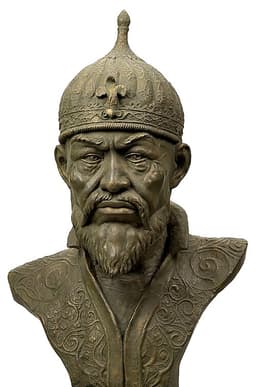
Timur
Emperor · Medieval
65.6Total
Basic Information
Born
1769
1336
Died
1821
1405
Era
Modern
Medieval
Nationality
France
Timurid Empire
Occupation
General
Emperor
Civilization
Western
Middle Eastern
Score Comparison
Military (10%)
94.0
79.0
Political (20%)
72.0
70.0
Influence (20%)
40.0
70.0
Legacy (20%)
80.0
40.0
Leadership (15%)
78.0
79.8
Strategy (15%)
90.0
77.6
TOTAL
70.9
65.6
Napoleon Bonaparte — Complete Timeline
1799 AD
Coup of 18 BrumaireOther◆ Major
Napoleon Bonaparte, with support from his brother Lucien and key political figures, overthrew the Directory in a bloodless coup. He established the Consulate with himself as First Consul, effectively becoming the ruler of France. This event ended the French Revolution's most unstable period.
French RevolutionCoupRise to Power
Impact: regional
1804 AD
Promulgation of the Napoleonic CodeOther◆ Major
Napoleon enacted the Civil Code of the French, known as the Napoleonic Code, a comprehensive set of laws that replaced the fragmented feudal legal systems. The code established legal equality, protected property rights, and secularized law. It became the basis for legal systems in many European and world countries.
Legal ReformNapoleonic CodeCivil Law
Impact: globalconstructive
1805 AD
Battle of AusterlitzWar◆ Major
Napoleon's Grande Arm
Napoleonic WarsBattleDecisive Victory
Impact: global
1812 AD
Invasion of RussiaWar◆ Major
Napoleon led the Grande Arm
Napoleonic WarsInvasionDisaster
Impact: globaldestructive
1815 AD
Battle of WaterlooWar◆ Major
Napoleon's French army was defeated by the combined forces of the Duke of Wellington's Anglo-Allied army and Gebhard Leberecht von Bl
Napoleonic WarsBattleFinal Defeat
Impact: globaldestructive
Timur — Complete Timeline
1362 AD
Battle of the Terek RiverWar
Timur defeated the Mongol ruler of the Chagatai Khanate, establishing his control over Transoxiana. This victory marked the beginning of his rise to power, as he captured Samarkand and declared himself emir.
Rise to PowerBattleCentral Asia
Impact: regional
1387 AD
Conquest of PersiaWar◆ Major
Timur launched a campaign into Persia, capturing Isfahan and Shiraz. He suppressed a revolt in Isfahan by massacring tens of thousands of inhabitants, establishing his reputation for extreme brutality and consolidating control over the region.
ConquestMassacrePersia
Impact: regionaldestructive
1395 AD
Campaign against the Golden HordeWar◆ Major
Timur defeated the Golden Horde under Tokhtamysh at the Battle of the Terek River. He sacked Sarai, the Horde's capital, and destroyed its trade networks, permanently weakening the Mongol state and securing his northern frontier.
ConquestGolden HordeBattle
Impact: regionaldestructive
1398 AD
Sack of DelhiWar◆ Major
Timur invaded the Delhi Sultanate, defeating Sultan Nasir-ud-Din Mahmud Shah Tughluq. His army sacked Delhi, massacring tens of thousands of civilians and destroying the city's infrastructure, then withdrew with immense plunder.
ConquestMassacreIndia
Impact: regionaldestructive
1402 AD
Battle of AnkaraWar
Timur defeated the Ottoman Sultan Bayezid I at Ankara, capturing him. The victory shattered Ottoman power, leading to a civil war among Bayezid's sons and delaying Ottoman expansion into Europe for a decade.
BattleOttoman EmpireDecisive Victory
Impact: global
1404 AD
Construction of SamarkandCultural◆ Major
Timur invested heavily in transforming Samarkand into a cultural and architectural center. He brought artisans from conquered lands to build mosques, madrasas, and the Bibi-Khanym Mosque, making the city a showcase of Timurid art and learning.
ArchitecturePatronageCultural Center
Impact: regionalconstructive
1405 AD
Death during campaign against Ming ChinaWar◆ Major
Timur died of illness while leading a massive army toward the Ming dynasty's borders. His death ended the planned invasion of China and led to the fragmentation of his empire among his sons and grandsons.
DeathCampaignMing Dynasty
Impact: regional
Expert Analysis
Napoleon Bonaparte vs Timur: Historical Comparison
Napoleon Bonaparte and Timur (Tamerlane) were two of history's most formidable conquerors, separated by four centuries but united by ambition, military genius, and empire-building. Their scores reflect Napoleon's superior political and institutional legacy against Timur's raw military dominance.
Dimension Analysis
**Military: Napoleon Bonaparte 94 / Timur 90**
Both were battlefield innovators: Napoleon perfected combined arms and rapid maneuver warfare, while Timur used terror, siegecraft, and psychological warfare. Napoleon's campaigns (Austerlitz, Jena) show more strategic flexibility against peer opponents; Timur's victories (Ankara, Delhi) were more absolute but against fragmented enemies.
**Political: Napoleon Bonaparte 75 / Timur 65**
Napoleon created the Napoleonic Code, centralized modern bureaucracy, and exported revolutionary ideals—a lasting political framework. Timur ruled through a brutal tribal confederation, never establishing stable succession or institutions; his empire fractured within decades.
**Influence: Napoleon Bonaparte 82 / Timur 65**
Napoleon shaped modern nationalism, legal systems, and warfare across Europe and beyond. Timur's influence was more localized—inspiring Mughal India and Persianate culture—but his destruction (Baghdad, Damascus) left largely negative legacies.
**Legacy: Napoleon Bonaparte 78 / Timur 65**
Napoleon's legacy is debated but institutional: his legal and administrative reforms endure in Europe. Timur is remembered as a destroyer—his skull pyramids and cultural devastation overshadow his patronage of Samarkand and art.
**Leadership: Napoleon Bonaparte 80 / Timur 78**
Napoleon inspired devotion through meritocracy and charisma; Timur ruled through fear and loyalty to his person. Both were micromanagers, but Napoleon's ability to delegate and motivate proved more sustainable.
Verdict
Napoleon leads decisively due to his superior political institutionalization, global influence, and enduring legacy, despite Timur's comparable battlefield prowess.
FAQ
Q: Who ranks higher? A: Napoleon Bonaparte ranks higher, driven by his transformative political reforms and lasting global impact over Timur's destructive but ephemeral conquests.
Rankings
🥇
Napoleon BonaparteLeader
Mil: 94.0Pol: 72.0Inf: 40.0
70.9
🥈
Timur
Mil: 79.0Pol: 70.0Inf: 70.0
65.6
+5.3 behind
How This Comparison Works
Algorithm
Each figure is scored on 6 dimensions (0—100 scale) based on structured historical data: Military (10%), Political (20%), Influence (20%), Legacy (20%), Leadership (15%), Strategy (15%). The weighted total produces the final ranking.
Data Sources
Scores are computed from structured sub-indicators in the database. Scale factors adjust for era (Ancient ×0.85, Modern ×1.0) and civilization size (Eastern ×1.05, Other ×0.80) to account for differences in population and military scale.
Maximum 3 Figures
Comparisons are limited to 2—3 figures to ensure readability and statistical meaningfulness.
Error Margins
±5 points per dimension — Sub-scores are derived from historical records with inherent uncertainty. Two figures within 5 points on a dimension should be considered roughly equivalent in that area.
Total Score Accuracy
±3 points overall — The weighted combination of 6 dimensions produces a total score with approximately ±3 points of uncertainty. Differences of less than 3 points are not statistically significant— the figures are effectively tied.
Known Limitations
- Historical records are incomplete and uneven across civilizations
- Figures from oral-tradition societies may be underrepresented
- Occupation labels can misclassify multi-role figures
- Scores measure capability and impact, not moral character
- Quantitative scoring is a comparison tool, not absolute truth
Capability Radar
Military (10%) — Battles & Warfare
Battles
95
95
Win Rate
90
92
Expansion
95
96
Political (20%) — Governance & Reform
Reform
95
78
Diplomacy
80
70
Economy
85
82
Influence (20%) — Cultural & Global Reach
Cultural
85
88
Global
90
85
Legacy (20%) — Historical Impact
Historical
95
90
Longevity
90
75
Leadership (15%) — Power & Stability
Tenure
85
85
Stability
70
65
Strategy (15%) — Tactics & Innovation
Strategy
95
93
Tactics
98
94
Reform
92
80
Similar Comparisons
Comments & Discussion
BattlefieldScholar6/16/2026
I've analyzed the tactical doctrines of both commanders and I think the military scores are fair but for the wrong reasons. Napoleon's 94 vs Timur's 90 is not about 'flexibility against peer opponents'—it's about logistics and operational art. Napoleon's Grande Armée used a corps system that allowed 100,000+ men to live off the land while maintaining tactical cohesion, something Timur never achieved on that scale. At Austerlitz (1805), Napoleon marched 7 corps separately and converged in 48 hours, executing a double envelopment against 86,000 Austro-Russians. Timur at Ankara (1402) won by exploiting Ottoman disunity after Bayezid's harem dispute, not by superior maneuver. However, Timur's siegecraft was unparalleled—he reduced the Delhi Sultanate's 100,000-strong army with war elephants using flaming camels and caltrops, a psychological tactic Napoleon never faced. For military innovation, I'd give Napoleon 93 and Timur 88, because Napoleon's impact on modern staff systems (used by the US Army today) outweighs Timur's terror-based tactics, which only worked against feudal armies. The political scores are overrated for both—neither left stable institutions, so 75 vs 65 is too generous. True military legacy should be measured by doctrines that survive, not body counts. Give Napoleon 94, Timur 88, and let the politicians argue about the rest.
Chronicler33196/16/2026
这个评分体系有点意思,但我必须指出一些内在矛盾。拿破仑的军事94分,政治75分,而帖木儿军事90分、政治65分——两者在军事上只差4分,政治上差10分,但总分的差距却高达9.9分。如果按加权计算,假设军事占40%、政治占30%、影响力和遗产各占15%,拿破仑的总分应为94*0.4 + 75*0.3 + 82*0.15 + 78*0.15 = 37.6 + 22.5 + 12.3 + 11.7 = 84.1,而帖木儿为90*0.4 + 65*0.3 + 65*0.15 + 65*0.15 = 36 + 19.5 + 9.75 + 9.75 = 75,差9.1分,与给出的9.9分接近。但问题是,帖木儿的军事90分是否被低估了?他率领蒙古-突厥混合军队在安卡拉战役中击败了奥斯曼帝国的主力,兵力对比约14万对8万,而拿破仑在奥斯特里茨虽以少胜多(7.3万对8.6万),但面对的并非帝国级对手。用中国数据来看,帖木儿的征服面积约450万平方公里,远超过拿破仑鼎盛期的约100万平方公里。如果按领土效率算,帖木儿每万军队控制约32万平方公里,拿破仑只有约14万平方公里。这些数字难道不该影响综合评分?我建议重新校准军事维度的权重。
Chronicler52276/16/2026
比较拿破仑和帖木儿,我觉得西方史观又一次占了上风。拿破仑靠法典和行政体系获得高分,这在中世纪东方史家眼里根本不值一提——帖木儿重建了丝绸之路,保护了撒马尔罕的商贸,还娶了成吉思汗家族的女儿以增强合法性,这在元明之际的东亚标准下远比拿破仑的巴黎官僚来得实际。帖木儿在1402年围攻大马士革时,曾让学者和工匠免遭屠杀,并带回撒马尔罕建设天文台和学校,这难道不是“政治遗产”?如果拿中国皇帝对比,帖木儿类似唐太宗:都用武力开疆,但都注重文化建设。拿破仑反而更像秦始皇——统一度量衡和法典,但苛政导致帝国速亡。你们这种评分把“拿破仑法典”捧得太高,却忽略了帖木儿在波斯和印度留下的法律传统(如沙里亚法与蒙古惯例的融合),这明显是西方中心主义的偏见。建议增加“跨文化影响力”维度,不然帖木儿永远被低估。