Loading...
Semerkhet vs Ziying
Ziying leads by 4.4 pts · 2 figures compared
…
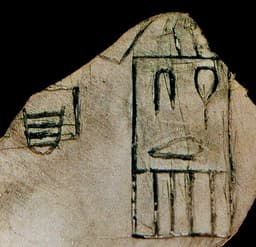
Semerkhet
Emperor · Ancient
37.0Total
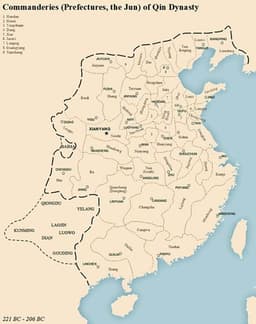
Ziying
Emperor · Ancient
41.4Total
Basic Information
Born
-2920
-240
Died
-2910
-206
Era
Ancient
Ancient
Nationality
Early Egypt
China
Occupation
Emperor
Emperor
Civilization
Middle Eastern
Eastern
Score Comparison
Military (10%)
10.2
47.5
Political (20%)
35.0
43.7
Influence (20%)
42.4
42.4
Legacy (20%)
32.5
32.5
Leadership (15%)
49.9
49.9
Strategy (15%)
45.0
38.6
TOTAL
37.0
41.4
Semerkhet — Complete Timeline
2920 BC
Usurped the ThronePolitical Action◆ Major
Semerkhet likely seized power through a coup, possibly overthrowing Anedjib. His name was erased from some king lists, suggesting his reign was considered illegitimate by later tradition.
UsurpationCoupIllegitimate
Impact: nationaldestructive
Reigned for a Short PeriodPolitical Action
Semerkhet ruled for only about 8-9 years, one of the shortest reigns of the First Dynasty. His brief rule may have been due to ongoing instability or his contested legitimacy.
Short ReignInstabilityFirst Dynasty
Impact: national
Built a Tomb at AbydosCultural
Semerkhet constructed a tomb at Abydos, but it was poorly built and contained few subsidiary burials. The tomb's condition reflects the troubled nature of his reign.
TombAbydosPoor
Ziying — Complete Timeline
207 BC
Killed Zhao GaoPolitical Action◆ Major
Ziying, after ascending the throne, plotted with his eunuchs to kill Zhao Gao. He succeeded, ending Zhao Gao's tyranny but failing to save the Qin dynasty from collapse.
AssassinationQinZhao Gao
Impact: nationalconstructive
206 BC
Surrendered to Liu BangPolitical Action
Ziying, the last ruler of Qin, surrendered to Liu Bang's rebel forces at Xianyang. This act ended the Qin dynasty and marked the beginning of the Han dynasty.
SurrenderQinHan
Impact: global
Expert Analysis
Origins
Semerkhet was a pharaoh of Egypt's First Dynasty, likely born around 3000 BCE. Little is known of his early life, but he is believed to have been a usurper who seized power, possibly from his predecessor Anedjib. His name means "Companion of the Divine" and appears on the Palermo Stone, though later king lists omitted him, suggesting his reign was controversial. He reigned for only about 8-9 years, one of the shortest of the dynasty.
Ziying was the last ruler of the Qin dynasty, born around 230 BCE as the son of Fusu, the eldest son of Qin Shi Huang. After Qin Shi Huang's death in 210 BCE, the eunuch Zhao Gao manipulated the succession, leading to the reigns of Qin Er Shi and then Ziying. Ziying was initially made a prince, but after Zhao Gao killed Qin Er Shi, Ziying was placed on the throne as king of Qin.
Rise to Power
Semerkhet rose to power through a coup, likely overthrowing Anedjib. His accession was marked by instability, and his name was erased from some king lists, indicating that his rule was not universally accepted. He had to consolidate power quickly, but his short reign suggests he faced ongoing opposition.
Ziying ascended the throne in 207 BCE after Zhao Gao forced him to become king. However, Ziying quickly plotted against Zhao Gao, killing him and his eunuch allies. This act ended Zhao Gao's tyranny but did not stabilize the dynasty. The Qin empire was already collapsing under rebel attacks, and Ziying ruled for only 46 days before surrendering to Liu Bang.
Leadership & Governance
Semerkhet's leadership was marked by his usurpation and short reign. He built a tomb at Abydos, but it was poorly constructed and contained few subsidiary burials, reflecting the troubled nature of his rule. His governance likely focused on maintaining control, but he left little administrative legacy. His political score of 35.0 indicates limited effectiveness.
Ziying showed decisiveness in eliminating Zhao Gao, but his overall leadership was hampered by the dynasty's collapse. He attempted to negotiate with Liu Bang, surrendering to spare the capital from destruction. However, he failed to rally support or defend the realm. His leadership score of 49.9 reflects some competence but in a hopeless situation.
Triumph & Tragedy
Semerkht's triumph was seizing power and ruling for nearly a decade, but his tragedy was the instability and poor construction of his tomb, which symbolized his weak reign. He scored 10.2 in military, indicating no significant military achievements.
Ziying's triumph was killing Zhao Gao, ending his tyranny. His tragedy was being the last Qin ruler, forced to surrender and later executed by Xiang Yu. He scored 47.5 in military, showing some capability, but his overall impact was minimal.
Character & Destiny
Semerkhet was likely ambitious and ruthless to usurp the throne, but his character led to a contested legacy. His name's erasure suggests he was seen as illegitimate. His tomb's poor state mirrors his troubled reign.
Ziying was pragmatic and willing to compromise, but his decision to surrender sealed his fate. He was executed by Xiang Yu despite surrendering, showing the brutality of the era. His character was shaped by the collapse around him.
Legacy
Semerkhet's legacy is minor; he is a footnote in Egyptian history. His tomb at Abydos is one of the less impressive of the dynasty, and his reign contributed to the instability of the First Dynasty. He scored 32.5 in legacy.
Ziying's legacy is tied to the fall of Qin. His surrender to Liu Bang allowed the Han dynasty to rise, but his own death meant he had no direct influence. He scored 32.5 in legacy as well, with his main impact being the end of the Qin.
Conclusion
While both rulers had short, troubled reigns, Ziying had a slightly higher total score (41.4 vs 37.0) due to his more decisive actions and the greater historical significance of the Qin collapse. Semerkhet's usurpation and poor tomb mark him as a weaker figure. Ziying's elimination of Zhao Gao and his role in the transition to Han give him a more notable, though still minor, place in history. Thus, Ziying had a greater impact.
Rankings
🥇
ZiyingLeader
Mil: 47.5Pol: 43.7Inf: 42.4
41.4
🥈
Semerkhet
Mil: 10.2Pol: 35.0Inf: 42.4
37.0
+4.4 behind
How This Comparison Works
Algorithm
Each figure is scored on 6 dimensions (0—100 scale) based on structured historical data: Military (10%), Political (20%), Influence (20%), Legacy (20%), Leadership (15%), Strategy (15%). The weighted total produces the final ranking.
Data Sources
Scores are computed from structured sub-indicators in the database. Scale factors adjust for era (Ancient ×0.85, Modern ×1.0) and civilization size (Eastern ×1.05, Other ×0.80) to account for differences in population and military scale.
Maximum 3 Figures
Comparisons are limited to 2—3 figures to ensure readability and statistical meaningfulness.
Error Margins
±5 points per dimension — Sub-scores are derived from historical records with inherent uncertainty. Two figures within 5 points on a dimension should be considered roughly equivalent in that area.
Total Score Accuracy
±3 points overall — The weighted combination of 6 dimensions produces a total score with approximately ±3 points of uncertainty. Differences of less than 3 points are not statistically significant— the figures are effectively tied.
Known Limitations
- Historical records are incomplete and uneven across civilizations
- Figures from oral-tradition societies may be underrepresented
- Occupation labels can misclassify multi-role figures
- Scores measure capability and impact, not moral character
- Quantitative scoring is a comparison tool, not absolute truth
Capability Radar
Military (10%) — Battles & Warfare
Battles
5
5
Win Rate
5
5
Expansion
5
0
Political (20%) — Governance & Reform
Reform
5
0
Diplomacy
5
20
Economy
5
0
Influence (20%) — Cultural & Global Reach
Cultural
5
5
Global
5
5
Legacy (20%) — Historical Impact
Historical
10
10
Longevity
5
5
Leadership (15%) — Power & Stability
Tenure
10
10
Stability
5
5
Strategy (15%) — Tactics & Innovation
Strategy
5
5
Tactics
5
5
Reform
5
0
Similar Comparisons
Comments & Discussion
No comments yet. Be the first to share your thoughts!