Loading...
This comparison has not been analyzed yet.
One-time AI generation (~1 minute). Scores and timeline are already available below.
Shapur I vs Tuoba Tao
Tuoba Tao leads by 4.4 pts · 2 figures compared
…
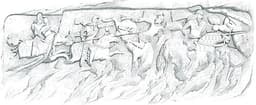
Shapur I
Emperor · Ancient
61.8Total
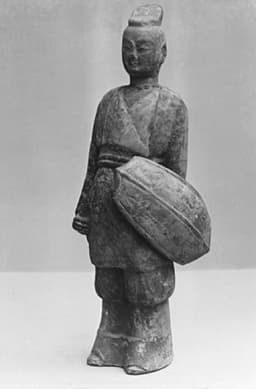
Tuoba Tao
Emperor · Ancient
66.2Total
Basic Information
Born
215
408
Died
270
452
Era
Ancient
Ancient
Nationality
Sassanid Empire
China
Occupation
Emperor
Emperor
Civilization
Middle Eastern
Eastern
Score Comparison
Military (10%)
78.0
78.0
Political (20%)
55.0
70.0
Influence (20%)
56.7
59.0
Legacy (20%)
56.0
58.0
Leadership (15%)
72.0
78.0
Strategy (15%)
68.1
69.1
TOTAL
61.8
66.2
Shapur I — Complete Timeline
244 AD
Battle of MisicheWar◆ Major
Shapur I defeated the Roman emperor Gordian III at Misiche in Mesopotamia. Gordian died during or shortly after the battle, and his successor Philip the Arab signed a peace treaty favorable to the Sassanids, paying a large ransom.
Roman-Persian WarsBattleSassanid Empire
Impact: regional
260 AD
Capture of Emperor ValerianWar
Shapur I captured the Roman emperor Valerian in battle near Edessa. Valerian was taken prisoner and spent the rest of his life in Persian captivity, a humiliation unprecedented in Roman history. Shapur used this victory to extract tribute and territory.
Roman-Persian WarsCaptureSassanid Empire
Impact: global
Sack of AntiochWar◆ Major
Following the capture of Valerian, Shapur I invaded Syria and sacked the city of Antioch, a major Roman center. The Sassanid army plundered the city and deported many inhabitants to Persia, demonstrating the empire's military reach.
Roman-Persian WarsSackAntioch
Impact: regionaldestructive
262 AD
Construction of Naqsh-e Rostam InscriptionsCultural
Shapur I commissioned rock reliefs and inscriptions at Naqsh-e Rostam, depicting his victories over Roman emperors. The trilingual inscription (Middle Persian, Parthian, Greek) details his campaigns and the extent of his empire, serving as a key historical source.
InscriptionPropagandaSassanid Empire
Impact: nationalconstructive
266 AD
Foundation of BishapurCultural
Shapur I founded the city of Bishapur in Fars province, modeled partly on Roman urban planning. The city featured a palace with mosaics and reliefs celebrating his victories, becoming a major Sassanid administrative and cultural center.
City FoundationArchitectureSassanid Empire
Impact: regionalconstructive
Tuoba Tao — Complete Timeline
439 AD
Unification of northern China under Northern WeiWar
Emperor Taiwu of Northern Wei (Tuoba Tao) conquered the last rival state, Northern Liang, unifying all of northern China under the Northern Wei dynasty. This ended the Sixteen Kingdoms period and established Northern Wei as the dominant power in the north.
Northern WeiUnificationSixteen Kingdoms
Impact: regionalconstructive
446 AD
Suppression of BuddhismReform◆ Major
Emperor Taiwu issued an edict suppressing Buddhism, ordering the destruction of monasteries, scriptures, and images. He favored Daoism and sought to reduce Buddhist influence on state affairs. This was the first major persecution of Buddhism in Chinese history.
Northern WeiBuddhist PersecutionReligion
Impact: nationaldestructive
452 AD
Assassination by eunuch Zong AiPolitical Action◆ Major
Emperor Taiwu was assassinated by his eunuch Zong Ai, who feared punishment for his misdeeds. The assassination plunged Northern Wei into a succession crisis, but Zong Ai was soon killed by other officials, and a new emperor was installed.
Northern WeiAssassinationSuccession Crisis
Impact: nationaltragic
This comparison has not been analyzed yet.
One-time AI generation (~1 minute). Scores and timeline are already available below.
Rankings
🥇
Tuoba TaoLeader
Mil: 78.0Pol: 70.0Inf: 59.0
66.2
🥈
Shapur I
Mil: 78.0Pol: 55.0Inf: 56.7
61.8
+4.4 behind
How This Comparison Works
Algorithm
Each figure is scored on 6 dimensions (0—100 scale) based on structured historical data: Military (10%), Political (20%), Influence (20%), Legacy (20%), Leadership (15%), Strategy (15%). The weighted total produces the final ranking.
Data Sources
Scores are computed from structured sub-indicators in the database. Scale factors adjust for era (Ancient ×0.85, Modern ×1.0) and civilization size (Eastern ×1.05, Other ×0.80) to account for differences in population and military scale.
Maximum 3 Figures
Comparisons are limited to 2—3 figures to ensure readability and statistical meaningfulness.
Error Margins
±5 points per dimension — Sub-scores are derived from historical records with inherent uncertainty. Two figures within 5 points on a dimension should be considered roughly equivalent in that area.
Total Score Accuracy
±3 points overall — The weighted combination of 6 dimensions produces a total score with approximately ±3 points of uncertainty. Differences of less than 3 points are not statistically significant— the figures are effectively tied.
Known Limitations
- Historical records are incomplete and uneven across civilizations
- Figures from oral-tradition societies may be underrepresented
- Occupation labels can misclassify multi-role figures
- Scores measure capability and impact, not moral character
- Quantitative scoring is a comparison tool, not absolute truth
Capability Radar
Military (10%) — Battles & Warfare
Battles
85
85
Win Rate
80
80
Expansion
85
85
Political (20%) — Governance & Reform
Reform
70
75
Diplomacy
80
70
Economy
65
70
Influence (20%) — Cultural & Global Reach
Cultural
60
60
Global
65
55
Legacy (20%) — Historical Impact
Historical
70
70
Longevity
60
65
Leadership (15%) — Power & Stability
Tenure
75
80
Stability
70
65
Strategy (15%) — Tactics & Innovation
Strategy
80
85
Tactics
75
75
Reform
70
70
Similar Comparisons
Comments & Discussion
No comments yet. Be the first to share your thoughts!