Loading...
Tamar of Georgia vs Timur
Tamar of Georgia leads by 5.9 pts · 2 figures compared
…
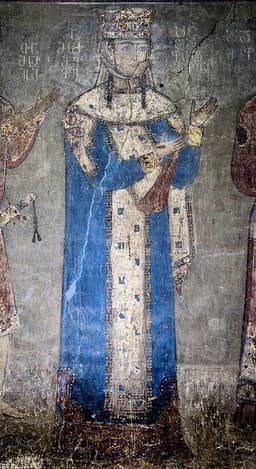
Tamar of Georgia
Emperor · Medieval
71.5Total
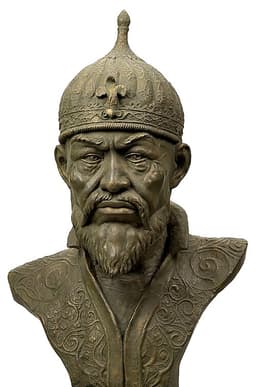
Timur
Emperor · Medieval
65.6Total
Basic Information
Born
1160
1336
Died
1213
1405
Era
Medieval
Medieval
Nationality
Georgia
Timurid Empire
Occupation
Emperor
Emperor
Civilization
Western
Middle Eastern
Score Comparison
Military (10%)
78.0
79.0
Political (20%)
72.0
70.0
Influence (20%)
82.0
70.0
Legacy (20%)
55.0
40.0
Leadership (15%)
80.0
79.8
Strategy (15%)
66.3
77.6
TOTAL
71.5
65.6
Tamar of Georgia — Complete Timeline
1184 AD
Coronation as Queen RegnantPolitical Action
Tamar was crowned as the first female ruler of Georgia after her father George III's death. Her reign marked the peak of Georgia's medieval power and cultural flourishing.
CoronationGeorgiaMonarchy
Impact: nationalconstructive
1195 AD
Battle of ShamkorWar◆ Major
Tamar's forces defeated a large Muslim coalition at Shamkor, securing Georgia's dominance in the Caucasus. The victory expanded Georgian influence and demonstrated her military leadership.
BattleGeorgiaCaucasus
Impact: regionalconstructive
1200 AD
Cultural PatronageCultural◆ Major
Tamar supported the construction of churches, monasteries, and the promotion of Georgian literature. Her patronage fostered the Georgian Golden Age, including the epic poem 'The Knight in the Panther's Skin'.
CulturePatronageGeorgia
Impact: nationalconstructive
Timur — Complete Timeline
1362 AD
Battle of the Terek RiverWar
Timur defeated the Mongol ruler of the Chagatai Khanate, establishing his control over Transoxiana. This victory marked the beginning of his rise to power, as he captured Samarkand and declared himself emir.
Rise to PowerBattleCentral Asia
Impact: regional
1387 AD
Conquest of PersiaWar◆ Major
Timur launched a campaign into Persia, capturing Isfahan and Shiraz. He suppressed a revolt in Isfahan by massacring tens of thousands of inhabitants, establishing his reputation for extreme brutality and consolidating control over the region.
ConquestMassacrePersia
Impact: regionaldestructive
1395 AD
Campaign against the Golden HordeWar◆ Major
Timur defeated the Golden Horde under Tokhtamysh at the Battle of the Terek River. He sacked Sarai, the Horde's capital, and destroyed its trade networks, permanently weakening the Mongol state and securing his northern frontier.
ConquestGolden HordeBattle
Impact: regionaldestructive
1398 AD
Sack of DelhiWar◆ Major
Timur invaded the Delhi Sultanate, defeating Sultan Nasir-ud-Din Mahmud Shah Tughluq. His army sacked Delhi, massacring tens of thousands of civilians and destroying the city's infrastructure, then withdrew with immense plunder.
ConquestMassacreIndia
Impact: regionaldestructive
1402 AD
Battle of AnkaraWar
Timur defeated the Ottoman Sultan Bayezid I at Ankara, capturing him. The victory shattered Ottoman power, leading to a civil war among Bayezid's sons and delaying Ottoman expansion into Europe for a decade.
BattleOttoman EmpireDecisive Victory
Impact: global
1404 AD
Construction of SamarkandCultural◆ Major
Timur invested heavily in transforming Samarkand into a cultural and architectural center. He brought artisans from conquered lands to build mosques, madrasas, and the Bibi-Khanym Mosque, making the city a showcase of Timurid art and learning.
ArchitecturePatronageCultural Center
Impact: regionalconstructive
1405 AD
Death during campaign against Ming ChinaWar◆ Major
Timur died of illness while leading a massive army toward the Ming dynasty's borders. His death ended the planned invasion of China and led to the fragmentation of his empire among his sons and grandsons.
DeathCampaignMing Dynasty
Impact: regional
Expert Analysis
Tamar of Georgia vs Timur
### Two Thrones of Blood and Light
History has a way of pairing conquerors who seem to share a century but inhabit different moral universes. In the year 1398, as Timur’s horsemen rode into Delhi and left a city of corpses, a queen named Tamar had been dead for almost two centuries—yet her kingdom, Georgia, still remembered her as a golden age. Timur, the “Scourge of God,” built pyramids of skulls; Tamar built churches and an empire that outlasted her. How did two rulers, both medieval monarchs commanding armies and forging states, leave such profoundly different marks on the world? The answer lies not in their scores, but in the soil of their ambitions.
### Origins
Timur was born in 1336 near Samarkand, into a minor Turco-Mongol noble family. He was a man of the steppe, a product of the fractured world left by the Mongol Empire’s collapse. Lame in one leg from an early wound, he compensated with a will of iron. His era was one of endless war, where a chieftain’s survival depended on cruelty and cunning. The Chagatai Khanate, a Mongol successor state, was his proving ground—a brutal school where mercy was a weakness.
Tamar, born around 1160, came from a very different world. Georgia was a Christian kingdom nestled between the Caucasus mountains, a crossroads of trade and faith. Her father, George III, was a strong king, and she was raised in a court that valued learning, art, and diplomacy. Her era was one of consolidation, not collapse. The Byzantine Empire to the west and the Seljuk Turks to the south were fading, leaving a power vacuum that Georgia could fill. Where Timur’s world demanded destruction, Tamar’s invited creation.
### Rise to Power
Timur’s ascent was a saga of betrayal and battlefield gambles. In 1362, at the Battle of the Terek River, he defeated the Mongol ruler of the Chagatai Khanate, establishing control over Transoxiana. He was not a legitimate heir; he seized power through alliances and broken oaths. His rise was a slow, bloody climb over rivals, each victory a step closer to being the unifier of the steppe.
Tamar’s path was smoother but no less challenging. Crowned queen regnant in 1184 after her father’s death, she was Georgia’s first female ruler. The nobility resisted a woman on the throne, but Tamar outmaneuvered them with patience and political acumen. She married a Rus’ prince, then divorced him when he proved useless, and later chose a Georgian nobleman as her co-ruler. Her rise was a dance of diplomacy and familial loyalty, not a river of blood.
### Leadership & Governance
Timur ruled through terror and spectacle. His military score of 90 reflects a genius for war—his campaigns against the Golden Horde in 1395, the sack of Delhi in 1398, and the capture of Ottoman Sultan Bayezid I at the Battle of Ankara in 1402 were masterstrokes of strategy. He destroyed the Golden Horde’s capital at Sarai and shattered Ottoman power, leading to an interregnum. Yet his political score of 65 tells a different story: his empire was a patchwork of vassals held together by fear. He built Samarkand into a jewel, importing artisans from conquered lands, but his governance was a reign of ruin. He massacred tens of thousands in Isfahan for a revolt, and his army left Delhi a ghost city.
Tamar, with a political score of 75 and leadership of 82, governed differently. Her military victories, like the Battle of Shamkor in 1195 against a Muslim coalition, secured Georgia’s dominance in the Caucasus, but she did not wage war for its own sake. She patronized culture—building churches, monasteries, and fostering a literary renaissance that produced the epic poem *The Knight in the Panther’s Skin*. Her rule was a golden age because she understood that a kingdom is built on loyalty, not fear. She appointed capable ministers, respected the church, and expanded trade routes. Her strategy score of 63 is lower than Timur’s 85, but her empire endured longer.
### Triumph & Tragedy
Timur’s greatest triumph was the Battle of Ankara in 1402, where he captured Bayezid I, humbling the rising Ottoman Empire. It was a victory that reshaped the Middle East. His tragedy came in 1405: while marching a massive army toward Ming China, he died of illness, his invasion abandoned. His empire, built on his personal will, fractured within a generation.
Tamar’s triumph was the Battle of Shamkor, which secured Georgia’s borders and prestige. Her tragedy was subtler: after her death in 1213, Georgia’s golden age faded under Mongol invasions. Yet her kingdom survived as a cultural entity, a testament to her foundations.
### Character & Destiny
Timur was a pragmatist with a pathological edge. He was literate, intelligent, and fascinated by history, yet he ordered massacres with cold calculation. His lameness may have fueled a need to prove himself. He saw himself as a restorer of the Mongol Empire, but his legacy was destruction. Tamar was a diplomat and patron. She was canonized as a saint by the Georgian Orthodox Church, a reflection of her piety and justice. Her character—resilient, wise, and merciful—shaped a destiny of creation.
### Legacy
Timur is remembered as a conqueror and a builder—Samarkand’s Registan Square and Bibi-Khanym Mosque are his monuments. But his legacy is also one of terror: his campaigns depopulated regions and weakened the Golden Horde, paving the way for Russian expansion. His influence score of 65 is modest because his empire was ephemeral.
Tamar’s legacy is more enduring. She is a national symbol in Georgia, a name given to ships, streets, and daughters. Her patronage fostered a cultural identity that survived centuries of foreign rule. Her legacy score of 72 reflects a queen who built not just an empire, but a soul for her people.
### Conclusion
Timur and Tamar both ruled at the apex of medieval power, but their stories are mirrors held up to different human impulses. One built towers of skulls, the other towers of stone and verse. One died on the march, his empire crumbling behind him; the other died in peace, her kingdom a beacon. In the end, the difference is not in their scores—both are rated similarly overall—but in what they chose to build. Timur conquered the world and left a desert. Tamar conquered a kingdom and left a garden. History remembers both, but only one is loved.
Rankings
🥇
Tamar of GeorgiaLeader
Mil: 78.0Pol: 72.0Inf: 82.0
71.5
🥈
Timur
Mil: 79.0Pol: 70.0Inf: 70.0
65.6
+5.9 behind
How This Comparison Works
Algorithm
Each figure is scored on 6 dimensions (0—100 scale) based on structured historical data: Military (10%), Political (20%), Influence (20%), Legacy (20%), Leadership (15%), Strategy (15%). The weighted total produces the final ranking.
Data Sources
Scores are computed from structured sub-indicators in the database. Scale factors adjust for era (Ancient ×0.85, Modern ×1.0) and civilization size (Eastern ×1.05, Other ×0.80) to account for differences in population and military scale.
Maximum 3 Figures
Comparisons are limited to 2—3 figures to ensure readability and statistical meaningfulness.
Error Margins
±5 points per dimension — Sub-scores are derived from historical records with inherent uncertainty. Two figures within 5 points on a dimension should be considered roughly equivalent in that area.
Total Score Accuracy
±3 points overall — The weighted combination of 6 dimensions produces a total score with approximately ±3 points of uncertainty. Differences of less than 3 points are not statistically significant— the figures are effectively tied.
Known Limitations
- Historical records are incomplete and uneven across civilizations
- Figures from oral-tradition societies may be underrepresented
- Occupation labels can misclassify multi-role figures
- Scores measure capability and impact, not moral character
- Quantitative scoring is a comparison tool, not absolute truth
Capability Radar
Military (10%) — Battles & Warfare
Battles
75
95
Win Rate
85
92
Expansion
75
96
Political (20%) — Governance & Reform
Reform
80
78
Diplomacy
75
70
Economy
85
82
Influence (20%) — Cultural & Global Reach
Cultural
80
88
Global
60
85
Legacy (20%) — Historical Impact
Historical
75
90
Longevity
70
75
Leadership (15%) — Power & Stability
Tenure
85
85
Stability
70
65
Strategy (15%) — Tactics & Innovation
Strategy
80
93
Tactics
70
94
Reform
65
80
Similar Comparisons
Comments & Discussion
No comments yet. Be the first to share your thoughts!