Loading...
John VIII Palaiologos vs William the Lion
William the Lion leads by 9.5 pts · 2 figures compared
…
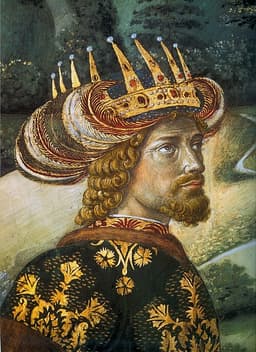
John VIII Palaiologos
Emperor · Medieval
41.3Total
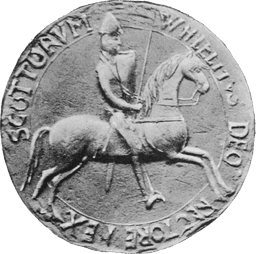
William the Lion
Emperor · Medieval
50.8Total
Basic Information
Born
1392
1143
Died
1448
1214
Era
Medieval
Medieval
Nationality
Byzantine Empire
Scotland
Occupation
Emperor
Emperor
Civilization
Western
Western
Score Comparison
Military (10%)
10.2
45.0
Political (20%)
36.5
45.1
Influence (20%)
53.3
54.9
Legacy (20%)
45.0
47.5
Leadership (15%)
41.5
67.0
Strategy (15%)
39.6
38.6
TOTAL
41.3
50.8
John VIII Palaiologos — Complete Timeline
1438 AD
Travel to Italy for the Council of FlorencePolitical Action◆ Major
John VIII traveled to Italy with a large delegation of Orthodox clergy to participate in the Council of Florence, which aimed to negotiate church union. His presence underscored the Byzantine Empire's desperation for Western aid.
CouncilDiplomacyByzantine Empire
Impact: regional
1439 AD
Acceptance of the Union of FlorencePolitical Action◆ Major
John VIII Palaiologos, as Byzantine emperor, agreed to the Union of Florence, which temporarily reunited the Eastern Orthodox Church with the Roman Catholic Church under papal authority. This was done to secure Western military aid against the Ottoman Empire, but the union was widely rejected by the Byzantine populace and clergy.
Church UnionDiplomacyOttoman Wars
Impact: regionaldestructive
1448 AD
Death embittered after failed union and Ottoman advancesOther
John VIII died embittered, having failed to secure effective Western military support despite the Union of Florence. The Ottoman Empire continued its conquests, and the union deepened internal divisions within Byzantium.
DeathByzantine EmpireOttoman Wars
Impact: nationaltragic
William the Lion — Complete Timeline
1174 AD
Capture at AlnwickWar
William the Lion was captured by English forces near Alnwick Castle during an invasion of Northumberland. He was taken prisoner to England, leading to the Treaty of Falaise where Scotland became a vassal state of England.
CaptureAnglo-Scottish WarVassalage
Impact: nationaldestructive
Treaty of FalaisePolitical Action◆ Major
William the Lion signed the Treaty of Falaise, acknowledging Henry II of England as his feudal overlord. Scotland's castles were garrisoned by English troops, and William paid homage to the English king.
TreatyVassalageAnglo-Scottish Relations
Impact: nationaldestructive
1178 AD
Foundation of Arbroath AbbeyCultural
William the Lion founded Arbroath Abbey in Angus, dedicated to St. Thomas Becket. The abbey became a major religious center and later the site where the Declaration of Arbroath was drafted in 1320.
FoundationReligionArchitecture
Impact: nationalconstructive
1189 AD
Purchase of Quitclaim of CanterburyPolitical Action
William the Lion paid 10,000 marks to Richard I of England to annul the Treaty of Falaise. This purchase restored Scotland's independence and ended English overlordship, with all English garrisons withdrawn from Scottish castles.
IndependenceTreatyDiplomacy
Impact: nationalconstructive
Expert Analysis
Origins
John VIII Palaiologos was born in 1392 to Emperor Manuel II Palaiologos and Helena Dragaš, part of the final dynasty of a declining Byzantine Empire. He received a thorough education in Constantinople, steeped in Orthodox theology and classical learning, but grew up witnessing the relentless Ottoman encirclement of what remained of Byzantine territory. His father had already traveled to Western Europe seeking aid, setting a precedent for John’s own diplomatic missions.
William the Lion, born around 1143, was the grandson of David I of Scotland and son of Henry of Scotland. He became Earl of Northumberland before ascending the throne. His upbringing was shaped by the ongoing struggles between Scotland and England, as well as the internal dynamics of the Scottish nobility. He inherited a kingdom that had expanded under David I but faced pressure from the Angevin Empire under Henry II.
Rise to Power
John VIII became co-emperor with his father in 1416 and sole emperor upon Manuel II’s death in 1425. His reign was dominated by the existential threat of the Ottoman Empire. With Constantinople’s population dwindling and its territory reduced to the city itself and the Peloponnese, John sought help from Western Europe. He personally led a delegation to the Council of Ferrara-Florence in 1438–1439, negotiating a union of the Eastern and Western churches in exchange for a crusade. The union was proclaimed in 1439, but it alienated much of his Orthodox clergy and populace.
William the Lion became King of Scotland in 1165 upon the death of his brother Malcolm IV. He immediately pursued a more aggressive policy toward England, seeking to recover Northumberland, which his grandfather had once controlled. In 1173, he joined the rebellion of Henry II’s sons against their father. This culminated in his capture at Alnwick in 1174 during an invasion of Northumberland. He was taken to England and forced to sign the Treaty of Falaise, acknowledging Henry II as his feudal overlord and allowing English garrisons in Scottish castles.
Leadership & Governance
John VIII’s leadership was focused on survival through diplomacy. He scored 41.5 in leadership, reflecting his ability to navigate the treacherous politics of the time but also his failure to inspire decisive action. His governance was marked by the controversial Union of Florence, which he saw as necessary for military aid but which deeply divided his court and church. The union was never effectively implemented, and the promised crusade—the Crusade of Varna in 1444—ended in disaster at the Battle of Varna.
William the Lion, with a leadership score of 67.0, was more effective in consolidating power. He worked to strengthen royal authority, founded Arbroath Abbey in 1178, and patronized the church. His capture and the Treaty of Falaise were humiliating, but he later used diplomacy to reverse them. He paid 10,000 marks to Richard I in 1189 to annul the treaty via the Quitclaim of Canterbury, restoring Scotland’s independence. His reign also saw the development of burghs and trade.
Triumph & Tragedy
John VIII’s greatest success was securing the Union of Florence, a diplomatic feat that momentarily brought East and West together. However, the tragedy was that the union failed to deliver the military support needed. The Ottoman victory at Varna in 1444 sealed the fate of Constantinople. John died in 1448, embittered and disillusioned, with the empire in terminal decline. His policy alienated his own people and weakened internal cohesion.
William the Lion’s triumph was the Quitclaim of Canterbury, which freed Scotland from English overlordship and ended a 15-year period of subjugation. His tragedy was the capture at Alnwick and the Treaty of Falaise, which temporarily reduced Scotland to a vassal state. However, he learned from his mistakes and ultimately secured independence, laying groundwork for the later Declaration of Arbroath.
Character & Destiny
John VIII was a determined but tragic figure, driven by the desperate need for Western aid. His willingness to sacrifice theological principles for political gain shows a pragmatism that ultimately failed. He scored 39.6 in strategy, indicating that his long-term planning was undermined by unrealistic expectations of Western help. His character—persistent but inflexible—led him down a path that ended in despair.
William the Lion was more resilient and adaptable. Despite his early military defeat, he used his captivity to negotiate favorable terms later. His character combined aggression with pragmatism, as seen in his willingness to pay a large sum for independence rather than continue futile conflict. His strategic score of 38.6 is modest, but his political and leadership scores reflect his ability to recover from setbacks.
Legacy
John VIII’s legacy is mixed. The Union of Florence is remembered as a failed attempt to save Byzantium, and his death marked the end of meaningful resistance. His influence score of 53.3 reflects the historical importance of his actions, even if unsuccessful. The union later became a point of contention in Orthodox-Catholic relations. He is often seen as a tragic figure who tried to do the right thing but failed.
William the Lion’s legacy is more positive. His restoration of Scottish independence is a key moment in the nation’s history. The Quitclaim of Canterbury is celebrated as a diplomatic victory. Arbroath Abbey became the site of the Declaration of Arbroath in 1320, a seminal document in Scottish identity. His legacy score of 47.5 is solid, reflecting his role in shaping Scotland’s sovereignty.
Conclusion
William the Lion had a greater impact on history than John VIII Palaiologos. While John’s efforts were noble, they ultimately failed to prevent the fall of Constantinople, whereas William’s actions secured Scotland’s independence for centuries. The total score gap of 9.5 points (William 50.8 vs John 41.3) reflects this. William’s leadership score of 67.0 starkly contrasts with John’s 41.5, and his ability to reverse a defeat into a lasting victory demonstrates superior statecraft. John’s story is one of tragic failure; William’s is one of successful recovery.
Rankings
🥇
William the LionLeader
Mil: 45.0Pol: 45.1Inf: 54.9
50.8
🥈
John VIII Palaiologos
Mil: 10.2Pol: 36.5Inf: 53.3
41.3
+9.5 behind
How This Comparison Works
Algorithm
Each figure is scored on 6 dimensions (0—100 scale) based on structured historical data: Military (10%), Political (20%), Influence (20%), Legacy (20%), Leadership (15%), Strategy (15%). The weighted total produces the final ranking.
Data Sources
Scores are computed from structured sub-indicators in the database. Scale factors adjust for era (Ancient ×0.85, Modern ×1.0) and civilization size (Eastern ×1.05, Other ×0.80) to account for differences in population and military scale.
Maximum 3 Figures
Comparisons are limited to 2—3 figures to ensure readability and statistical meaningfulness.
Error Margins
±5 points per dimension — Sub-scores are derived from historical records with inherent uncertainty. Two figures within 5 points on a dimension should be considered roughly equivalent in that area.
Total Score Accuracy
±3 points overall — The weighted combination of 6 dimensions produces a total score with approximately ±3 points of uncertainty. Differences of less than 3 points are not statistically significant— the figures are effectively tied.
Known Limitations
- Historical records are incomplete and uneven across civilizations
- Figures from oral-tradition societies may be underrepresented
- Occupation labels can misclassify multi-role figures
- Scores measure capability and impact, not moral character
- Quantitative scoring is a comparison tool, not absolute truth
Capability Radar
Military (10%) — Battles & Warfare
Battles
10
30
Win Rate
10
25
Expansion
5
20
Political (20%) — Governance & Reform
Reform
20
40
Diplomacy
60
50
Economy
15
35
Influence (20%) — Cultural & Global Reach
Cultural
30
30
Global
30
20
Legacy (20%) — Historical Impact
Historical
40
40
Longevity
30
35
Leadership (15%) — Power & Stability
Tenure
40
60
Stability
10
30
Strategy (15%) — Tactics & Innovation
Strategy
10
25
Tactics
10
20
Reform
5
15
Similar Comparisons
Comments & Discussion
No comments yet. Be the first to share your thoughts!