Loading...
Harun al-Rashid vs William the Lion
Harun al-Rashid leads by 20.5 pts · 2 figures compared
…
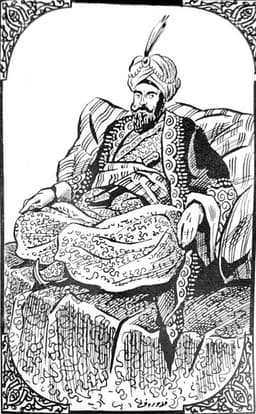
Harun al-Rashid
Emperor · Medieval
71.3Total
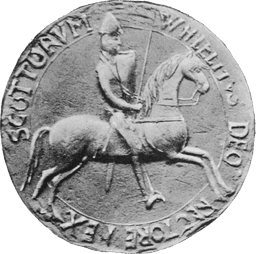
William the Lion
Emperor · Medieval
50.8Total
Basic Information
Born
763
1143
Died
809
1214
Era
Medieval
Medieval
Nationality
Abbasid Caliphate
Scotland
Occupation
Emperor
Emperor
Civilization
Middle Eastern
Western
Score Comparison
Military (10%)
72.5
45.0
Political (20%)
70.0
45.1
Influence (20%)
71.0
54.9
Legacy (20%)
80.0
47.5
Leadership (15%)
72.0
67.0
Strategy (15%)
50.0
38.6
TOTAL
71.3
50.8
Harun al-Rashid — Complete Timeline
786 AD
Accession to the CaliphatePolitical Action◆ Major
Harun al-Rashid became the fifth Abbasid caliph after the death of his brother Al-Hadi. His reign marked the beginning of a period of cultural and economic flourishing, often considered the zenith of Abbasid power.
SuccessionCaliphateGolden Age
Impact: regionalconstructive
Patronage of the Arts and SciencesCultural◆ Major
Harun al-Rashid's court in Baghdad became a center of learning and culture, attracting poets, scholars, and musicians. His patronage fostered the development of Arabic literature, including the tales later compiled as One Thousand and One Nights.
CulturePatronageLiterature
Impact: globalconstructive
790 AD
Military Campaigns Against ByzantiumWar
Harun al-Rashid led several campaigns into Byzantine Anatolia, capturing fortresses and extracting tribute. These raids, though not resulting in permanent conquest, demonstrated Abbasid military strength and secured the frontier.
Byzantine WarsMilitary CampaignFrontier
Impact: regional
797 AD
Diplomatic Exchange with CharlemagnePolitical Action◆ Major
Harun al-Rashid sent an embassy to the Frankish emperor Charlemagne, including gifts such as an elephant named Abul-Abbas. This exchange established diplomatic relations between the Abbasid Caliphate and the Carolingian Empire, facilitating trade and cultural contact.
DiplomacyCharlemagneInternational Relations
Impact: globalconstructive
803 AD
Suppression of the BarmakidsPolitical Action◆ Major
Harun al-Rashid ordered the execution of the powerful Barmakid family, who had served as viziers for decades. This purge removed a major political faction and consolidated Harun's personal authority, but also disrupted the administration.
PurgeBarmakidsPower Struggle
Impact: regionaldestructive
William the Lion — Complete Timeline
1174 AD
Capture at AlnwickWar
William the Lion was captured by English forces near Alnwick Castle during an invasion of Northumberland. He was taken prisoner to England, leading to the Treaty of Falaise where Scotland became a vassal state of England.
CaptureAnglo-Scottish WarVassalage
Impact: nationaldestructive
Treaty of FalaisePolitical Action◆ Major
William the Lion signed the Treaty of Falaise, acknowledging Henry II of England as his feudal overlord. Scotland's castles were garrisoned by English troops, and William paid homage to the English king.
TreatyVassalageAnglo-Scottish Relations
Impact: nationaldestructive
1178 AD
Foundation of Arbroath AbbeyCultural
William the Lion founded Arbroath Abbey in Angus, dedicated to St. Thomas Becket. The abbey became a major religious center and later the site where the Declaration of Arbroath was drafted in 1320.
FoundationReligionArchitecture
Impact: nationalconstructive
1189 AD
Purchase of Quitclaim of CanterburyPolitical Action
William the Lion paid 10,000 marks to Richard I of England to annul the Treaty of Falaise. This purchase restored Scotland's independence and ended English overlordship, with all English garrisons withdrawn from Scottish castles.
IndependenceTreatyDiplomacy
Impact: nationalconstructive
Expert Analysis
Origins
Harun al-Rashid was born in 766 in Rayy, Iran, to the Abbasid caliph al-Mahdi and a Yemeni slave concubine named al-Khayzuran. He received a thorough education in Islamic sciences, literature, and military tactics, and was appointed governor of Armenia and Azerbaijan at a young age. His early exposure to court politics and military campaigns shaped his later rule.
William the Lion was born around 1143, the son of Henry of Scotland, Earl of Huntingdon, and Ada de Warenne. He inherited the Scottish throne in 1165 after the death of his brother Malcolm IV. William was raised in a period of English dominance over Scotland, which defined his quest for independence.
Rise to Power
Harun al-Rashid became caliph in 786 after the death of his brother al-Hadi, amid rumors of poisoning. He quickly consolidated power by appointing the Barmakid family as viziers, who managed the empire efficiently. His reign saw the Abbasid Caliphate at its peak, with Baghdad as a global center of trade and culture.
William the Lion ascended to the Scottish throne in 1165, inheriting a kingdom that was de facto subordinate to England. He sought to assert Scottish independence by exploiting conflicts between England and France. In 1173, he joined a rebellion against Henry II of England, hoping to gain territory in Northumberland.
Leadership & Governance
Harun al-Rashid's governance was characterized by delegation to capable ministers, particularly the Barmakids, who oversaw administration and finance. He was a patron of the arts and sciences, founding the House of Wisdom in Baghdad, which translated Greek and Persian works. His military strategy scored 50.0, reflecting limited territorial expansion despite numerous campaigns against Byzantium.
William the Lion's leadership was marked by his military ambition but poor strategic execution. His overall military score is 45.0, dragged down by his capture at Alnwick in 1174. Politically, he scored 45.1, as his treaty with England temporarily subjugated Scotland. However, his persistence led to the Quitclaim of Canterbury in 1189, which restored independence.
Triumph & Tragedy
Harun al-Rashid's greatest triumph was the cultural flourishing of Baghdad, exemplified by the stories of One Thousand and One Nights. His diplomatic exchange with Charlemagne in 801, including the gift of an elephant, symbolized his reach. However, his tragic turn came in 803 when he purged the Barmakids, destroying the very institution that underpinned his success. This act destabilized the caliphate and contributed to its decline.
William the Lion's triumph was the Quitclaim of Canterbury (1189), which annulled the Treaty of Falaise and restored Scottish independence. He paid 10,000 marks to Richard I, but secured freedom from English overlordship. His tragedy was his capture at Alnwick in 1174, which led to the humiliating Treaty of Falaise, where he acknowledged Henry II as his feudal lord. This event scored a political low of 45.1.
Character & Destiny
Harun al-Rashid was known for his piety and cruelty, often leading pilgrimages to Mecca while ordering executions. His decision to eliminate the Barmakids reflected a paranoid streak that undermined his own power. Historians assess him as a capable ruler whose cultural patronage outshone his military achievements. His legacy score of 80.0 reflects this enduring image.
William the Lion was tenacious but reckless. His invasion of Northumberland in 1174 was poorly planned, leading to capture. Yet his determination to free Scotland from English domination shaped his later success. He is remembered as a king who secured independence despite initial failures. His overall score of 50.8 indicates a less impactful reign compared to Harun.
Legacy
Harun al-Rashid's legacy is immense: his patronage of arts and sciences catalyzed the Islamic Golden Age. The House of Wisdom influenced generations of scholars, and his court became a symbol of cultural sophistication. His diplomatic ties with Charlemagne set precedents for intercultural exchange. He scored 71.0 in influence and 80.0 in legacy.
William the Lion's legacy is more localized: he founded Arbroath Abbey in 1178, which later hosted the Declaration of Arbroath (1320), a cornerstone of Scottish independence. His purchase of the Quitclaim of Canterbury ended English overlordship, paving the way for Scotland's sovereignty. However, his impact is overshadowed by later figures like Robert the Bruce. His legacy score of 47.5 reflects this limited reach.
Conclusion
Harun al-Rashid had a greater impact than William the Lion, with a total score of 71.3 versus 50.8. His cultural contributions shaped the Islamic world for centuries, while William's achievements were largely reactive and temporary. Harun's patronage of knowledge influenced global history, whereas William's independence struggle, though important for Scotland, did not change the broader course of history. Therefore, Harun al-Rashid stands as the more significant figure.
Rankings
🥇
Harun al-RashidLeader
Mil: 72.5Pol: 70.0Inf: 71.0
71.3
🥈
William the Lion
Mil: 45.0Pol: 45.1Inf: 54.9
50.8
+20.5 behind
How This Comparison Works
Algorithm
Each figure is scored on 6 dimensions (0—100 scale) based on structured historical data: Military (10%), Political (20%), Influence (20%), Legacy (20%), Leadership (15%), Strategy (15%). The weighted total produces the final ranking.
Data Sources
Scores are computed from structured sub-indicators in the database. Scale factors adjust for era (Ancient ×0.85, Modern ×1.0) and civilization size (Eastern ×1.05, Other ×0.80) to account for differences in population and military scale.
Maximum 3 Figures
Comparisons are limited to 2—3 figures to ensure readability and statistical meaningfulness.
Error Margins
±5 points per dimension — Sub-scores are derived from historical records with inherent uncertainty. Two figures within 5 points on a dimension should be considered roughly equivalent in that area.
Total Score Accuracy
±3 points overall — The weighted combination of 6 dimensions produces a total score with approximately ±3 points of uncertainty. Differences of less than 3 points are not statistically significant— the figures are effectively tied.
Known Limitations
- Historical records are incomplete and uneven across civilizations
- Figures from oral-tradition societies may be underrepresented
- Occupation labels can misclassify multi-role figures
- Scores measure capability and impact, not moral character
- Quantitative scoring is a comparison tool, not absolute truth
Capability Radar
Military (10%) — Battles & Warfare
Battles
60
30
Win Rate
65
25
Expansion
55
20
Political (20%) — Governance & Reform
Reform
70
40
Diplomacy
80
50
Economy
85
35
Influence (20%) — Cultural & Global Reach
Cultural
90
30
Global
85
20
Legacy (20%) — Historical Impact
Historical
85
40
Longevity
90
35
Leadership (15%) — Power & Stability
Tenure
75
60
Stability
70
30
Strategy (15%) — Tactics & Innovation
Strategy
60
25
Tactics
55
20
Reform
50
15
Similar Comparisons
Comments & Discussion
No comments yet. Be the first to share your thoughts!