Loading...
This comparison has not been analyzed yet.
One-time AI generation (~1 minute). Scores and timeline are already available below.
Tian Yu vs Yue Yi
Yue Yi leads by 6.5 pts · 2 figures compared
…

Tian Yu
General · Ancient
43.3Total
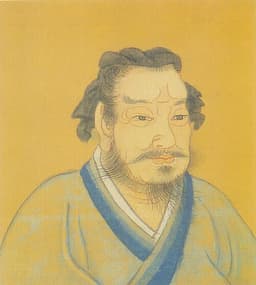
Yue Yi
General · Ancient
49.8Total
Basic Information
Born
170
-310
Died
252
-259
Era
Ancient
Ancient
Nationality
China
China
Occupation
General
General
Civilization
Eastern
Eastern
Score Comparison
Military (10%)
60.0
75.0
Political (20%)
27.9
26.4
Influence (20%)
47.1
53.3
Legacy (20%)
39.2
50.0
Leadership (15%)
43.8
36.9
Strategy (15%)
50.0
70.0
TOTAL
43.3
49.8
Tian Yu — Complete Timeline
220 AD
Campaign against the XianbeiWar
Tian Yu led Wei forces against the Xianbei tribes raiding the northern frontier. He employed a strategy of building forts and using cavalry to intercept raiders, stabilizing the border region.
Three KingdomsFrontierXianbei
Impact: regional
230 AD
Defense of YanmenWar◆ Major
Tian Yu defended Yanmen Commandery against a Xianbei invasion. He used a feigned retreat to lure the enemy into an ambush, killing their leader and scattering the tribe. This victory secured the northern frontier for years.
Three KingdomsBattleXianbei
Impact: regional
240 AD
Governor of You ProvincePolitical Action◆ Major
Tian Yu was appointed Governor of You Province, overseeing Wei's northern territories. He implemented policies to integrate non-Chinese tribes into the Wei state, reducing border conflicts through diplomacy and trade.
Three KingdomsGovernanceDiplomacy
Impact: regionalconstructive
249 AD
Battle of GaopinglingWar
Tian Yu supported Sima Yi's coup against Cao Shuang. He led troops to secure key positions in the capital, ensuring the success of the coup. This event marked the rise of the Sima family's control over Wei.
Three KingdomsCoupSima Yi
Impact: national
Yue Yi — Complete Timeline
284 BC
Alliance of Five StatesWar◆ Major
Yue Yi formed a coalition of five states
CoalitionDiplomacyWarring States
Impact: regional
Conquest of Qi CitiesWar◆ Major
Yue Yi led the coalition forces to a series of victories, capturing over 70 cities of Qi, including the capital Linzi. Qi was reduced to only two remaining cities, Ju and Jimo, and was on the verge of total annihilation.
Qi ConquestMilitary CampaignYan Victory
Impact: regional
Appointment as General of YanPolitical Action◆ Major
King Zhao of Yan appointed Yue Yi as general to lead a campaign against the state of Qi. Yue Yi had previously served in Wei and Zhao, but his talents were recognized by King Zhao, who trusted him with the command of the Yan army.
Yan StateAppointmentQi Campaign
Impact: regional
279 BC
Exile to ZhaoPolitical Action◆ Major
After King Zhao of Yan died, his successor King Hui distrusted Yue Yi due to slander from Qi spies. Yue Yi fled to the state of Zhao to avoid execution. His departure allowed Qi to recover under Tian Dan and recapture its lost cities.
ExileYan StateQi Recovery
Impact: regionaltragic
This comparison has not been analyzed yet.
One-time AI generation (~1 minute). Scores and timeline are already available below.
Rankings
🥇
Yue YiLeader
Mil: 75.0Pol: 26.4Inf: 53.3
49.8
🥈
Tian Yu
Mil: 60.0Pol: 27.9Inf: 47.1
43.3
+6.5 behind
How This Comparison Works
Algorithm
Each figure is scored on 6 dimensions (0—100 scale) based on structured historical data: Military (10%), Political (20%), Influence (20%), Legacy (20%), Leadership (15%), Strategy (15%). The weighted total produces the final ranking.
Data Sources
Scores are computed from structured sub-indicators in the database. Scale factors adjust for era (Ancient ×0.85, Modern ×1.0) and civilization size (Eastern ×1.05, Other ×0.80) to account for differences in population and military scale.
Maximum 3 Figures
Comparisons are limited to 2—3 figures to ensure readability and statistical meaningfulness.
Error Margins
±5 points per dimension — Sub-scores are derived from historical records with inherent uncertainty. Two figures within 5 points on a dimension should be considered roughly equivalent in that area.
Total Score Accuracy
±3 points overall — The weighted combination of 6 dimensions produces a total score with approximately ±3 points of uncertainty. Differences of less than 3 points are not statistically significant— the figures are effectively tied.
Known Limitations
- Historical records are incomplete and uneven across civilizations
- Figures from oral-tradition societies may be underrepresented
- Occupation labels can misclassify multi-role figures
- Scores measure capability and impact, not moral character
- Quantitative scoring is a comparison tool, not absolute truth
Capability Radar
Military (10%) — Battles & Warfare
Battles
45
75
Win Rate
50
80
Expansion
25
70
Political (20%) — Governance & Reform
Reform
20
20
Diplomacy
45
50
Economy
25
25
Influence (20%) — Cultural & Global Reach
Cultural
20
40
Global
10
30
Legacy (20%) — Historical Impact
Historical
25
60
Longevity
20
50
Leadership (15%) — Power & Stability
Tenure
40
40
Stability
40
30
Strategy (15%) — Tactics & Innovation
Strategy
50
90
Tactics
55
85
Reform
30
30
Similar Comparisons
Comments & Discussion
No comments yet. Be the first to share your thoughts!