Loading...
Tiberius vs Trajan
Trajan leads by 24.7 pts · 2 figures compared
…
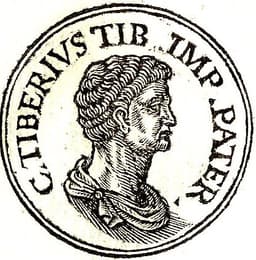
Tiberius
Emperor · Ancient
51.3Total

Trajan
Emperor · Ancient
76.0Total
Basic Information
Born
-42
53
Died
37
117
Era
Ancient
Ancient
Nationality
Roman Empire
Roman Empire
Occupation
Emperor
Emperor
Civilization
Western
Western
Score Comparison
Military (10%)
20.0
86.0
Political (20%)
68.0
79.2
Influence (20%)
54.1
82.0
Legacy (20%)
49.2
65.6
Leadership (15%)
53.2
73.2
Strategy (15%)
52.5
76.0
TOTAL
51.3
76.0
Tiberius — Complete Timeline
14 AD
Accession as Roman EmperorPolitical Action◆ Major
Upon Augustus's death, Tiberius became the second Roman emperor. He was adopted by Augustus and had been given tribunician power and imperium, ensuring a smooth transition of power.
SuccessionImperial RuleAugustus
Impact: global
19 AD
Germanicus's Death and AftermathOther◆ Major
Tiberius's adopted son and heir Germanicus died under suspicious circumstances in Syria. Tiberius was suspected of involvement, leading to public grief and political tension.
DeathSuccessionSuspicion
Impact: nationaltragic
26 AD
Retirement to CapriPolitical Action◆ Major
Tiberius withdrew from Rome to the island of Capri, leaving administration to the Praetorian Prefect Sejanus. This retreat led to a power vacuum and Sejanus's eventual execution for conspiracy.
RetirementSejanusAdministration
Impact: nationaldestructive
31 AD
Execution of SejanusPolitical Action◆ Major
Tiberius ordered the arrest and execution of Sejanus, his powerful Praetorian Prefect, for plotting against him. Sejanus's family and supporters were also purged, restoring Tiberius's control.
PurgePraetorian GuardConspiracy
Impact: nationaldestructive
Reign of Terror (Tiberius)Political Action◆ Major
After Sejanus's fall, Tiberius conducted a series of treason trials and executions, targeting senators and equestrians. Many were condemned on flimsy charges, creating an atmosphere of fear.
Treason TrialsPolitical RepressionTerror
Impact: nationaldestructive
Trajan — Complete Timeline
101 AD
Implemented the Alimenta Welfare ProgramReform◆ Major
Trajan expanded the Alimenta program, a state-funded welfare system that provided food subsidies and educational support for poor children in Italy. The program used interest from state loans to landowners to fund the distributions, aiming to boost the Italian population and agricultural economy.
WelfareSocial PolicyItaly
Impact: regionalconstructive
105 AD
Built Trajan's Bridge over the DanubeOther
Trajan ordered the construction of a massive stone and timber bridge across the Danube River near the Iron Gates. Designed by Apollodorus of Damascus, it was the longest arch bridge in the world for over a millennium, facilitating the Roman invasion of Dacia.
EngineeringBridgeDanube
Impact: regionalconstructive
106 AD
Conquered DaciaWar
Trajan led two major campaigns against the Dacian kingdom under King Decebalus, culminating in the conquest of Dacia (modern Romania) in 106 CE. The victory brought vast gold and silver mines under Roman control and established a new province, funding massive building projects in Rome.
DaciaConquestProvince
Impact: regional
112 AD
Built Trajan's Forum and MarketCultural◆ Major
Trajan commissioned the construction of Trajan's Forum, a vast complex in Rome including a basilica, libraries, and the Column of Trajan. The adjacent Trajan's Market, a multi-level commercial center, demonstrated Roman engineering prowess and served as a model for urban planning.
ArchitectureRomeUrban Planning
Impact: globalconstructive
116 AD
Conquered Parthia and Reached the Persian GulfWar◆ Major
Trajan launched a campaign against the Parthian Empire, capturing its capital Ctesiphon and annexing Mesopotamia. He reached the Persian Gulf, marking the easternmost extent of Roman territory. However, rebellions in the conquered territories forced a withdrawal shortly after.
ParthiaMesopotamiaExpansion
Impact: global
Expert Analysis
Origins
Tiberius Claudius Nero was born in 42 BCE to a prominent patrician family. His father, also Tiberius Claudius Nero, was a naval commander for Julius Caesar, but the family's fortunes shifted after Caesar's assassination. Tiberius's mother Livia divorced his father to marry Octavian (later Augustus) in 38 BCE, bringing Tiberius into the imperial household. He received a rigorous education in rhetoric, law, and military tactics, but his reserved and melancholic nature set him apart from the more charismatic Julians.
Trajan was born Marcus Ulpius Traianus in 53 CE in Italica, Hispania Baetica (modern Spain), making him the first emperor from a provincial background. His family was of Italian origin but had settled in Spain. His father, also Marcus Ulpius Traianus, was a distinguished senator and governor under Vespasian. Trajan grew up in military camps and provincial administrations, absorbing a practical, no-nonsense approach to governance. He served as a legionary tribune in Syria and later as a praetor, gaining firsthand experience of frontier defense.
Rise to Power
Tiberius's path to power was indirect and reluctant. After Augustus's chosen heirs died—first Marcellus, then Agrippa, then his grandsons Gaius and Lucius—Augustus was forced to adopt Tiberius in 4 CE. Tiberius had previously retired to Rhodes in 6 BCE, disenchanted with court life. Upon adoption, he was granted tribunician power and proconsular imperium, effectively making him co-ruler. When Augustus died in 14 CE, Tiberius assumed power smoothly, but his accession was met with suspicion and a mutiny among the Rhine legions, which he and his adopted son Germanicus suppressed.
Trajan's rise was more straightforward. He was adopted by Emperor Nerva in 97 CE, after a mutiny by the Praetorian Guard forced Nerva to choose a popular military commander as successor. Trajan, then governor of Upper Germany, was acclaimed emperor in 98 CE upon Nerva's death. He delayed entering Rome to inspect the Rhine and Danube frontiers, securing the loyalty of the armies. His accession was universally welcomed by the Senate and people.
Leadership & Governance
Tiberius ruled with a cautious, legalistic approach. He respected the Senate's authority initially, allowing it to debate and decide on many matters, but his suspicion and indecisiveness led him to rely heavily on the Praetorian Prefect Sejanus. He centralized power in the imperial bureaucracy but withdrew from active governance after 26 CE, retiring to Capri. From there, he communicated through letters, often ambiguous, leading to a reign of terror after Sejanus's execution in 31 CE. Treason trials multiplied, and many senators were executed or forced to suicide. Tiberius's political score of 68.0 reflects his initial competence but ultimate failure to maintain stable governance.
Trajan was an active, hands-on ruler. He traveled extensively, inspected provinces, and personally led military campaigns. He maintained good relations with the Senate, avoiding the purges that marked earlier reigns. His governance was marked by pragmatic reforms: he expanded the Alimenta welfare program to support poor children in Italy, commissioned massive public works (Trajan's Forum, markets, aqueducts), and improved provincial administration by appointing honest governors. He scored 79.2 in political skill, reflecting his ability to balance autocratic power with senatorial cooperation.
Triumph & Tragedy
Tiberius's greatest success was securing the empire's stability after Augustus's death. He maintained the Augustan system, managed the economy prudently, and ensured the Rhine and Danube frontiers were defended. He also annexed Cappadocia and consolidated Roman control in the East. However, his greatest failure was his retreat to Capri and the subsequent reign of terror. His paranoia destroyed the trust between emperor and Senate, and his reign set a precedent for imperial tyranny. The suspicious death of Germanicus in 19 CE tarnished his reputation, even if he was not directly responsible. His legacy score of 49.2 reflects this mixed record.
Trajan's greatest triumphs were his military conquests. He conquered Dacia in two campaigns (101-102 and 105-106 CE), securing vast gold mines and territory. He then invaded Parthia in 114-117 CE, capturing Ctesiphon and annexing Mesopotamia, reaching the Persian Gulf. These campaigns expanded the empire to its greatest territorial extent. His building projects, including Trajan's Column and the Forum, remain iconic. However, his overextension in Parthia led to supply problems and revolts; after his death in 117 CE, Hadrian abandoned the conquered territories. Trajan's military score of 86.0 reflects his success, but the Parthian campaign was strategically unsustainable.
Character & Destiny
Tiberius was intelligent, cynical, and deeply suspicious. His character was shaped by his forced adoption and the intrigues of the Julio-Claudian court. He was capable of effective governance but lacked the charisma to inspire loyalty. His decision to retire to Capri was a fatal flaw: it allowed Sejanus to accumulate power and created a atmosphere of fear. Ancient historians like Tacitus and Suetonius depict him as a tyrant who indulged in perversions on Capri, though modern scholars view these accounts with skepticism. His destiny was to be remembered as the gloomy, reclusive emperor who failed to live up to Augustus's legacy.
Trajan was energetic, confident, and approachable. He was known for his justice and humility, often walking among citizens without guards. He was a brilliant general who led from the front, earning the loyalty of his troops. His character enabled him to unite the empire and project strength. He was deified after death, and his reputation as the 'optimus princeps' (best ruler) endured. His destiny was to embody the ideal Roman emperor: a successful warrior and benevolent administrator.
Legacy
Tiberius's legacy is largely negative. His reign demonstrated the dangers of imperial withdrawal and the potential for tyranny within the principate. The treason trials under him set a precedent that later emperors like Caligula and Nero would exploit. However, his administrative and financial policies kept the empire stable, and his cautious frontier policy preserved Augustus's gains. He is remembered primarily through the hostile accounts of Tacitus and Suetonius, which shaped his image as a paranoid tyrant.
Trajan's legacy is overwhelmingly positive. He was considered the 'optimus princeps' by the Senate, and his model of energetic, military emperorship influenced later rulers. His conquests enriched the empire and funded massive building projects. The Alimenta program was a precursor to state welfare. Trajan's Column remains a masterpiece of Roman art. His reputation was so high that every later emperor was honored with the wish 'felicior Augusto, melior Traiano' (may you be luckier than Augustus and better than Trajan). He scored 65.6 in legacy, reflecting his enduring fame.
Conclusion
Comparing Tiberius and Trajan reveals a stark contrast in effectiveness and impact. Trajan scored 76.0 overall to Tiberius's 51.3, a gap of 24.7 points. In military terms, Trajan's 86.0 dwarfs Tiberius's 20.0; Trajan expanded the empire, while Tiberius barely maintained it. Politically, Trajan's 79.2 exceeded Tiberius's 68.0, as Trajan worked with the Senate while Tiberius alienated it. In leadership, Trajan's 73.2 to Tiberius's 53.2 shows the difference between an active ruler and a reluctant recluse. Trajan's influence score of 82.0 versus Tiberius's 54.1 reflects his lasting model of good governance. While Tiberius's reign had administrative merits, his failures in judgment and the reign of terror undermine his achievements. Trajan's positive legacy, military success, and effective governance make him clearly the greater emperor. Historical consensus supports this: Trajan is ranked among the 'Five Good Emperors,' while Tiberius is often listed among the worst.
Rankings
🥇
TrajanLeader
Mil: 86.0Pol: 79.2Inf: 82.0
76.0
🥈
Tiberius
Mil: 20.0Pol: 68.0Inf: 54.1
51.3
+24.7 behind
How This Comparison Works
Algorithm
Each figure is scored on 6 dimensions (0—100 scale) based on structured historical data: Military (10%), Political (20%), Influence (20%), Legacy (20%), Leadership (15%), Strategy (15%). The weighted total produces the final ranking.
Data Sources
Scores are computed from structured sub-indicators in the database. Scale factors adjust for era (Ancient ×0.85, Modern ×1.0) and civilization size (Eastern ×1.05, Other ×0.80) to account for differences in population and military scale.
Maximum 3 Figures
Comparisons are limited to 2—3 figures to ensure readability and statistical meaningfulness.
Error Margins
±5 points per dimension — Sub-scores are derived from historical records with inherent uncertainty. Two figures within 5 points on a dimension should be considered roughly equivalent in that area.
Total Score Accuracy
±3 points overall — The weighted combination of 6 dimensions produces a total score with approximately ±3 points of uncertainty. Differences of less than 3 points are not statistically significant— the figures are effectively tied.
Known Limitations
- Historical records are incomplete and uneven across civilizations
- Figures from oral-tradition societies may be underrepresented
- Occupation labels can misclassify multi-role figures
- Scores measure capability and impact, not moral character
- Quantitative scoring is a comparison tool, not absolute truth
Capability Radar
Military (10%) — Battles & Warfare
Battles
45
95
Win Rate
50
98
Expansion
20
95
Political (20%) — Governance & Reform
Reform
65
88
Diplomacy
60
85
Economy
55
90
Influence (20%) — Cultural & Global Reach
Cultural
40
85
Global
45
85
Legacy (20%) — Historical Impact
Historical
55
90
Longevity
50
88
Leadership (15%) — Power & Stability
Tenure
70
90
Stability
50
92
Strategy (15%) — Tactics & Innovation
Strategy
60
92
Tactics
55
88
Reform
40
85
Similar Comparisons
Comments & Discussion
No comments yet. Be the first to share your thoughts!