Loading...
Beopheung of Silla vs Tiberius
Beopheung of Silla leads by 3.0 pts · 2 figures compared
…

Beopheung of Silla
Emperor · Ancient
54.3Total
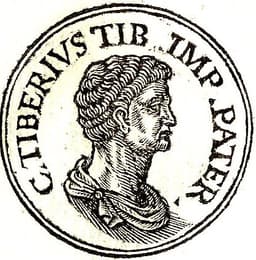
Tiberius
Emperor · Ancient
51.3Total
Basic Information
Born
487
-42
Died
514
37
Era
Ancient
Ancient
Nationality
Korea
Roman Empire
Occupation
Emperor
Emperor
Civilization
Eastern
Western
Score Comparison
Military (10%)
25.9
20.0
Political (20%)
68.0
68.0
Influence (20%)
54.9
54.1
Legacy (20%)
52.0
49.2
Leadership (15%)
74.0
53.2
Strategy (15%)
36.8
52.5
TOTAL
54.3
51.3
Tiberius — Complete Timeline
14 AD
Accession as Roman EmperorPolitical Action◆ Major
Upon Augustus's death, Tiberius became the second Roman emperor. He was adopted by Augustus and had been given tribunician power and imperium, ensuring a smooth transition of power.
SuccessionImperial RuleAugustus
Impact: global
19 AD
Germanicus's Death and AftermathOther◆ Major
Tiberius's adopted son and heir Germanicus died under suspicious circumstances in Syria. Tiberius was suspected of involvement, leading to public grief and political tension.
DeathSuccessionSuspicion
Impact: nationaltragic
26 AD
Retirement to CapriPolitical Action◆ Major
Tiberius withdrew from Rome to the island of Capri, leaving administration to the Praetorian Prefect Sejanus. This retreat led to a power vacuum and Sejanus's eventual execution for conspiracy.
RetirementSejanusAdministration
Impact: nationaldestructive
31 AD
Execution of SejanusPolitical Action◆ Major
Tiberius ordered the arrest and execution of Sejanus, his powerful Praetorian Prefect, for plotting against him. Sejanus's family and supporters were also purged, restoring Tiberius's control.
PurgePraetorian GuardConspiracy
Impact: nationaldestructive
Reign of Terror (Tiberius)Political Action◆ Major
After Sejanus's fall, Tiberius conducted a series of treason trials and executions, targeting senators and equestrians. Many were condemned on flimsy charges, creating an atmosphere of fear.
Treason TrialsPolitical RepressionTerror
Impact: nationaldestructive
Expert Analysis
Origins
Beopheung of Silla (born c. 504 AD) was the 23rd monarch of the Silla Kingdom in Korea. He belonged to the Kim clan, the ruling dynasty. Little is known of his early life, but he ascended the throne in 514 AD at a time when Silla was consolidating power among the Three Kingdoms of Korea. His father, King Jijeung, had already begun centralizing reforms. Beopheung was educated in Confucian classics and exposed to Buddhism through trade with China and Goguryeo.
Tiberius (born 42 BC) was the son of Tiberius Claudius Nero and Livia Drusilla. His mother later divorced and married Octavian (the future Augustus). Tiberius grew up in the shadow of Augustus, receiving military and political training. He served as a quaestor at age 19 and commanded campaigns in Armenia and Pannonia. His early life was marked by forced marriages and political maneuvering within the Julio-Claudian dynasty.
Rise to Power
Beopheung became king at age 10 upon his father's death. His early reign was controlled by the aristocratic council (Hwabaek). To assert authority, he promoted Buddhism as a unifying force against entrenched noble families. In 527 AD, he issued an edict making Buddhism the state religion. This followed the martyrdom of Ichadon, a Buddhist monk who predicted his own execution to sway public opinion. The move broke the power of conservative aristocrats and centralized royal authority.
Tiberius rose through military commands. He secured Augustus's favor by marrying his daughter Julia in 11 BC, though the marriage was unhappy. After Augustus's grandsons died, Tiberius was adopted in 4 AD and given tribunician power. He became emperor upon Augustus's death in 14 AD, but his accession was marred by mutinies in the legions, which he suppressed. His rise was more about survival than vision.
Leadership & Governance
Beopheung's leadership focused on institutional reform. He promulgated a legal code in 520 AD, defining social classes and penal laws. He built Heungnyunsa Temple in 527 AD, the first Buddhist temple in Silla, which became a center for learning. His suppression of aristocratic opposition was ruthless but effective. He used Buddhism to legitimize his rule, scoring 68.0 in political skill. However, his military score was low (25.9) as he focused on internal consolidation.
Tiberius governed Rome with efficiency but grew paranoid. He maintained Augustus's policies, strengthening the treasury and provincial administration. He delegated power to Sejanus, the Praetorian Prefect, leading to corruption. His retreat to Capri in 26 AD left a power vacuum. His political score matched Beopheung's (68.0), but his leadership score (53.2) reflects his inability to trust. He conducted treason trials after Sejanus's fall, executing many on flimsy charges.
Triumph & Tragedy
Beopheung's greatest success was establishing Buddhism, which shaped Korean culture for centuries. The construction of Heungnyunsa Temple and the legal code were lasting achievements. His tragedy was the violent suppression of opponents; Ichadon's martyrdom, while strategic, was a brutal act. Silla's unification of Korea came later, but Beopheung laid the groundwork.
Tiberius's triumphs include securing the Roman frontier and maintaining stability after Augustus. He conquered Pannonia and Dalmatia as a general. His tragedy was his later reign: the Sejanus affair, the death of Germanicus (suspected poisoning), and the reign of terror that killed hundreds. He died in 37 AD, possibly murdered, and was remembered as a tyrant.
Character & Destiny
Beopheung was calculating and religiously devout. He used Buddhism as a political tool, but his conviction was genuine. His character was decisive; he executed Ichadon to achieve a greater goal. His fate was to be remembered as a founder of Silla's Buddhist identity.
Tiberius was introverted and suspicious. His inability to trust led to isolation on Capri. His character caused his downfall: he delegated too much to Sejanus, then overreacted. Historians like Tacitus portray him as a tyrant, but some modern scholars note his administrative competence. His destiny was to be the reluctant emperor who failed to live up to Augustus.
Legacy
Beopheung's legacy is profound in Korea. Buddhism became the state religion, influencing art, architecture, and politics. The legal code he enacted influenced Silla's unification. He scored 54.9 in influence and 52.0 in legacy. Today, he is honored as a cultural founder.
Tiberius's legacy is mixed. He expanded the empire and maintained stability, but his later reign tarnished his reputation. The Roman Empire endured, but his paranoia set a precedent for imperial tyranny. He scored 54.1 in influence and 49.2 in legacy. He is often overshadowed by Augustus and Caligula.
Conclusion
Beopheung had a greater impact on his civilization than Tiberius. While Tiberius managed an existing empire, Beopheung transformed Silla from a tribal kingdom into a centralized state with a unifying religion. Beopheung's political score (68.0) matches Tiberius, but his leadership (74.0) exceeds Tiberius (53.2). His total score (54.3) is slightly higher than Tiberius (51.3). Beopheung's changes endured for centuries, whereas Tiberius's contributions were largely administrative. Beopheung is the more significant figure.
Rankings
🥇
Beopheung of SillaLeader
Mil: 25.9Pol: 68.0Inf: 54.9
54.3
🥈
Tiberius
Mil: 20.0Pol: 68.0Inf: 54.1
51.3
+3.0 behind
How This Comparison Works
Algorithm
Each figure is scored on 6 dimensions (0—100 scale) based on structured historical data: Military (10%), Political (20%), Influence (20%), Legacy (20%), Leadership (15%), Strategy (15%). The weighted total produces the final ranking.
Data Sources
Scores are computed from structured sub-indicators in the database. Scale factors adjust for era (Ancient ×0.85, Modern ×1.0) and civilization size (Eastern ×1.05, Other ×0.80) to account for differences in population and military scale.
Maximum 3 Figures
Comparisons are limited to 2—3 figures to ensure readability and statistical meaningfulness.
Error Margins
±5 points per dimension — Sub-scores are derived from historical records with inherent uncertainty. Two figures within 5 points on a dimension should be considered roughly equivalent in that area.
Total Score Accuracy
±3 points overall — The weighted combination of 6 dimensions produces a total score with approximately ±3 points of uncertainty. Differences of less than 3 points are not statistically significant— the figures are effectively tied.
Known Limitations
- Historical records are incomplete and uneven across civilizations
- Figures from oral-tradition societies may be underrepresented
- Occupation labels can misclassify multi-role figures
- Scores measure capability and impact, not moral character
- Quantitative scoring is a comparison tool, not absolute truth
Capability Radar
Military (10%) — Battles & Warfare
Battles
10
45
Win Rate
10
50
Expansion
10
20
Political (20%) — Governance & Reform
Reform
70
65
Diplomacy
50
60
Economy
40
55
Influence (20%) — Cultural & Global Reach
Cultural
60
40
Global
30
45
Legacy (20%) — Historical Impact
Historical
60
55
Longevity
60
50
Leadership (15%) — Power & Stability
Tenure
60
70
Stability
50
50
Strategy (15%) — Tactics & Innovation
Strategy
10
60
Tactics
10
55
Reform
10
40
Similar Comparisons
Comments & Discussion
No comments yet. Be the first to share your thoughts!