Loading...
Tiberius vs Zenobia of Palmyra
Zenobia of Palmyra leads by 6.9 pts · 2 figures compared
…

Tiberius
Emperor · Ancient
51.3Total
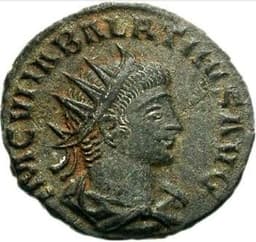
Zenobia of Palmyra
Emperor · Ancient
58.2Total
Basic Information
Born
-42
240
Died
37
274
Era
Ancient
Ancient
Nationality
Roman Empire
Palmyrene Empire
Occupation
Emperor
Emperor
Civilization
Western
Middle Eastern
Score Comparison
Military (10%)
20.0
82.0
Political (20%)
68.0
54.7
Influence (20%)
54.1
60.0
Legacy (20%)
49.2
52.0
Leadership (15%)
53.2
55.3
Strategy (15%)
52.5
55.0
TOTAL
51.3
58.2
Tiberius — Complete Timeline
14 AD
Accession as Roman EmperorPolitical Action◆ Major
Upon Augustus's death, Tiberius became the second Roman emperor. He was adopted by Augustus and had been given tribunician power and imperium, ensuring a smooth transition of power.
SuccessionImperial RuleAugustus
Impact: global
19 AD
Germanicus's Death and AftermathOther◆ Major
Tiberius's adopted son and heir Germanicus died under suspicious circumstances in Syria. Tiberius was suspected of involvement, leading to public grief and political tension.
DeathSuccessionSuspicion
Impact: nationaltragic
26 AD
Retirement to CapriPolitical Action◆ Major
Tiberius withdrew from Rome to the island of Capri, leaving administration to the Praetorian Prefect Sejanus. This retreat led to a power vacuum and Sejanus's eventual execution for conspiracy.
RetirementSejanusAdministration
Impact: nationaldestructive
31 AD
Execution of SejanusPolitical Action◆ Major
Tiberius ordered the arrest and execution of Sejanus, his powerful Praetorian Prefect, for plotting against him. Sejanus's family and supporters were also purged, restoring Tiberius's control.
PurgePraetorian GuardConspiracy
Impact: nationaldestructive
Reign of Terror (Tiberius)Political Action◆ Major
After Sejanus's fall, Tiberius conducted a series of treason trials and executions, targeting senators and equestrians. Many were condemned on flimsy charges, creating an atmosphere of fear.
Treason TrialsPolitical RepressionTerror
Impact: nationaldestructive
Zenobia of Palmyra — Complete Timeline
270 AD
Conquest of EgyptWar◆ Major
Zenobia's general Zabdas led a Palmyrene army to conquer Egypt, defeating the Roman prefect Tenagino Probus. Egypt became part of the Palmyrene Empire, giving Zenobia control over the grain supply to Rome.
ConquestEgyptPalmyrene Empire
Impact: regionaldestructive
271 AD
Proclamation of Augustus for VaballathusPolitical Action◆ Major
Zenobia proclaimed her son Vaballathus as Augustus (emperor), effectively declaring independence from the Roman Empire. This was a direct challenge to Roman authority and marked the height of Palmyrene power.
ProclamationIndependencePalmyrene Empire
Impact: regionaldestructive
272 AD
Defeat by Aurelian at the Battle of ImmaeWar◆ Major
Roman Emperor Aurelian defeated Zenobia's forces at the Battle of Immae near Antioch. The Palmyrene army was routed, and Zenobia was forced to retreat to Palmyra.
BattleRoman-Persian WarAurelian
Impact: regionaldestructive
274 AD
Capture and Parade in RomePolitical Action◆ Major
After the fall of Palmyra, Zenobia was captured by Aurelian and brought to Rome. She was paraded in golden chains in Aurelian's triumph, a symbol of Roman victory over the Palmyrene rebellion.
CaptureTriumphRoman Empire
Impact: regionaltragic
Expert Analysis
Origins
Tiberius Claudius Nero was born on November 16, 42 BCE, into the patrician Claudian family. His father, also named Tiberius, was a naval commander for Julius Caesar. His mother, Livia Drusilla, later divorced his father to marry Octavian (the future Augustus). Tiberius grew up in the shadow of Augustus, receiving a thorough education in rhetoric and military affairs. He served as a military tribune in Hispania and later in the east, gaining early command experience.
Zenobia was born around 240 CE in Palmyra, a wealthy trading city in the Syrian desert. Her birth name was Septimia Zenobia, and she claimed descent from the Ptolemies of Egypt and the Seleucids. She was educated in Greek, Latin, and Egyptian, and was known for her physical stamina and intellectual curiosity. She married Odaenathus, the ruler of Palmyra, who had carved out a semi-independent kingdom under Roman suzerainty after defeating the Persians.
Rise to Power
Tiberius's rise was marked by his adoption by Augustus in 4 CE. He had already held consulships and military commands in Pannonia and Germany. In 6 CE, he suppressed the Great Illyrian Revolt, a major test of his military capabilities. After the deaths of Augustus's preferred heirs, Gaius and Lucius Caesar, Tiberius was made co-princeps with tribunician power. Upon Augustus's death in 14 CE, Tiberius smoothly assumed power, though the transition was marked by mutinies among the Rhine and Danube legions, which he quelled through a combination of concessions and executions.
Zenobia rose to power after the assassination of her husband Odaenathus in 267 CE. She assumed regency for her young son Vaballathus, effectively controlling Palmyra. She expanded Palmyrene influence by capitalizing on Roman weakness during the Crisis of the Third Century. In 269 CE, her general Zabdas conquered Egypt, securing the grain supply and challenging Rome's authority. She then proclaimed Vaballathus as Augustus, declaring the Palmyrene Empire independent.
Leadership & Governance
Tiberius governed Rome with a cautious, conservative approach. He maintained Augustus's administrative structures but was reluctant to delegate, leading to micromanagement. He improved financial management, reduced taxes, and curbed provincial abuses. However, his leadership style was aloof and indecisive, culminating in his withdrawal to Capri in 26 CE, leaving the Praetorian Prefect Sejanus to run the state. This led to a reign of terror after Sejanus's fall, with many senators executed for treason on flimsy charges.
Zenobia ruled Palmyra with a blend of Hellenistic and Persian traditions. She styled herself as a queen and claimed descent from Cleopatra. She promoted religious tolerance, patronized scholars, and maintained the city's trade networks. Her governance was effective in consolidating Palmyrene control over Syria, Anatolia, and Egypt. However, her decision to challenge Rome directly by declaring independence proved strategically reckless, as it provoked a Roman response she could not withstand.
Triumph & Tragedy
Tiberius's greatest success was his consolidation of the Augustan system, ensuring a stable transition of power after Augustus's death. He also left a substantial treasury of 2.7 billion sesterces upon his death. His greatest failure was his withdrawal from Rome and the subsequent terror, which tarnished his reputation and destabilized the imperial administration. He scored 49.2 in legacy, reflecting his mixed record.
Zenobia's greatest triumph was her conquest of Egypt and the expansion of Palmyrene power to its zenith. She challenged Rome at a time of weakness and nearly carved out a lasting empire. Her tragedy was her defeat by Aurelian at the Battle of Immae in 272 CE, followed by the fall of Palmyra. She was captured and paraded in Rome in golden chains, a symbol of Roman vengeance. Her legacy score of 52.0 reflects her enduring fame as a warrior queen, but her empire crumbled quickly.
Character & Destiny
Tiberius was introverted, suspicious, and prone to bitterness. His character was shaped by his forced adoption and the death of his beloved brother Drusus. He resented his role as emperor and often acted reluctantly. His retirement to Capri and the subsequent terror stemmed from his paranoia and inability to trust others. Ancient historians like Tacitus and Suetonius portrayed him as a tyrant, though modern scholars note his administrative competence.
Zenobia was ambitious, intelligent, and charismatic. She cultivated an image as a learned ruler, hosting philosophers and scholars. Her decision to challenge Rome was bold but ultimately overreaching. She misjudged the resilience of the Roman Empire under Aurelian. Her capture and humiliation defined her later fate, but she was reportedly treated well in retirement, marrying a Roman senator.
Legacy
Tiberius's legacy is mixed. He strengthened the imperial bureaucracy but left a reputation as a tyrant. His reign set precedents for imperial succession and the role of the Praetorian Guard. His total score of 51.3 places him as an average emperor. Zenobia's legacy is more romanticized. She became a symbol of female leadership and resistance against Rome. Her story inspired later cultures, including the medieval Arab world. Her total score of 58.2 reflects her higher military and influence scores.
Conclusion
Zenobia had a greater impact per unit of time and resources than Tiberius. While Tiberius ruled for 23 years and maintained an existing system, Zenobia built an empire from scratch and challenged the world's greatest power. Her military score of 82.0 dwarfs Tiberius's 20.0, and her influence score of 60.0 exceeds his 54.1. Though her empire fell, her legend endures. Tiberius, despite his administrative successes, failed to secure a positive historical memory. Therefore, Zenobia of Palmyra stands as the more impactful figure.
Rankings
🥇
Zenobia of PalmyraLeader
Mil: 82.0Pol: 54.7Inf: 60.0
58.2
🥈
Tiberius
Mil: 20.0Pol: 68.0Inf: 54.1
51.3
+6.9 behind
How This Comparison Works
Algorithm
Each figure is scored on 6 dimensions (0—100 scale) based on structured historical data: Military (10%), Political (20%), Influence (20%), Legacy (20%), Leadership (15%), Strategy (15%). The weighted total produces the final ranking.
Data Sources
Scores are computed from structured sub-indicators in the database. Scale factors adjust for era (Ancient ×0.85, Modern ×1.0) and civilization size (Eastern ×1.05, Other ×0.80) to account for differences in population and military scale.
Maximum 3 Figures
Comparisons are limited to 2—3 figures to ensure readability and statistical meaningfulness.
Error Margins
±5 points per dimension — Sub-scores are derived from historical records with inherent uncertainty. Two figures within 5 points on a dimension should be considered roughly equivalent in that area.
Total Score Accuracy
±3 points overall — The weighted combination of 6 dimensions produces a total score with approximately ±3 points of uncertainty. Differences of less than 3 points are not statistically significant— the figures are effectively tied.
Known Limitations
- Historical records are incomplete and uneven across civilizations
- Figures from oral-tradition societies may be underrepresented
- Occupation labels can misclassify multi-role figures
- Scores measure capability and impact, not moral character
- Quantitative scoring is a comparison tool, not absolute truth
Capability Radar
Military (10%) — Battles & Warfare
Battles
45
65
Win Rate
50
60
Expansion
20
70
Political (20%) — Governance & Reform
Reform
65
35
Diplomacy
60
60
Economy
55
45
Influence (20%) — Cultural & Global Reach
Cultural
40
55
Global
45
45
Legacy (20%) — Historical Impact
Historical
55
60
Longevity
50
50
Leadership (15%) — Power & Stability
Tenure
70
40
Stability
50
30
Strategy (15%) — Tactics & Innovation
Strategy
60
75
Tactics
55
70
Reform
40
30
Similar Comparisons
Comments & Discussion
No comments yet. Be the first to share your thoughts!