Loading...
Timur vs Vijayalaya Chola
Timur leads by 11.4 pts · 2 figures compared
…
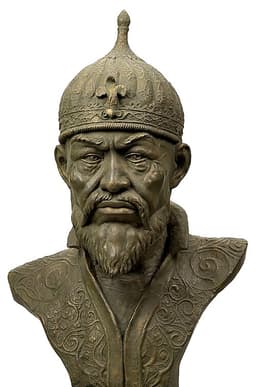
Timur
Emperor · Medieval
65.6Total
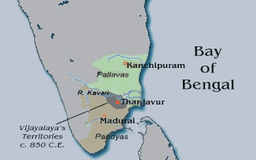
Vijayalaya Chola
Emperor · Medieval
54.2Total
Basic Information
Born
1336
820
Died
1405
870
Era
Medieval
Medieval
Nationality
Timurid Empire
India
Occupation
Emperor
Emperor
Civilization
Middle Eastern
Indian
Score Comparison
Military (10%)
79.0
45.0
Political (20%)
70.0
40.8
Influence (20%)
70.0
58.0
Legacy (20%)
40.0
54.0
Leadership (15%)
79.8
64.0
Strategy (15%)
77.6
60.0
TOTAL
65.6
54.2
Timur — Complete Timeline
1362 AD
Battle of the Terek RiverWar
Timur defeated the Mongol ruler of the Chagatai Khanate, establishing his control over Transoxiana. This victory marked the beginning of his rise to power, as he captured Samarkand and declared himself emir.
Rise to PowerBattleCentral Asia
Impact: regional
1387 AD
Conquest of PersiaWar◆ Major
Timur launched a campaign into Persia, capturing Isfahan and Shiraz. He suppressed a revolt in Isfahan by massacring tens of thousands of inhabitants, establishing his reputation for extreme brutality and consolidating control over the region.
ConquestMassacrePersia
Impact: regionaldestructive
1395 AD
Campaign against the Golden HordeWar◆ Major
Timur defeated the Golden Horde under Tokhtamysh at the Battle of the Terek River. He sacked Sarai, the Horde's capital, and destroyed its trade networks, permanently weakening the Mongol state and securing his northern frontier.
ConquestGolden HordeBattle
Impact: regionaldestructive
1398 AD
Sack of DelhiWar◆ Major
Timur invaded the Delhi Sultanate, defeating Sultan Nasir-ud-Din Mahmud Shah Tughluq. His army sacked Delhi, massacring tens of thousands of civilians and destroying the city's infrastructure, then withdrew with immense plunder.
ConquestMassacreIndia
Impact: regionaldestructive
1402 AD
Battle of AnkaraWar
Timur defeated the Ottoman Sultan Bayezid I at Ankara, capturing him. The victory shattered Ottoman power, leading to a civil war among Bayezid's sons and delaying Ottoman expansion into Europe for a decade.
BattleOttoman EmpireDecisive Victory
Impact: global
1404 AD
Construction of SamarkandCultural◆ Major
Timur invested heavily in transforming Samarkand into a cultural and architectural center. He brought artisans from conquered lands to build mosques, madrasas, and the Bibi-Khanym Mosque, making the city a showcase of Timurid art and learning.
ArchitecturePatronageCultural Center
Impact: regionalconstructive
1405 AD
Death during campaign against Ming ChinaWar◆ Major
Timur died of illness while leading a massive army toward the Ming dynasty's borders. His death ended the planned invasion of China and led to the fragmentation of his empire among his sons and grandsons.
DeathCampaignMing Dynasty
Impact: regional
Vijayalaya Chola — Complete Timeline
820 AD
Foundation of the Imperial Chola DynastyPolitical Action◆ Major
Vijayalaya Chola established the Imperial Chola dynasty, reviving the ancient Chola lineage after centuries of obscurity. He consolidated control over the Kaveri delta region, laying the foundation for the Chola Empire's future expansion.
Impact: regionalconstructive
850 AD
Capture of Thanjavur from the MutharaiyarWar◆ Major
Vijayalaya Chola captured the city of Thanjavur from the Mutharaiyar chieftains, who were vassals of the Pallavas. This victory established the Chola kingdom as an independent power and made Thanjavur the new Chola capital.
Impact: regionalconstructive
860 AD
Construction of the Vijayalaya Choleswaram TempleCultural
Vijayalaya Chola built the Vijayalaya Choleswaram temple at Narthamalai, a rock-cut temple dedicated to Shiva. This temple is one of the earliest Chola architectural monuments, reflecting the transition from Pallava to Chola styles.
constructive
Expert Analysis
Timur vs Vijayalaya Chola
### The Conqueror and the Builder: Timur and Vijayalaya Chola
In the winter of 1398, a storm of horsemen descended upon the plains of northern India. The city of Delhi, one of the wealthiest in the world, was sacked with a brutality that left its streets piled high with skulls. The man who ordered this, Timur, was a lame, aging conqueror from Central Asia who saw himself as the heir to Genghis Khan. Half a millennium earlier, on the same subcontinent but far to the south, another man had climbed a hill overlooking a sleepy town called Thanjavur. He did not come to destroy, but to claim. He was Vijayalaya Chola, and his capture of that single city would seed an empire that would rule the seas for three hundred years. Both men were founders. One built a pyramid of corpses; the other, a dynasty of bronze and stone. What drove such different outcomes?
### Origins
Timur was born in 1336 near the city of Shahr-e Sabz, in what is now Uzbekistan, into a minor noble family of the Barlas tribe, a Turkicized Mongol clan. The Mongol Empire had fractured, and Central Asia was a world of warring khans, shifting loyalties, and endless steppe raids. Timur learned to ride and shoot before he could read; his world was the saddle, his law the sword. A shepherd’s son in a land of wolves, he was wounded in his youth by an arrow that lamed his right leg and crippled his hand—earning him the name Timur-e Lang, “Timur the Lame.” The pain only sharpened his ambition.
Vijayalaya Chola was born around 820 into a world of equal chaos but different rhythms. South India was a patchwork of warring kingdoms—the Pallavas, the Pandyas, the Rashtrakutas—all vying for control of the fertile Kaveri delta. The Chola dynasty was ancient, mentioned in Tamil poetry a thousand years earlier, but it had faded into obscurity, reduced to a minor chieftaincy in the shadow of greater powers. Vijayalaya inherited not a throne but a name. He was a vassal in a land of vassals, and his only path forward was to carve a kingdom from the cracks between empires.
### Rise to Power
Timur’s rise was a masterclass in ruthless pragmatism. In 1362, at the Battle of the Terek River, he defeated the Mongol ruler of the Chagatai Khanate, establishing his control over Transoxiana. He did not merely win; he annihilated. He allied with nomadic warriors, married into power, and then turned on his allies without hesitation. By 1387, he had swept into Persia, capturing Isfahan and Shiraz. When Isfahan revolted, he ordered the massacre of tens of thousands, building towers of severed heads as a warning. Each victory was a stone in his pyramid of terror.
Vijayalaya’s path was quieter, but no less cunning. He served as a feudatory under the Pallava king, biding his time. Around 850, he saw his moment: the Mutharaiyar chieftains, who controlled the fertile Thanjavur region, had grown weak. Vijayalaya struck, capturing the city in a swift, decisive campaign. He did not massacre the population; he absorbed them. He then built a small rock-cut temple, the Vijayalaya Choleswaram, at Narthamalai to celebrate his victory. Where Timur used terror, Vijayalaya used temples.
### Leadership & Governance
Timur was a military genius of the first order, with a strategic score of 85.0. His campaigns were logistical marvels: he marched armies across the Hindu Kush, through the deserts of Persia, and deep into the Russian steppes. In 1395, he crushed the Golden Horde under Tokhtamysh at the Battle of the Terek River, sacking their capital Sarai and breaking their power for a century. In 1402, he captured the Ottoman Sultan Bayezid I at the Battle of Ankara, shattering the Ottoman state and plunging it into a decade-long civil war. Yet his political score of 65.0 reflects a fatal flaw: he could conquer, but he could not govern. His empire was a personal possession, held together by fear and his own presence. When he died, it fragmented.
Vijayalaya’s military score of 24.2 is deceptively low for a founder. He was not a great general in the Timurid sense; he fought small wars for small lands. But his political score of 54.2 and leadership score of 74.0 tell a deeper story. He understood that an empire is built not on fear, but on institutions. He established the Chola dynasty as a legitimate, hereditary power, rooted in Tamil tradition. He used the temple not just as a religious center, but as a tool of administration and social unity. Where Timur’s capital, Samarkand, was a showcase of looted artisans and forced labor, Vijayalaya’s Thanjavur was a seed that would grow into the magnificent Brihadeeswarar Temple under his successors.
### Triumph & Tragedy
Timur’s greatest moment was the Battle of Ankara in 1402. He captured the most powerful sultan in the Islamic world, and for a moment, he stood as the master of Asia from the Mediterranean to the Indus. His tragedy came three years later. In 1405, he died of illness while leading a massive army toward the borders of Ming China. His last campaign was a bridge too far. His empire, built on sand, collapsed within a generation.
Vijayalaya’s triumph was not a single battle, but the foundation of a dynasty. His capture of Thanjavur in 850 was the first domino in a chain that would see Chola fleets sailing to Southeast Asia and Chola temples rising as wonders of the world. His tragedy is that he did not live to see it. He died around 870, a minor king in a small kingdom. He never knew that his descendants—Rajaraja Chola I, Rajendra Chola I—would be remembered as some of the greatest emperors in Indian history.
### Character & Destiny
Timur was a man of immense will and immense cruelty. He saw himself as the sword of God, purging the world of infidels and rivals. He was literate, cultured, and fascinated by history, but he could order a massacre over breakfast. His personality was forged in the steppe: honor meant power, mercy meant weakness. His destiny was to die on the march, chasing a horizon he could never reach.
Vijayalaya was a man of patience and prudence. He did not dream of conquering the world; he dreamed of restoring a name. His personality was shaped by the temple, not the tent. He understood that a kingdom is built generation by generation, stone by stone. His destiny was to be the root, not the flower.
### Legacy
Timur’s legacy is paradoxical. He is remembered as a monster in Persia, India, and Russia, his name synonymous with destruction. Yet his capital, Samarkand, became a jewel of Islamic architecture, and his descendants included Babur, the founder of the Mughal Empire. His influence score of 65.0 reflects this: he changed the map of Asia, but his empire did not last.
Vijayalaya’s legacy is quieter but deeper. He founded a dynasty that ruled for over three centuries, leaving a mark on Tamil culture, architecture, and maritime history that survives to this day. His legacy score of 68.0 is higher than Timur’s 65.0, a testament to the power of building rather than burning.
### Conclusion
Timur and Vijayalaya Chola both rose from obscurity to found empires. One conquered a continent and left a trail of ash; the other captured a single city and planted a tree that shaded generations. Their stories remind us that power is not measured only in battles won, but in what remains after the conqueror is gone. Timur’s skull towers have crumbled; Vijayalaya’s temples still stand. The lame man and the patient man—each wrote his name on history, but only one wrote it in stone.
Rankings
🥇
TimurLeader
Mil: 79.0Pol: 70.0Inf: 70.0
65.6
🥈
Vijayalaya Chola
Mil: 45.0Pol: 40.8Inf: 58.0
54.2
+11.4 behind
How This Comparison Works
Algorithm
Each figure is scored on 6 dimensions (0—100 scale) based on structured historical data: Military (10%), Political (20%), Influence (20%), Legacy (20%), Leadership (15%), Strategy (15%). The weighted total produces the final ranking.
Data Sources
Scores are computed from structured sub-indicators in the database. Scale factors adjust for era (Ancient ×0.85, Modern ×1.0) and civilization size (Eastern ×1.05, Other ×0.80) to account for differences in population and military scale.
Maximum 3 Figures
Comparisons are limited to 2—3 figures to ensure readability and statistical meaningfulness.
Error Margins
±5 points per dimension — Sub-scores are derived from historical records with inherent uncertainty. Two figures within 5 points on a dimension should be considered roughly equivalent in that area.
Total Score Accuracy
±3 points overall — The weighted combination of 6 dimensions produces a total score with approximately ±3 points of uncertainty. Differences of less than 3 points are not statistically significant— the figures are effectively tied.
Known Limitations
- Historical records are incomplete and uneven across civilizations
- Figures from oral-tradition societies may be underrepresented
- Occupation labels can misclassify multi-role figures
- Scores measure capability and impact, not moral character
- Quantitative scoring is a comparison tool, not absolute truth
Capability Radar
Military (10%) — Battles & Warfare
Battles
95
45
Win Rate
92
50
Expansion
96
55
Political (20%) — Governance & Reform
Reform
78
35
Diplomacy
70
40
Economy
82
35
Influence (20%) — Cultural & Global Reach
Cultural
88
40
Global
85
30
Legacy (20%) — Historical Impact
Historical
90
55
Longevity
75
50
Leadership (15%) — Power & Stability
Tenure
85
50
Stability
65
45
Strategy (15%) — Tactics & Innovation
Strategy
93
45
Tactics
94
40
Reform
80
30
Similar Comparisons
Comments & Discussion
SteppeMauler6/16/2026
Timur was a brilliant tactician but a human catastrophe—his 1398 sack of Delhi reduced a city of millions to rubble and left 100,000 captives slaughtered after a single night. That's not conquest, it's a mass grave with a general. Vijayalaya, by contrast, took Thanjavur with a handful of loyalists and build a navy that controlled the Bay of Bengal for three centuries. One leaves skull pyramids, the other leaves bronze temples that still stand today.|zh|铁血账本|zh|拿人口当战绩?德里战役后屠了十万俘虏这叫帝国?铁木儿就是个披着统帅皮的