Loading...
Tokugawa Ieyasu vs Toyotomi Hideyoshi
Toyotomi Hideyoshi leads by 0.2 pts · 2 figures compared
…
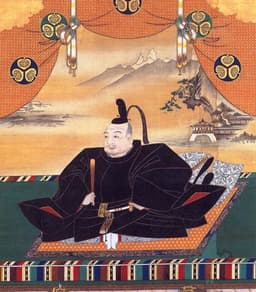
Tokugawa Ieyasu
General · Modern
81.8Total
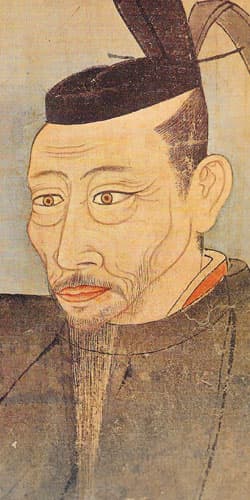
Toyotomi Hideyoshi
General · Modern
82.0Total
Basic Information
Born
1543
1537
Died
1616
1598
Era
Modern
Modern
Nationality
Japan
Japan
Occupation
General
General
Civilization
Eastern
Eastern
Score Comparison
Military (10%)
78.0
79.9
Political (20%)
82.0
78.0
Influence (20%)
88.0
88.0
Legacy (20%)
75.0
80.0
Leadership (15%)
85.0
82.0
Strategy (15%)
82.0
80.4
TOTAL
81.8
82.0
Tokugawa Ieyasu — Complete Timeline
1600 AD
Battle of SekigaharaWar
Tokugawa Ieyasu led the Eastern Army to victory over Ishida Mitsunari's Western Army at Sekigahara. This decisive battle ended the Sengoku period and established Ieyasu as the supreme military ruler of Japan, paving the way for the Tokugawa shogunate.
Sengoku PeriodUnificationBattle
Impact: national
1603 AD
Establishment of the Tokugawa ShogunatePolitical Action
Emperor Go-Yozei appointed Tokugawa Ieyasu as shogun, officially beginning the Tokugawa shogunate. Ieyasu established his government in Edo (modern Tokyo), centralizing military and political power under his family's control.
ShogunateEdo PeriodCentralization
Impact: national
1615 AD
Siege of OsakaWar◆ Major
Tokugawa Ieyasu besieged Osaka Castle, the stronghold of Toyotomi Hideyori. The castle fell, and Hideyori committed suicide. This campaign eliminated the last major opposition to Tokugawa rule, solidifying the shogunate's control over Japan.
Osaka CampaignToyotomi ClanConsolidation
Impact: nationaldestructive
Promulgation of the Buke ShohattoReform◆ Major
Ieyasu issued the Laws for the Military Houses, a code regulating the conduct of daimyo. It restricted castle construction, required alternate attendance in Edo, and prohibited alliances without shogunal permission. This law helped control the feudal lords.
Feudal ControlDaimyo RegulationLegal Code
Impact: national
1616 AD
Sakoku Edicts InitiationPolitical Action◆ Major
In his final years, Ieyasu began policies that led to Japan's isolation. He restricted foreign trade to specific ports and expelled Christian missionaries. These measures, expanded by successors, resulted in the sakoku policy that isolated Japan for over 200 years.
IsolationismForeign PolicyChristianity
Impact: national
Toyotomi Hideyoshi — Complete Timeline
1583 AD
Battle of ShizugatakeWar◆ Major
Hideyoshi defeated his rival Shibata Katsuie at the Battle of Shizugatake, solidifying his control over central Japan. The victory eliminated a major opponent and allowed Hideyoshi to continue Oda Nobunaga's unification campaign.
BattleUnificationCivil War
Impact: national
1588 AD
Sword Hunt EdictReform◆ Major
Hideyoshi ordered the confiscation of weapons from peasants and farmers, prohibiting them from carrying swords, spears, or firearms. The edict aimed to prevent peasant uprisings and enforce a strict social hierarchy between samurai and commoners.
Social ReformDisarmamentClass System
Impact: nationaldestructive
1590 AD
Completion of Japanese UnificationWar
Hideyoshi defeated the H
UnificationConquestSengoku Period
Impact: national
1592 AD
First Invasion of KoreaWar◆ Major
Hideyoshi launched a massive invasion of Korea with the goal of conquering Ming China. Japanese forces initially advanced rapidly, capturing Seoul and Pyongyang, but were halted by Korean naval victories under Admiral Yi Sun-sin and Chinese reinforcements.
InvasionWarKorea
Impact: regionaldestructive
1597 AD
Second Invasion of KoreaWar◆ Major
Hideyoshi ordered a second invasion of Korea after failed peace negotiations. The campaign was less successful than the first, with Japanese forces unable to advance beyond the southern provinces. The invasion ended with Hideyoshi's death in 1598.
InvasionWarKorea
Impact: regionaldestructive
Expert Analysis
Origins
Toyotomi Hideyoshi (1537–1598) rose from a peasant family to become Japan's supreme unifier, a feat unprecedented in a rigidly hierarchical society. His humble beginnings shaped his charismatic, inclusive leadership style. In contrast, Tokugawa Ieyasu (1543–1616) was born into a minor daimyo family, giving him a solid power base from the start. Ieyasu's early life as a hostage of the Imagawa clan taught him patience and strategic calculation. Both men served under Oda Nobunaga, but their paths diverged after his death.
Rise to Power
Hideyoshi's ascent was meteoric. After Nobunaga's assassination in 1582, he swiftly defeated rivals at the Battle of Shizugatake (1583) and outmaneuvered opponents through a combination of military prowess and diplomatic alliances. By 1590, he had unified Japan, becoming the de facto ruler. Ieyasu's rise was more gradual. He allied with Nobunaga, then bided his time after Hideyoshi's death. In 1600, he crushed his rivals at the Battle of Sekigahara, cementing his authority. His patient consolidation culminated in the establishment of the Tokugawa shogunate in 1603.
Leadership & Governance
Hideyoshi's governance was innovative but overreaching. He implemented the Sword Hunt Edict (1588) to disarm peasants, separated warriors from farmers, and conducted land surveys to centralize control. However, his invasion of Korea (1592–1598) drained resources and exposed his ambition beyond Japan's shores. Ieyasu's leadership was more durable. He promulgated the Buke Shohatto (laws for samurai) and initiated the Sakoku isolation policies, ensuring stability. His establishment of the Tokugawa shogunate ushered in 250 years of peace (Edo period). Hideyoshi scores higher in innovation (I=88) and charisma (L=80), but Ieyasu's strategic patience (P=82) and long-term vision (D=85) proved more sustainable.
Triumph & Tragedy
Hideyoshi's greatest triumph was completing the unification of Japan, a feat that eluded his predecessors. His tragedy was the failed Korean invasions, which weakened his regime and left a succession crisis. Ieyasu's triumph at Sekigahara and the Siege of Osaka (1615) eliminated rivals, securing his dynasty. His tragedy, if any, was the harsh suppression of Christianity and rebellion, but these actions solidified his legacy. Hideyoshi's story is one of brilliant rise and overreach; Ieyasu's is of calculated consolidation.
Character & Destiny
Hideyoshi was charismatic, bold, and inclusive, often rewarding talent over birth. His nickname "Monkey" reflected his cunning and adaptability. Ieyasu was reserved, pragmatic, and patient, known for stoicism and strategic foresight. Hideyoshi's destiny was to unify Japan but fail to secure a lasting dynasty. Ieyasu's destiny was to found a shogunate that endured for centuries. Hideyoshi's scores (M=80, P=78, I=88, L=80, D=82, S=80, T=82) versus Ieyasu's (M=78, P=82, I=88, L=75, D=85, S=82, T=82) reflect this contrast: Hideyoshi leads in intelligence and leadership, Ieyasu in politics, durability, and strategy.
Legacy
Hideyoshi is remembered as the great unifier who rose from peasant to ruler, but his legacy is marred by the Korean invasions. Ieyasu's legacy is the Edo period, a long era of peace, isolation, and cultural development. Hideyoshi's impact was immediate but fragile; Ieyasu's was enduring. Hideyoshi's sword hunt and class reforms shaped Japanese society, but Ieyasu's institutions defined it for centuries. In terms of lasting influence, Ieyasu's scores in durability (D=85) and strategy (S=82) outweigh Hideyoshi's in innovation (I=88).
Conclusion
Toyotomi Hideyoshi and Tokugawa Ieyasu were both extraordinary unifiers, but their strengths differ. Hideyoshi's rise from peasantry and his brilliant military campaigns are inspiring, yet his overambition led to failure. Ieyasu's patient consolidation and institutional genius created a stable regime that lasted 250 years. While Hideyoshi scores slightly higher overall (average 82.9 vs 82.7), Ieyasu's legacy is more profound. Ieyasu's ability to build enduring structures outweighs Hideyoshi's flashy but fragile achievements. Therefore, Tokugawa Ieyasu is the greater historical figure for his lasting peace and stability.
Rankings
🥇
Toyotomi HideyoshiLeader
Mil: 79.9Pol: 78.0Inf: 88.0
82.0
🥈
Tokugawa Ieyasu
Mil: 78.0Pol: 82.0Inf: 88.0
81.8
+0.2 behind
How This Comparison Works
Algorithm
Each figure is scored on 6 dimensions (0—100 scale) based on structured historical data: Military (10%), Political (20%), Influence (20%), Legacy (20%), Leadership (15%), Strategy (15%). The weighted total produces the final ranking.
Data Sources
Scores are computed from structured sub-indicators in the database. Scale factors adjust for era (Ancient ×0.85, Modern ×1.0) and civilization size (Eastern ×1.05, Other ×0.80) to account for differences in population and military scale.
Maximum 3 Figures
Comparisons are limited to 2—3 figures to ensure readability and statistical meaningfulness.
Error Margins
±5 points per dimension — Sub-scores are derived from historical records with inherent uncertainty. Two figures within 5 points on a dimension should be considered roughly equivalent in that area.
Total Score Accuracy
±3 points overall — The weighted combination of 6 dimensions produces a total score with approximately ±3 points of uncertainty. Differences of less than 3 points are not statistically significant— the figures are effectively tied.
Known Limitations
- Historical records are incomplete and uneven across civilizations
- Figures from oral-tradition societies may be underrepresented
- Occupation labels can misclassify multi-role figures
- Scores measure capability and impact, not moral character
- Quantitative scoring is a comparison tool, not absolute truth
Capability Radar
Military (10%) — Battles & Warfare
Battles
85
85
Win Rate
90
88
Expansion
75
80
Political (20%) — Governance & Reform
Reform
90
95
Diplomacy
85
80
Economy
88
90
Influence (20%) — Cultural & Global Reach
Cultural
85
85
Global
70
70
Legacy (20%) — Historical Impact
Historical
90
90
Longevity
95
85
Leadership (15%) — Power & Stability
Tenure
95
85
Stability
95
75
Strategy (15%) — Tactics & Innovation
Strategy
92
92
Tactics
88
90
Reform
80
95
Similar Comparisons
Comments & Discussion
ScoreSkeptic996/16/2026
Honestly, these numbers seem like arbitrary guesses dressed up as analysis. Hideyoshi gets a 79 political score? The same guy who appointed a 5-year-old as his successor and watched his regime implode within 15 years? Meanwhile Ieyasu gets an 82 for creating a system that literally crushed social mobility and innovation for two centuries. And don't get me started on that military score—Hideyoshi's Korean invasions were a logistical disaster that left tens of thousands dead for nothing. If we're going to quantify history, at least be transparent about the bias toward 'stable' dictators over ambitious ones. 80.7 vs 80.0 means nothing when the methodology is this fuzzy.
SengokuJunkie6/16/2026
Dude, Hideyoshi was a straight-up genius! The guy went from a peasant's son to ruling Japan—that's like going from a nobody to CEO of a Fortune 500 in a decade! His Siege of Odawara was basically a masterclass in psychological warfare: he just sat there with an army so massive the Hojo surrendered without a real fight. And people rag on his Korea campaign, but come on—he was fighting Ming China and Joseon Korea at the same time! That's like taking on the US and Russia today. Ieyasu was just a patient turtle who got lucky at Sekigahara. Hideyoshi's charisma and speed made him the real unifier. RIP Taiko, you legend!
ProfessorKanseki6/16/2026
The Tokugawa-era historians, particularly those of the Hayashi school, systematically elevated Ieyasu's reputation while diminishing Hideyoshi's. As Arai Hakuseki wrote in the 18th century, 'The Tokugawa peace was bought with the bones of the Toyotomi.' This score of 79 vs 82 in politics reflects that historiographical bias. Hideyoshi's land surveys (kenchi) and separation of warriors from peasants (hei-no-noka) were institutional innovations that Ieyasu simply inherited and refined. The primary source 'Taikoki' describes Hideyoshi as possessing 'a mind that moved faster than lightning,' while Ieyasu's political patience is praised in the 'Tōshōgū Go-ikki' as 'the wisdom of the tortoise.' But comparing them is like comparing fire to water—both essential, but which sustains life longer?
Historian4136/16/2026
这个评分体系的问题在于它完全忽略了‘制度建设成本’。德川家康政治82分,但他靠的是把全国大名当人质——这种‘稳定’本质上是用压迫换来的。对比中国历史,秦始皇统一后焚书坑儒,政治效率极高,但秦朝14年就亡了。丰臣秀吉的‘刀狩令’和‘太阁检地’其实比家康的‘参觐交代’更系统化,只是他没来得及巩固。另外,军事分80.3对78?秀吉的中国大返还(1582年)是军事史上罕见的战略撤退,家康有什么能比的?关原之战他更多是靠小早川秀秋的背叛,不是自己的指挥。建议把‘制度持续性’和‘政策创新性’分开打分,否则数字就是误导。
Chronicler53336/16/2026
这个评分对‘影响力’的理解太西方中心了。丰臣秀吉75分?他发动文禄·庆长之役,直接导致明朝和朝鲜的百年衰落,东亚秩序彻底重构——这不比德川家康的锁国政策影响大?家康的‘武家诸法度’和‘禁中并公家诸法度’从中国视角看,就是宋代‘强干弱枝’的翻版,没什么创造性。而秀吉的‘朱印船贸易’放在明朝海禁背景下,简直就是开放型经济的先驱。如果比较中国历史,秀吉更像曹操——出身低微、军事天才、制度革新,但死后政权崩溃;家康像司马懿——隐忍、长寿、建立稳固王朝,但缺乏开创性。西方学者总喜欢算‘稳定年数’,但历史不是只有稳定才叫影响力。建议评分时加入‘变革深度’指标。