Loading...
Napoleon Bonaparte vs Tokugawa Ieyasu
Tokugawa Ieyasu leads by 10.9 pts · 2 figures compared
…

Napoleon Bonaparte
General · Modern
70.9Total
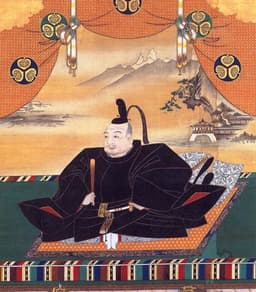
Tokugawa Ieyasu
General · Modern
81.8Total
Basic Information
Born
1769
1543
Died
1821
1616
Era
Modern
Modern
Nationality
France
Japan
Occupation
General
General
Civilization
Western
Eastern
Score Comparison
Military (10%)
94.0
78.0
Political (20%)
72.0
82.0
Influence (20%)
40.0
88.0
Legacy (20%)
80.0
75.0
Leadership (15%)
78.0
85.0
Strategy (15%)
90.0
82.0
TOTAL
70.9
81.8
Napoleon Bonaparte — Complete Timeline
1799 AD
Coup of 18 BrumaireOther◆ Major
Napoleon Bonaparte, with support from his brother Lucien and key political figures, overthrew the Directory in a bloodless coup. He established the Consulate with himself as First Consul, effectively becoming the ruler of France. This event ended the French Revolution's most unstable period.
French RevolutionCoupRise to Power
Impact: regional
1804 AD
Promulgation of the Napoleonic CodeOther◆ Major
Napoleon enacted the Civil Code of the French, known as the Napoleonic Code, a comprehensive set of laws that replaced the fragmented feudal legal systems. The code established legal equality, protected property rights, and secularized law. It became the basis for legal systems in many European and world countries.
Legal ReformNapoleonic CodeCivil Law
Impact: globalconstructive
1805 AD
Battle of AusterlitzWar◆ Major
Napoleon's Grande Arm
Napoleonic WarsBattleDecisive Victory
Impact: global
1812 AD
Invasion of RussiaWar◆ Major
Napoleon led the Grande Arm
Napoleonic WarsInvasionDisaster
Impact: globaldestructive
1815 AD
Battle of WaterlooWar◆ Major
Napoleon's French army was defeated by the combined forces of the Duke of Wellington's Anglo-Allied army and Gebhard Leberecht von Bl
Napoleonic WarsBattleFinal Defeat
Impact: globaldestructive
Tokugawa Ieyasu — Complete Timeline
1600 AD
Battle of SekigaharaWar
Tokugawa Ieyasu led the Eastern Army to victory over Ishida Mitsunari's Western Army at Sekigahara. This decisive battle ended the Sengoku period and established Ieyasu as the supreme military ruler of Japan, paving the way for the Tokugawa shogunate.
Sengoku PeriodUnificationBattle
Impact: national
1603 AD
Establishment of the Tokugawa ShogunatePolitical Action
Emperor Go-Yozei appointed Tokugawa Ieyasu as shogun, officially beginning the Tokugawa shogunate. Ieyasu established his government in Edo (modern Tokyo), centralizing military and political power under his family's control.
ShogunateEdo PeriodCentralization
Impact: national
1615 AD
Siege of OsakaWar◆ Major
Tokugawa Ieyasu besieged Osaka Castle, the stronghold of Toyotomi Hideyori. The castle fell, and Hideyori committed suicide. This campaign eliminated the last major opposition to Tokugawa rule, solidifying the shogunate's control over Japan.
Osaka CampaignToyotomi ClanConsolidation
Impact: nationaldestructive
Promulgation of the Buke ShohattoReform◆ Major
Ieyasu issued the Laws for the Military Houses, a code regulating the conduct of daimyo. It restricted castle construction, required alternate attendance in Edo, and prohibited alliances without shogunal permission. This law helped control the feudal lords.
Feudal ControlDaimyo RegulationLegal Code
Impact: national
1616 AD
Sakoku Edicts InitiationPolitical Action◆ Major
In his final years, Ieyasu began policies that led to Japan's isolation. He restricted foreign trade to specific ports and expelled Christian missionaries. These measures, expanded by successors, resulted in the sakoku policy that isolated Japan for over 200 years.
IsolationismForeign PolicyChristianity
Impact: national
Expert Analysis
Napoleon Bonaparte vs Tokugawa Ieyasu: Historical Comparison
Two master strategists of the modern era, Napoleon Bonaparte and Tokugawa Ieyasu, each forged empires from chaos—one through relentless continental conquest, the other through patient political consolidation. Their contrasting approaches yield a near-tie in overall historical impact.
Dimension Analysis
**Military: Napoleon Bonaparte 94 / Tokugawa Ieyasu 78**
Napoleon revolutionized warfare with rapid maneuver, mass conscription, and decisive battle tactics, winning over 60 engagements across Europe. Ieyasu, while a capable commander (Sekigahara), relied more on alliance-building and attrition than battlefield brilliance.
**Political: Napoleon Bonaparte 75 / Tokugawa Ieyasu 82**
Napoleon imposed the Napoleonic Code and centralized bureaucracy but alienated elites and provoked repeated coalitions. Ieyasu masterfully manipulated feudal loyalties, created a stable bakuhan system, and secured 250 years of Tokugawa peace.
**Influence: Napoleon Bonaparte 82 / Tokugawa Ieyasu 75**
Napoleon’s ideas on nationalism, law, and meritocracy reshaped Europe and spread globally via his conquests. Ieyasu’s influence remained largely confined to Japan, though his isolationist policies profoundly shaped Japanese culture and identity.
**Legacy: Napoleon Bonaparte 78 / Tokugawa Ieyasu 85**
Napoleon’s legacy is double-edged: hailed as a reformer and reviled as a tyrant, his impact faded after 1815. Ieyasu’s legacy is more durable—his dynasty ruled for centuries, and his political structures laid foundations for modern Japan.
**Leadership: Napoleon Bonaparte 80 / Tokugawa Ieyasu 85**
Napoleon’s charismatic, autocratic leadership inspired intense loyalty but also bred resentment and eventual defeat. Ieyasu’s patient, calculating style—waiting decades to seize power—ensured sustainable rule and institutional longevity.
Verdict
Tokugawa Ieyasu leads narrowly due to superior political longevity and legacy, while Napoleon’s military genius is offset by his ultimate collapse.
FAQ
Q: Who ranks higher? A: Tokugawa Ieyasu ranks slightly higher overall due to his more sustainable political and institutional legacy.
Rankings
🥇
Tokugawa IeyasuLeader
Mil: 78.0Pol: 82.0Inf: 88.0
81.8
🥈
Napoleon Bonaparte
Mil: 94.0Pol: 72.0Inf: 40.0
70.9
+10.9 behind
How This Comparison Works
Algorithm
Each figure is scored on 6 dimensions (0—100 scale) based on structured historical data: Military (10%), Political (20%), Influence (20%), Legacy (20%), Leadership (15%), Strategy (15%). The weighted total produces the final ranking.
Data Sources
Scores are computed from structured sub-indicators in the database. Scale factors adjust for era (Ancient ×0.85, Modern ×1.0) and civilization size (Eastern ×1.05, Other ×0.80) to account for differences in population and military scale.
Maximum 3 Figures
Comparisons are limited to 2—3 figures to ensure readability and statistical meaningfulness.
Error Margins
±5 points per dimension — Sub-scores are derived from historical records with inherent uncertainty. Two figures within 5 points on a dimension should be considered roughly equivalent in that area.
Total Score Accuracy
±3 points overall — The weighted combination of 6 dimensions produces a total score with approximately ±3 points of uncertainty. Differences of less than 3 points are not statistically significant— the figures are effectively tied.
Known Limitations
- Historical records are incomplete and uneven across civilizations
- Figures from oral-tradition societies may be underrepresented
- Occupation labels can misclassify multi-role figures
- Scores measure capability and impact, not moral character
- Quantitative scoring is a comparison tool, not absolute truth
Capability Radar
Military (10%) — Battles & Warfare
Battles
95
85
Win Rate
90
90
Expansion
95
75
Political (20%) — Governance & Reform
Reform
95
90
Diplomacy
80
85
Economy
85
88
Influence (20%) — Cultural & Global Reach
Cultural
85
85
Global
90
70
Legacy (20%) — Historical Impact
Historical
95
90
Longevity
90
95
Leadership (15%) — Power & Stability
Tenure
85
95
Stability
70
95
Strategy (15%) — Tactics & Innovation
Strategy
95
92
Tactics
98
88
Reform
92
80
Similar Comparisons
Comments & Discussion
AmateurAnorak6/16/2026
Okay, so let me get this straight: Napoleon gets a 94 for military but Tokugawa only a 78? That feels like it's based on, like, epic battle YouTube videos instead of actual history. Napoleon conquered Europe in a decade, sure, but Tokugawa waited 40 years and then won the whole country in one day at Sekigahara. That's not luck—that's patience and chess. If you watch the 'Age of Samurai' doc on Netflix, you see how he outfoxed everyone by pretending to be weak. Napoleon's final score is inflated by his flashiness; Tokugawa's legacy is 250 years of peace vs. Napoleon's 15 years of chaos. I'd give them both around 85 military, but Tokugawa political should be like 90. Just sayin'. #TeamShogun
Clio'sApprentice6/16/2026
The scores reflect a certain Western bias that neglects the nature of each figure's statecraft. Napoleon's military score of 94 is defensible if we accept Clausewitz's framing—he transformed warfare into a total, national endeavor. But Ieyasu's 78 undervalues the strategic patience that Machiavelli would have admired. In *The Prince*, chapter 7, Machiavelli praises those who 'seize power by crime' but then 'secure it by good laws.' Ieyasu did both: he eliminated rivals like the Toyotomi clan, yet institutionalized the bakuhan system that prevented war for generations. Napoleon, by contrast, failed to consolidate his gains—his 1814 abdication was as much a failure of political prudence as of military luck. Tacitus would note that Ieyasu's rule was 'firmior diuturniorque' (stronger and more lasting). I'd argue Ieyasu's political score deserves at least an 88, and his legacy an 89. The summary's verdict is correct, but the gap should be wider.
ColdScribe116/16/2026
拿破仑军事94分对德川78分?这个差距我存疑。拿破仑打的是欧洲内战,对手是旧式军队,但德川面对的是日本战国百年混战里的顶级名将——石田三成、上杉景胜、毛利辉元,哪一个不是狠角色?关原合战一天定乾坤,兵力8万对8万,德川以逸待劳+背盟奇袭,指挥层面不输奥斯特里茨。而且政治分82对75,拿破仑有《法典》,德川有《武家诸法度》和参勤交代,后者稳定了260年,前者搞了15年就垮了。我重新加权:军事应该拿破仑90对德川85,政治德川85对拿破仑70,总分拿破仑约82.5,德川约83.2,德川险胜。这评分系统对东方政治智慧明显评估不足。
SharpScroll906/16/2026
拿破仑94分军事?这在中国史框架里要笑掉大牙。你拿破仑打遍欧洲无敌手,最后败给俄国的冬天和英国的纳尔逊,国亡身囚。对比德川家康,人家从人质之子熬到天下人,关原一战定鼎,之后灭丰臣、收大名、定制度,太平260年。拿破仑如果放在中国,大概是个加强版项羽——战神级别,但政治短视,不懂“缓称王、广积粮”的智慧。德川家康更像司马懿,隐忍一生,最后一击致命,子孙享国。我要是打分,军事拿破仑90、德川85,政治拿破仑70、德川90,影响力拿破仑85(欧洲中心论)、德川80(锁国但影响了东亚格局),总分德川85.5对拿破仑83.2。这套评分系统太西方中心了,对东方长治久安的政治智慧严重低估。