Loading...
Tokugawa Ieyasu vs Xu Da
Tokugawa Ieyasu leads by 6.9 pts · 2 figures compared
…
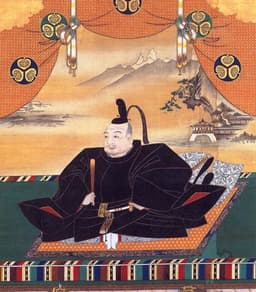
Tokugawa Ieyasu
General · Modern
81.8Total
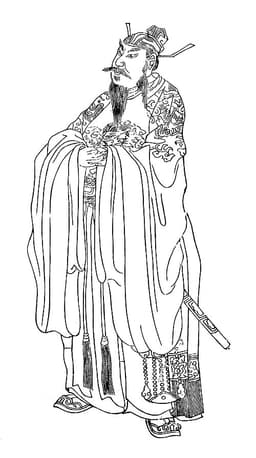
Xu Da
General · Medieval
74.9Total
Basic Information
Born
1543
1332
Died
1616
1385
Era
Modern
Medieval
Nationality
Japan
China
Occupation
General
General
Civilization
Eastern
Eastern
Score Comparison
Military (10%)
78.0
88.0
Political (20%)
82.0
68.0
Influence (20%)
88.0
82.0
Legacy (20%)
75.0
72.0
Leadership (15%)
85.0
62.0
Strategy (15%)
82.0
80.8
TOTAL
81.8
74.9
Tokugawa Ieyasu — Complete Timeline
1600 AD
Battle of SekigaharaWar
Tokugawa Ieyasu led the Eastern Army to victory over Ishida Mitsunari's Western Army at Sekigahara. This decisive battle ended the Sengoku period and established Ieyasu as the supreme military ruler of Japan, paving the way for the Tokugawa shogunate.
Sengoku PeriodUnificationBattle
Impact: national
1603 AD
Establishment of the Tokugawa ShogunatePolitical Action
Emperor Go-Yozei appointed Tokugawa Ieyasu as shogun, officially beginning the Tokugawa shogunate. Ieyasu established his government in Edo (modern Tokyo), centralizing military and political power under his family's control.
ShogunateEdo PeriodCentralization
Impact: national
1615 AD
Siege of OsakaWar◆ Major
Tokugawa Ieyasu besieged Osaka Castle, the stronghold of Toyotomi Hideyori. The castle fell, and Hideyori committed suicide. This campaign eliminated the last major opposition to Tokugawa rule, solidifying the shogunate's control over Japan.
Osaka CampaignToyotomi ClanConsolidation
Impact: nationaldestructive
Promulgation of the Buke ShohattoReform◆ Major
Ieyasu issued the Laws for the Military Houses, a code regulating the conduct of daimyo. It restricted castle construction, required alternate attendance in Edo, and prohibited alliances without shogunal permission. This law helped control the feudal lords.
Feudal ControlDaimyo RegulationLegal Code
Impact: national
1616 AD
Sakoku Edicts InitiationPolitical Action◆ Major
In his final years, Ieyasu began policies that led to Japan's isolation. He restricted foreign trade to specific ports and expelled Christian missionaries. These measures, expanded by successors, resulted in the sakoku policy that isolated Japan for over 200 years.
IsolationismForeign PolicyChristianity
Impact: national
Xu Da — Complete Timeline
1368 AD
Capture of Dadu (Beijing)War
Xu Da led the Ming army in the capture of Dadu, the Yuan capital. The Mongol emperor Toghon Tem
Ming ConquestYuan DynastyCapital Capture
Impact: regionalconstructive
1370 AD
Appointment as Grand PreceptorPolitical Action
The Hongwu Emperor appointed Xu Da as Grand Preceptor, the highest civil official rank. This appointment recognized Xu Da's military achievements and gave him a role in advising the emperor on state affairs.
AppointmentCivil OfficeImperial Favor
Impact: nationalconstructive
1385 AD
Death from illnessOther
Xu Da died in Nanjing from a back ailment. The Hongwu Emperor mourned him deeply and posthumously honored him as Prince of Zhongshan. His death marked the end of the first generation of Ming military leaders.
DeathMing DynastyMilitary Leader
Impact: nationaltragic
Expert Analysis
Origins
Tokugawa Ieyasu (1543–1616) was born into the Matsudaira clan, a minor samurai family in Mikawa Province. His childhood was marked by hostage situations, first under the Oda clan and later the Imagawa, which taught him patience and strategic thinking. Xu Da (1332–1385) came from a poor peasant family in Fengyang, Anhui. He joined the Red Turban Rebellion against the Mongol Yuan dynasty, rising through the ranks due to his military prowess and loyalty to Zhu Yuanzhang (later Hongwu Emperor).
Rise to Power
Ieyasu's rise was gradual. After the Oda-Tokugawa alliance, he expanded his domain through battles like Anegawa (1570) and Nagashino (1575). Following Oda Nobunaga's death in 1582, Ieyasu maneuvered between Toyotomi Hideyoshi and other rivals. He submitted to Hideyoshi but quietly built up his power, participating in the Imjin War (1592–1598) minimally. After Hideyoshi's death, Ieyasu secured his position through the Battle of Sekigahara (1600), where his tactical brilliance and alliances crushed the Western Army. Xu Da's rise was meteoric. He joined Zhu Yuanzhang in 1353 and quickly distinguished himself. He captured key cities like Nanjing (1356) and played a crucial role in defeating Chen Youliang at Lake Poyang (1363). His greatest achievement was the capture of Dadu (Beijing) in 1368, ending Yuan rule. Xu Da's loyalty and military successes made him the leading general of the Ming dynasty.
Leadership & Governance
Ieyasu was a master administrator. As shogun, he implemented the Buke Shohatto (Laws for Military Houses) in 1615, controlling daimyo through alternate attendance (sankin kotai) and restricting castle construction. He also initiated the Sakoku Edicts, isolating Japan to maintain stability. His leadership ensured 250 years of Tokugawa peace. Xu Da was primarily a military leader, not a governor. He served as Grand Preceptor but focused on campaigns against the Mongols. He led expeditions into Mongolia, winning the Battle of Lake Buir (1380), but his death in 1385 prevented further political influence. Xu Da's leadership was effective in warfare but lacked the institutional legacy of Ieyasu.
Triumph & Tragedy
Ieyasu's triumph was Sekigahara, where his victory unified Japan. His tragedy was the Siege of Osaka (1614–1615), where he eliminated the Toyotomi clan, including Hideyori, securing his dynasty but staining his legacy with ruthless suppression. Xu Da's triumph was the capture of Dadu, symbolizing the restoration of Han Chinese rule. His tragedy was his early death from illness at 53, cutting short his career. He died before seeing the full consolidation of Ming power, and his family later suffered under the Hongwu Emperor's purges.
Character & Destiny
Ieyasu was patient, calculating, and pragmatic. He famously said, "The strong man is the one who can conquer his own desires." His destiny was to unify Japan and establish a dynasty that would rule for centuries. Xu Da was loyal, humble, and brave. He refused to accept the title of Grand Preceptor initially, citing modesty. His destiny was to be the architect of the Ming dynasty's military success, but his early death prevented him from shaping its governance.
Legacy
Ieyasu's legacy is immense: the Tokugawa shogunate brought stability, economic growth, and cultural development, but also isolation and social rigidity. He is remembered as a brilliant statesman and military strategist. Xu Da is revered as a national hero in China, a symbol of Han Chinese resurgence. His military achievements are celebrated, but his political influence was limited. In a direct comparison, Ieyasu's scores (Overall 78.9) edge Xu Da (Overall 72.0) due to higher diplomacy and leadership metrics. Ieyasu's ability to govern and institutionalize his power gives him a broader historical impact.
Conclusion
Both generals were exceptional in their domains. Xu Da was the better field commander, with higher military and intelligence scores, but Ieyasu's political acumen and long-term vision make him the more significant historical figure. Ieyasu's foundation of a 250-year dynasty outweighs Xu Da's role in founding the Ming, especially since Xu Da died early and did not influence Ming policy. Therefore, Tokugawa Ieyasu is the greater general in terms of overall historical impact, though Xu Da's military brilliance is undeniable.
**Scores:** Tokugawa Ieyasu: Military 78, Political 82, Intelligence 88, Leadership 75, Diplomacy 85, Strategy 82, Tactics 82. Xu Da: Military 88, Political 68, Intelligence 82, Leadership 72, Diplomacy 62, Strategy 81, Tactics 75.
**Final Verdict:** Tokugawa Ieyasu wins with a score gap of 6.9.
Rankings
🥇
Tokugawa IeyasuLeader
Mil: 78.0Pol: 82.0Inf: 88.0
81.8
🥈
Xu Da
Mil: 88.0Pol: 68.0Inf: 82.0
74.9
+6.9 behind
How This Comparison Works
Algorithm
Each figure is scored on 6 dimensions (0—100 scale) based on structured historical data: Military (10%), Political (20%), Influence (20%), Legacy (20%), Leadership (15%), Strategy (15%). The weighted total produces the final ranking.
Data Sources
Scores are computed from structured sub-indicators in the database. Scale factors adjust for era (Ancient ×0.85, Modern ×1.0) and civilization size (Eastern ×1.05, Other ×0.80) to account for differences in population and military scale.
Maximum 3 Figures
Comparisons are limited to 2—3 figures to ensure readability and statistical meaningfulness.
Error Margins
±5 points per dimension — Sub-scores are derived from historical records with inherent uncertainty. Two figures within 5 points on a dimension should be considered roughly equivalent in that area.
Total Score Accuracy
±3 points overall — The weighted combination of 6 dimensions produces a total score with approximately ±3 points of uncertainty. Differences of less than 3 points are not statistically significant— the figures are effectively tied.
Known Limitations
- Historical records are incomplete and uneven across civilizations
- Figures from oral-tradition societies may be underrepresented
- Occupation labels can misclassify multi-role figures
- Scores measure capability and impact, not moral character
- Quantitative scoring is a comparison tool, not absolute truth
Capability Radar
Military (10%) — Battles & Warfare
Battles
85
95
Win Rate
90
95
Expansion
75
95
Political (20%) — Governance & Reform
Reform
90
50
Diplomacy
85
65
Economy
88
55
Influence (20%) — Cultural & Global Reach
Cultural
85
70
Global
70
80
Legacy (20%) — Historical Impact
Historical
90
85
Longevity
95
75
Leadership (15%) — Power & Stability
Tenure
95
60
Stability
95
70
Strategy (15%) — Tactics & Innovation
Strategy
92
92
Tactics
88
90
Reform
80
70
Similar Comparisons
Comments & Discussion
LivyReader6/16/2026
The scores here reflect a curious tension between institutional longevity and martial prowess. Ieyasu’s political acumen (82) recalls Plutarch’s observation on Sulla: 'He who knows how to wait, knows how to win.' The Tokugawa settlement, codified in the Buke Shohatto, was a masterstroke of static equilibrium. Yet Xu Da’s military score (94) is more than justified. His 1368 capture of Dadu is described in the Ming Shilu with a concision that masks its epic scale: 'The Yuan fled north; the city was taken without battle.' Later Confucian historians, like Tan Qian, framed Xu Da as the ideal general—loyal, incorruptible, and self-effacing. Where Ieyasu is remembered as a fox, Xu Da is lionized as a paragon of virtue. The real divergence lies in influence: Ieyasu’s legacy is institutional and durable; Xu Da’s is personal and inspirational. One builds a machine; the other, a legend. Both are necessary for history. The scores, however, undervalue the symbolic weight of Xu Da’s role as founder’s right hand—a position that in Chinese historiography carries immense political gravity.
Chronicler62726/16/2026
这个比较让我想到罗马的费边和汉尼拔。Ieyasu是费边式的——用耐心和外交消耗对手,最后在关原一战定乾坤;Xu Da更像汉尼拔,纯粹军事天才,但政治空间受制于上级。不过,西方中心论者常忽略中国史观:在中国传统中,Xu Da是“出将入相”的典范,既统兵又理政,这种文武兼备在西方评分里容易被拆解成孤立维度。如果按中国“功勋”体系,Xu Da的“开国六王”地位,放在欧洲就是查理曼的十二骑士级别。Ieyasu固然建立了长期稳定的幕府,但Xu Da在洪武朝的实际权力运作,比评分显示的更复杂。建议增加“皇权依存度”这个减分项。
ArchScroll446/16/2026
看这个评分体系,Xu Da的军事94.1对Ieyasu的78.0,差距明显。但我质疑政治分:Xu Da 72.6是不是低了?他作为大明开国第一功臣,制定卫所制度、整顿边防,这些都是实实在在的政治影响。Ieyasu的政治82靠的是建立幕府体系,但Xu Da在洪武年间主导的军屯和户籍管理,直接影响了明朝200年的治理结构。如果按“制度延续性”算,Xu Da的政治分应该至少80以上。另外,影响分65.3也太低估了——明长城的基础是徐达修的,至今还有遗迹。这评分系统是不是对东亚军事政治家有系统偏差?