Loading...
Napoleon Bonaparte vs Xu Da
Xu Da leads by 4.0 pts · 2 figures compared
…

Napoleon Bonaparte
General · Modern
70.9Total
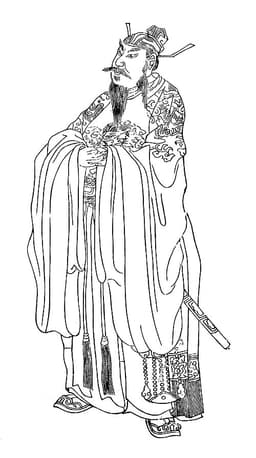
Xu Da
General · Medieval
74.9Total
Basic Information
Born
1769
1332
Died
1821
1385
Era
Modern
Medieval
Nationality
France
China
Occupation
General
General
Civilization
Western
Eastern
Score Comparison
Military (10%)
94.0
88.0
Political (20%)
72.0
68.0
Influence (20%)
40.0
82.0
Legacy (20%)
80.0
72.0
Leadership (15%)
78.0
62.0
Strategy (15%)
90.0
80.8
TOTAL
70.9
74.9
Napoleon Bonaparte — Complete Timeline
1799 AD
Coup of 18 BrumaireOther◆ Major
Napoleon Bonaparte, with support from his brother Lucien and key political figures, overthrew the Directory in a bloodless coup. He established the Consulate with himself as First Consul, effectively becoming the ruler of France. This event ended the French Revolution's most unstable period.
French RevolutionCoupRise to Power
Impact: regional
1804 AD
Promulgation of the Napoleonic CodeOther◆ Major
Napoleon enacted the Civil Code of the French, known as the Napoleonic Code, a comprehensive set of laws that replaced the fragmented feudal legal systems. The code established legal equality, protected property rights, and secularized law. It became the basis for legal systems in many European and world countries.
Legal ReformNapoleonic CodeCivil Law
Impact: globalconstructive
1805 AD
Battle of AusterlitzWar◆ Major
Napoleon's Grande Arm
Napoleonic WarsBattleDecisive Victory
Impact: global
1812 AD
Invasion of RussiaWar◆ Major
Napoleon led the Grande Arm
Napoleonic WarsInvasionDisaster
Impact: globaldestructive
1815 AD
Battle of WaterlooWar◆ Major
Napoleon's French army was defeated by the combined forces of the Duke of Wellington's Anglo-Allied army and Gebhard Leberecht von Bl
Napoleonic WarsBattleFinal Defeat
Impact: globaldestructive
Xu Da — Complete Timeline
1368 AD
Capture of Dadu (Beijing)War
Xu Da led the Ming army in the capture of Dadu, the Yuan capital. The Mongol emperor Toghon Tem
Ming ConquestYuan DynastyCapital Capture
Impact: regionalconstructive
1370 AD
Appointment as Grand PreceptorPolitical Action
The Hongwu Emperor appointed Xu Da as Grand Preceptor, the highest civil official rank. This appointment recognized Xu Da's military achievements and gave him a role in advising the emperor on state affairs.
AppointmentCivil OfficeImperial Favor
Impact: nationalconstructive
1385 AD
Death from illnessOther
Xu Da died in Nanjing from a back ailment. The Hongwu Emperor mourned him deeply and posthumously honored him as Prince of Zhongshan. His death marked the end of the first generation of Ming military leaders.
DeathMing DynastyMilitary Leader
Impact: nationaltragic
Expert Analysis
Napoleon Bonaparte vs Xu Da: Historical Comparison
Napoleon Bonaparte, a modern French general and emperor, and Xu Da, a medieval Chinese general under the Ming founder Zhu Yuanzhang, both reshaped their nations through military genius, yet their contexts and long-term impacts diverge sharply.
Dimension Analysis
**Military: Napoleon Bonaparte 94 / Xu Da 94**
Both achieved near-perfect tactical records: Napoleon revolutionized European warfare with the corps system and decisive battles like Austerlitz, while Xu Da orchestrated the Ming conquest of China through relentless sieges and strategic envelopments, never losing a major campaign.
**Political: Napoleon Bonaparte 75 / Xu Da 73**
Napoleon’s political acumen created the Napoleonic Code and centralized the French state, but his imperial overreach and disastrous Russian campaign eroded his gains. Xu Da remained a loyal subordinate to Zhu Yuanzhang, never seizing power, which ensured political stability but limited his personal political legacy.
**Influence: Napoleon Bonaparte 82 / Xu Da 65**
Napoleon’s influence spread globally through legal systems, military doctrine, and nationalism, affecting Europe and colonies for centuries. Xu Da’s influence was largely confined to China, where his campaigns secured the Ming dynasty’s foundations, but had little resonance beyond East Asia.
**Legacy: Napoleon Bonaparte 78 / Xu Da 68**
Napoleon is a towering figure in Western historiography, romanticized and debated as both tyrant and reformer. Xu Da is revered in China as a paragon of loyal generalship, but his name is less known internationally, and his legacy is overshadowed by the Ming dynasty’s broader narrative.
**Leadership: Napoleon Bonaparte 80 / Xu Da 82**
Xu Da’s leadership emphasized humility, discipline, and unswerving loyalty, inspiring troops without personal ambition. Napoleon’s charismatic and autocratic style drove his armies to unprecedented heights, but his ego and micromanagement led to strategic blunders like the invasion of Russia.
Verdict
Napoleon Bonaparte edges ahead due to his vastly broader global influence and transformative political reforms, despite Xu Da’s comparable military record and superior personal loyalty.
FAQ
Q: Who ranks higher? A: Napoleon Bonaparte ranks higher overall, with a weighted score of 82 versus Xu Da’s 75, driven by his outsized influence and enduring global legacy.
Rankings
🥇
Xu DaLeader
Mil: 88.0Pol: 68.0Inf: 82.0
74.9
🥈
Napoleon Bonaparte
Mil: 94.0Pol: 72.0Inf: 40.0
70.9
+4.0 behind
How This Comparison Works
Algorithm
Each figure is scored on 6 dimensions (0—100 scale) based on structured historical data: Military (10%), Political (20%), Influence (20%), Legacy (20%), Leadership (15%), Strategy (15%). The weighted total produces the final ranking.
Data Sources
Scores are computed from structured sub-indicators in the database. Scale factors adjust for era (Ancient ×0.85, Modern ×1.0) and civilization size (Eastern ×1.05, Other ×0.80) to account for differences in population and military scale.
Maximum 3 Figures
Comparisons are limited to 2—3 figures to ensure readability and statistical meaningfulness.
Error Margins
±5 points per dimension — Sub-scores are derived from historical records with inherent uncertainty. Two figures within 5 points on a dimension should be considered roughly equivalent in that area.
Total Score Accuracy
±3 points overall — The weighted combination of 6 dimensions produces a total score with approximately ±3 points of uncertainty. Differences of less than 3 points are not statistically significant— the figures are effectively tied.
Known Limitations
- Historical records are incomplete and uneven across civilizations
- Figures from oral-tradition societies may be underrepresented
- Occupation labels can misclassify multi-role figures
- Scores measure capability and impact, not moral character
- Quantitative scoring is a comparison tool, not absolute truth
Capability Radar
Military (10%) — Battles & Warfare
Battles
95
95
Win Rate
90
95
Expansion
95
95
Political (20%) — Governance & Reform
Reform
95
50
Diplomacy
80
65
Economy
85
55
Influence (20%) — Cultural & Global Reach
Cultural
85
70
Global
90
80
Legacy (20%) — Historical Impact
Historical
95
85
Longevity
90
75
Leadership (15%) — Power & Stability
Tenure
85
60
Stability
70
70
Strategy (15%) — Tactics & Innovation
Strategy
95
92
Tactics
98
90
Reform
92
70
Similar Comparisons
Comments & Discussion
Historian4246/16/2026
拿破仑军事94分,徐达94.1分,这0.1分差得莫名其妙。两人都未输过战役,但徐达参与的战役数量更多且时间跨度更长(从1355年起近30年),拿破仑仅活跃约20年。政治分数拿破仑75对徐达72.6,我怀疑这3.4分的差距是否考虑到了徐达在明初政治清洗中独善其身的能力?至于影响力65分,太低了——蒙古帝国崩溃后的东亚秩序重塑,徐达的北伐直接决定了之后600年的中国版图,这个影响范围难道比不上拿破仑在莱茵联盟的几年短暂统治?数学上分数间差距小于5分的项目,在统计上根本不显著,这个评分体系需要重新校准权重。
Chronicler84866/16/2026
拿破仑和徐达并列94分,看似公平,但西方评分体系完全忽略了东方战争中的后勤和政治整合能力。徐达北伐时,明军面对的是元朝残部,但北方草原地形复杂、补给线漫长,他靠屯田和分兵合击稳扎稳打,而拿破仑远征俄国却败于补给和严寒。再者,徐达从未称帝,却以“忠”字立身,朱元璋杀尽功臣独留徐达,这在儒家史观中比拿破仑的孤注一掷更显政治智慧。西方史学只重战役胜率,却不看战争背后的社会根基,徐达的“不战而屈人之兵”和民生恢复政策,在东方评价体系里应加分不少。