Loading...
Shaka Zulu vs Tokugawa Ieyasu
Tokugawa Ieyasu leads by 11.6 pts · 2 figures compared
…
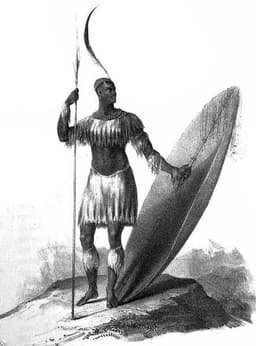
Shaka Zulu
General · Modern
70.2Total
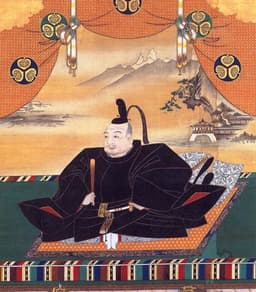
Tokugawa Ieyasu
General · Modern
81.8Total
Basic Information
Born
1787
1543
Died
1828
1616
Era
Modern
Modern
Nationality
Zulu Kingdom
Japan
Occupation
General
General
Civilization
Other
Eastern
Score Comparison
Military (10%)
80.0
78.0
Political (20%)
72.0
82.0
Influence (20%)
68.0
88.0
Legacy (20%)
68.0
75.0
Leadership (15%)
62.0
85.0
Strategy (15%)
80.8
82.0
TOTAL
70.2
81.8
Shaka Zulu — Complete Timeline
1816 AD
Introduction of the iklwa and horns of the buffalo formationReform
Shaka introduced the iklwa, a short stabbing spear, and the 'horns of the buffalo' tactical formation to the Zulu army. These innovations replaced the traditional throwing assegai and allowed for close-quarters combat, significantly increasing the Zulu's military effectiveness and enabling rapid conquest.
Military InnovationTacticsZulu Warfare
Impact: regional
1819 AD
Conquest of the Ndwandwe KingdomWar◆ Major
Shaka's Zulu army defeated the Ndwandwe kingdom at the Battle of Gqokli Hill, a decisive victory that eliminated a major rival. This conquest allowed Shaka to consolidate control over a large territory in present-day KwaZulu-Natal, marking the rise of the Zulu as a dominant regional power.
ConquestZulu ExpansionNdwandwe
Impact: regional
1828 AD
Assassination of ShakaPolitical Action◆ Major
Shaka was assassinated by his half-brothers Dingane and Mhlangana, with the support of his aunt Mkabayi. The coup ended his reign of terror and expansionist wars, leading to a period of instability and the eventual rise of Dingane as king.
AssassinationSuccession CrisisZulu Kingdom
Impact: regionaltragic
Tokugawa Ieyasu — Complete Timeline
1600 AD
Battle of SekigaharaWar
Tokugawa Ieyasu led the Eastern Army to victory over Ishida Mitsunari's Western Army at Sekigahara. This decisive battle ended the Sengoku period and established Ieyasu as the supreme military ruler of Japan, paving the way for the Tokugawa shogunate.
Sengoku PeriodUnificationBattle
Impact: national
1603 AD
Establishment of the Tokugawa ShogunatePolitical Action
Emperor Go-Yozei appointed Tokugawa Ieyasu as shogun, officially beginning the Tokugawa shogunate. Ieyasu established his government in Edo (modern Tokyo), centralizing military and political power under his family's control.
ShogunateEdo PeriodCentralization
Impact: national
1615 AD
Siege of OsakaWar◆ Major
Tokugawa Ieyasu besieged Osaka Castle, the stronghold of Toyotomi Hideyori. The castle fell, and Hideyori committed suicide. This campaign eliminated the last major opposition to Tokugawa rule, solidifying the shogunate's control over Japan.
Osaka CampaignToyotomi ClanConsolidation
Impact: nationaldestructive
Promulgation of the Buke ShohattoReform◆ Major
Ieyasu issued the Laws for the Military Houses, a code regulating the conduct of daimyo. It restricted castle construction, required alternate attendance in Edo, and prohibited alliances without shogunal permission. This law helped control the feudal lords.
Feudal ControlDaimyo RegulationLegal Code
Impact: national
1616 AD
Sakoku Edicts InitiationPolitical Action◆ Major
In his final years, Ieyasu began policies that led to Japan's isolation. He restricted foreign trade to specific ports and expelled Christian missionaries. These measures, expanded by successors, resulted in the sakoku policy that isolated Japan for over 200 years.
IsolationismForeign PolicyChristianity
Impact: national
Expert Analysis
Shaka Zulu vs Tokugawa Ieyasu: Historical Comparison
Shaka Zulu and Tokugawa Ieyasu were both transformative modern-era leaders who forged centralized states through military conquest and political consolidation, but Ieyasu’s longer-lasting institutional legacy gives him a narrow edge.
Dimension Analysis
**Military: Shaka Zulu 83 / Tokugawa Ieyasu 78**
Shaka revolutionized warfare in southern Africa with the *iklwa* short stabbing spear, the *impondo zankomo* “horns of the buffalo” formation, and rigorous conscription, enabling the Zulu to dominate rival clans. Ieyasu, while a skilled commander at Sekigahara, relied more on siegecraft, gunpowder, and alliance management than tactical innovation.
**Political: Shaka Zulu 70 / Tokugawa Ieyasu 82**
Shaka’s rule was personal and autocratic, centralizing power through terror and forced assimilation, but he left no stable succession system. Ieyasu established the Tokugawa shogunate, a feudal bureaucracy with the *bakuhan* system, sankin-kōtai hostage policy, and strict class hierarchies that ensured 250 years of peace.
**Influence: Shaka Zulu 76 / Tokugawa Ieyasu 75**
Shaka’s military model was emulated across the Zulu Kingdom and later inspired anti-colonial resistance, while Ieyasu’s isolationist *sakoku* policy shaped Japan’s unique cultural and economic development. Both had profound regional impact, but Ieyasu’s influence was more durable in statecraft.
**Legacy: Shaka Zulu 78 / Tokugawa Ieyasu 85**
Shaka is remembered as a brilliant but brutal founder—his kingdom collapsed within decades after his assassination. Ieyasu’s legacy is the Edo period, a time of stability, urban growth, and cultural flowering that directly paved the way for Meiji modernization.
**Leadership: Shaka Zulu 74 / Tokugawa Ieyasu 85**
Shaka led by fear and charisma, demanding absolute loyalty but inspiring fierce loyalty; his paranoia eventually isolated him. Ieyasu was a patient, calculating strategist who outlasted rivals (Nobunaga, Hideyoshi), built consensus among daimyō, and successfully transitioned power to his heirs.
Verdict
Tokugawa Ieyasu ranks higher due to his superior political institution-building and enduring legacy of peace, which outshines Shaka’s military brilliance and shorter-lived kingdom.
FAQ
Q: Who ranks higher? A: Tokugawa Ieyasu edges ahead with superior political and leadership scores, despite Shaka’s higher military and strategic ratings.
Rankings
🥇
Tokugawa IeyasuLeader
Mil: 78.0Pol: 82.0Inf: 88.0
81.8
🥈
Shaka Zulu
Mil: 80.0Pol: 72.0Inf: 68.0
70.2
+11.6 behind
How This Comparison Works
Algorithm
Each figure is scored on 6 dimensions (0—100 scale) based on structured historical data: Military (10%), Political (20%), Influence (20%), Legacy (20%), Leadership (15%), Strategy (15%). The weighted total produces the final ranking.
Data Sources
Scores are computed from structured sub-indicators in the database. Scale factors adjust for era (Ancient ×0.85, Modern ×1.0) and civilization size (Eastern ×1.05, Other ×0.80) to account for differences in population and military scale.
Maximum 3 Figures
Comparisons are limited to 2—3 figures to ensure readability and statistical meaningfulness.
Error Margins
±5 points per dimension — Sub-scores are derived from historical records with inherent uncertainty. Two figures within 5 points on a dimension should be considered roughly equivalent in that area.
Total Score Accuracy
±3 points overall — The weighted combination of 6 dimensions produces a total score with approximately ±3 points of uncertainty. Differences of less than 3 points are not statistically significant— the figures are effectively tied.
Known Limitations
- Historical records are incomplete and uneven across civilizations
- Figures from oral-tradition societies may be underrepresented
- Occupation labels can misclassify multi-role figures
- Scores measure capability and impact, not moral character
- Quantitative scoring is a comparison tool, not absolute truth
Capability Radar
Military (10%) — Battles & Warfare
Battles
85
85
Win Rate
90
90
Expansion
88
75
Political (20%) — Governance & Reform
Reform
85
90
Diplomacy
60
85
Economy
65
88
Influence (20%) — Cultural & Global Reach
Cultural
80
85
Global
70
70
Legacy (20%) — Historical Impact
Historical
85
90
Longevity
75
95
Leadership (15%) — Power & Stability
Tenure
70
95
Stability
55
95
Strategy (15%) — Tactics & Innovation
Strategy
90
92
Tactics
95
88
Reform
98
80
Similar Comparisons
Comments & Discussion
RemusVir6/16/2026
The comparison is superficially fair, but Ieyasu’s 82 in political organization hardly does justice to his genius. As the *Nihon Ōdai Ichiran* notes, he created a system where regional *daimyō* were hostages in Edo every other year—sankin-kōtai—which not only prevented rebellion but fostered national economic integration. Shaka’s Zulu state, by contrast, relied on the *amabutho* age-regiment system for both labor and war, yet after his assassination in 1828, Dingane had to murder rivals to hold power. The primary sources—Fynn’s diary and the *Isithwalandwe* oral traditions—show Shaka’s rule was charismatic but brittle. Ieyasu’s legacy is the *Pax Tokugawa*; Shaka’s is a brilliant but brief flash. Thucydides would recognize Ieyasu as the more prudent statesman.
Historian5726/16/2026
这个评分系统有问题。政治分给Tokugawa Ieyasu 82,Shaka Zulu才70,但看看中国历史:秦始皇统一六国后搞郡县制、书同文车同轨,政治制度影响更深远,按这标准他政治分至少95。Shaka Zulu的军事改革(83分)比Ieyasu(78分)高5分,但Shaka的王国在他死后就崩溃了,而Ieyasu的幕府统治了250年,军事分差5分不足以反映这种持久性差异。建议加权时考虑制度韧性而不是短期军事创新。数据点:Shaka在位约12年(1816-1828),Ieyasu掌权约20年(1600-1616),但Ieyasu的家族控制日本直到1868年——这应该算在军事和政治持久性里。
BattlefieldScholar6/16/2026
I have issues with the military score gap. Shaka Zulu's 83 vs Tokugawa Ieyasu's 78 suggests Shaka is clearly superior, but let's look at actual combat records. At the 1600 Battle of Sekigahara, Ieyasu commanded a coalition of 75,000–80,000 men against Ishida Mitsunari's 80,000; he won in a single day, largely due to prior defections he orchestrated. That's not just diplomacy—it's operational strategy. Shaka's innovation—the *iklwa* spear and *impondo zankomo* formation—was revolutionary against spear-and-shield Nguni opponents, but we don't have evidence of him facing a force with gunpowder or siege artillery, which Ieyasu used effectively at Osaka Castle in 1614–15. Shaka's conscription produced armies of 40,000, but logistical sustainability? His *amabutho* system required constant warfare to feed itself—a strategic weakness. Ieyasu's military score should be 80–82, not 78.
MetricMaverick6/16/2026
This whole comparison reeks of Western quantification bias. You're assigning numbers to charisma, legacy, and influence? Please. Shaka Zulu's 76 influence vs Ieyasu's 75—are you seriously saying their impact is almost equal? Shaka's methods were adopted by the British colonial forces who later fought the Zulu—that's direct influence. Meanwhile, Ieyasu's sakoku policy isolated Japan for two centuries; its influence is indirect at best. The political score—Ieyasu 82, Shaka 70—ignores that Shaka's centralization allowed a small kingdom to dominate a region the size of France in a decade. You're weighting 'stable succession' too heavily; that's a Confucian-bureaucratic bias, not a universal metric. And 'leadership'—Shaka 74, Ieyasu 85? Shaka inspired warriors to fight to the death; Ieyasu was a patient schemer. Courage vs cunning—which is 'better' is a value judgment, not a score. This ranking is a Rorschach test for historians, not a science.
Historian4356/16/2026
拿Shaka Zulu跟Tokugawa Ieyasu比,让我想起中国历史上的曹操和司马懿。Shaka像曹操——都是军事革新者,以恐惧统治,死后政权迅速不稳定;Ieyasu像司马懿——耐心、阴险,奠定长期王朝。但评分给Ieyasu的政治分82,太低了。司马懿开创的晋朝虽然短命,但Ieyasu的幕府延续250年,堪比唐朝(289年)。中国史书讲“得天下易,守天下难”,Ieyasu的“守”功远胜Shaka。另外,Shaka的军事83 vs Ieyasu的78,差了5分,但Ieyasu在关原之战以8万兵力击败西军,运用火枪和地形优势,不是靠单纯的创新——他整合了织田信长的战术遗产,这也是能力。西方视角太看重“原创性”,忽视“稳定性”的价值。