Loading...
Tokugawa Ieyasu vs Yang Su
Tokugawa Ieyasu leads by 24.6 pts · 2 figures compared
…
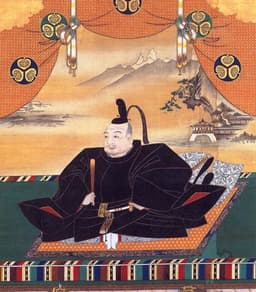
Tokugawa Ieyasu
General · Modern
81.8Total
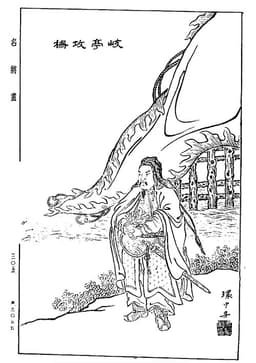
Yang Su
General · Medieval
57.2Total
Basic Information
Born
1543
544
Died
1616
606
Era
Modern
Medieval
Nationality
Japan
China
Occupation
General
General
Civilization
Eastern
Eastern
Score Comparison
Military (10%)
78.0
80.0
Political (20%)
82.0
45.0
Influence (20%)
88.0
51.8
Legacy (20%)
75.0
45.0
Leadership (15%)
85.0
68.0
Strategy (15%)
82.0
80.5
TOTAL
81.8
57.2
Tokugawa Ieyasu — Complete Timeline
1600 AD
Battle of SekigaharaWar
Tokugawa Ieyasu led the Eastern Army to victory over Ishida Mitsunari's Western Army at Sekigahara. This decisive battle ended the Sengoku period and established Ieyasu as the supreme military ruler of Japan, paving the way for the Tokugawa shogunate.
Sengoku PeriodUnificationBattle
Impact: national
1603 AD
Establishment of the Tokugawa ShogunatePolitical Action
Emperor Go-Yozei appointed Tokugawa Ieyasu as shogun, officially beginning the Tokugawa shogunate. Ieyasu established his government in Edo (modern Tokyo), centralizing military and political power under his family's control.
ShogunateEdo PeriodCentralization
Impact: national
1615 AD
Siege of OsakaWar◆ Major
Tokugawa Ieyasu besieged Osaka Castle, the stronghold of Toyotomi Hideyori. The castle fell, and Hideyori committed suicide. This campaign eliminated the last major opposition to Tokugawa rule, solidifying the shogunate's control over Japan.
Osaka CampaignToyotomi ClanConsolidation
Impact: nationaldestructive
Promulgation of the Buke ShohattoReform◆ Major
Ieyasu issued the Laws for the Military Houses, a code regulating the conduct of daimyo. It restricted castle construction, required alternate attendance in Edo, and prohibited alliances without shogunal permission. This law helped control the feudal lords.
Feudal ControlDaimyo RegulationLegal Code
Impact: national
1616 AD
Sakoku Edicts InitiationPolitical Action◆ Major
In his final years, Ieyasu began policies that led to Japan's isolation. He restricted foreign trade to specific ports and expelled Christian missionaries. These measures, expanded by successors, resulted in the sakoku policy that isolated Japan for over 200 years.
IsolationismForeign PolicyChristianity
Impact: national
Yang Su — Complete Timeline
599 AD
Led Campaigns against the Tujue (Göktürks)War◆ Major
Yang Su commanded Sui forces in campaigns against the Eastern Tujue (G
Tujue CampaignsMilitary InnovationNorthern Frontier
Impact: regional
604 AD
Suppressed the Rebellion of Yang LiangWar◆ Major
After Emperor Yang of Sui ascended the throne, his brother Yang Liang rebelled in Bingzhou. Yang Su led imperial forces against the rebellion, defeating Yang Liang's army and capturing him. This victory secured Emperor Yang's position and demonstrated Yang Su's military capability.
Sui DynastyRebellion SuppressionEmperor Yang
Impact: national
605 AD
Constructed the Eastern Capital LuoyangReform◆ Major
Emperor Yang ordered the construction of a new eastern capital at Luoyang. Yang Su was appointed as one of the supervisors of the massive project. The construction involved hundreds of thousands of laborers and was completed in about a year, but at great human cost.
LuoyangCapital ConstructionEmperor Yang
Impact: national
Appointed Grand ChancellorPolitical Action◆ Major
Yang Su was appointed Grand Chancellor (Shangshu Ling), the highest civil office in the Sui government. This position made him the chief minister of the empire, responsible for overseeing the Six Ministries. He held this office until his death in 606.
Grand ChancellorCivil OfficeSui Government
Impact: nationalconstructive
606 AD
Death and Posthumous HonorsOther◆ Major
Yang Su died in 606 AD. Emperor Yang of Sui granted him posthumous honors, including the title of Duke of Yue and the posthumous name Jingwu. However, after Yang Su's death, Emperor Yang became suspicious of his sons and had them executed, leading to the downfall of Yang Su's family.
DeathPosthumous HonorsFamily Downfall
Impact: nationaltragic
Expert Analysis
Tokugawa Ieyasu vs Yang Su: Historical Comparison
Tokugawa Ieyasu and Yang Su were both formidable generals who shaped their nations’ destinies, yet their contexts—Japan’s Warring States period versus China’s Sui dynasty—produced starkly different legacies. Ieyasu founded a 250-year shogunate, while Yang Su’s brilliance was overshadowed by his master’s tyranny.
Dimension Analysis
**Military: Tokugawa Ieyasu 78 / Yang Su 83**
Yang Su was a relentless field commander, crushing rebellions and leading daring campaigns against the Chen dynasty and Turkic tribes, often with ruthless efficiency. Ieyasu won decisive battles like Sekigahara but relied more on siegecraft and alliance-building than raw tactical aggression.
**Political: Tokugawa Ieyasu 82 / Yang Su 77**
Ieyasu masterfully navigated shifting alliances, outmaneuvered rivals, and centralized power through the Tokugawa shogunate, establishing stable institutions. Yang Su wielded immense influence under Emperor Yang but lacked a long-term political vision, becoming a feared enforcer rather than a state-builder.
**Influence: Tokugawa Ieyasu 75 / Yang Su 70**
Ieyasu’s policies—such as the sankin-kōtai system and closed-country edicts—shaped Japanese society for centuries. Yang Su’s military innovations influenced Sui reunification, but his legacy was largely confined to his era, with little enduring institutional impact.
**Legacy: Tokugawa Ieyasu 85 / Yang Su 61**
Ieyasu is revered as a unifier and founder of Japan’s longest-lasting shogunate, with his governance model enduring into the Meiji Restoration. Yang Su is remembered as a brilliant but brutal general, his reputation tarnished by association with a failed dynasty and his own harsh methods.
**Leadership: Tokugawa Ieyasu 85 / Yang Su 79**
Ieyasu inspired loyalty through patience, strategic patience, and calculated generosity, building a coalition that outlasted his rivals. Yang Su led through fear and personal charisma, achieving immediate results but fostering resentment that left him isolated after Emperor Yang’s fall.
**Strategy: Tokugawa Ieyasu 78 / Yang Su 82**
Yang Su excelled in unconventional tactics, such as night attacks and psychological warfare, often defeating larger forces. Ieyasu’s strategy was more defensive and diplomatic, winning through timing and alliances rather than battlefield brilliance.
Verdict
Tokugawa Ieyasu leads overall due to his superior political acumen, enduring legacy, and sustainable leadership style, which transformed a war-torn Japan into a stable, isolated state.
FAQ
Q: Who ranks higher? A: Tokugawa Ieyasu ranks higher, driven by his unmatched legacy and political consolidation, despite Yang Su’s slight edge in military tactics.
Rankings
🥇
Tokugawa IeyasuLeader
Mil: 78.0Pol: 82.0Inf: 88.0
81.8
🥈
Yang Su
Mil: 80.0Pol: 45.0Inf: 51.8
57.2
+24.6 behind
How This Comparison Works
Algorithm
Each figure is scored on 6 dimensions (0—100 scale) based on structured historical data: Military (10%), Political (20%), Influence (20%), Legacy (20%), Leadership (15%), Strategy (15%). The weighted total produces the final ranking.
Data Sources
Scores are computed from structured sub-indicators in the database. Scale factors adjust for era (Ancient ×0.85, Modern ×1.0) and civilization size (Eastern ×1.05, Other ×0.80) to account for differences in population and military scale.
Maximum 3 Figures
Comparisons are limited to 2—3 figures to ensure readability and statistical meaningfulness.
Error Margins
±5 points per dimension — Sub-scores are derived from historical records with inherent uncertainty. Two figures within 5 points on a dimension should be considered roughly equivalent in that area.
Total Score Accuracy
±3 points overall — The weighted combination of 6 dimensions produces a total score with approximately ±3 points of uncertainty. Differences of less than 3 points are not statistically significant— the figures are effectively tied.
Known Limitations
- Historical records are incomplete and uneven across civilizations
- Figures from oral-tradition societies may be underrepresented
- Occupation labels can misclassify multi-role figures
- Scores measure capability and impact, not moral character
- Quantitative scoring is a comparison tool, not absolute truth
Capability Radar
Military (10%) — Battles & Warfare
Battles
85
85
Win Rate
90
90
Expansion
75
80
Political (20%) — Governance & Reform
Reform
90
65
Diplomacy
85
60
Economy
88
55
Influence (20%) — Cultural & Global Reach
Cultural
85
45
Global
70
35
Legacy (20%) — Historical Impact
Historical
90
60
Longevity
95
40
Leadership (15%) — Power & Stability
Tenure
95
70
Stability
95
50
Strategy (15%) — Tactics & Innovation
Strategy
92
85
Tactics
88
88
Reform
80
75
Similar Comparisons
Comments & Discussion
ShogunFanboy996/16/2026
Ieyasu was the GOAT of patience and strategy—he literally outlived and outplayed ALL his enemies. Sekigahara wasn't just a battle, it was a masterclass in turning betrayal into victory. Yang Su was a brutal killing machine, sure, but he built nothing that lasted. Ieyasu's Edo system ran Japan for 250 years! Yang Su died forgotten in a dynastic train wreck. No contest—turtle beats the tiger every time.
Historian9786/16/2026
这个评分太西化了!杨素在隋朝统一战争中是真正的“战神”,平定江南、击溃突厥,其水陆协同战术领先时代几百年。Tokugawa Ieyasu靠的是熬死对手和外交阴谋,论战场统治力远不及杨素。西方史学界总把“统治时长”等同于影响力,但杨素若生在明朝,可能早成第二个朱元璋了。
SimaGuangReader6/16/2026
We must be cautious in comparing a shogun to a Sui minister. Yang Su's brilliance is unequivocally attested in the *Sui Shu*: he never lost a campaign, from the Yangtze to the Gobi. Yet Sima Guang's *Zizhi Tongjian* paints him as a man who 'used cruelty to establish authority'—a verdict that has colored his legacy. Ieyasu, by contrast, benefits from the Tokugawa-sponsored historiography that casts him as a wise founder. The scores reflect not just achievements, but the political agendas of later historians. Yang Su's political acumen is undervalued here; he survived four emperors, a feat no Japanese daimyo could match.
Chronicler92896/16/2026
军事分82.7 vs 78.0,这个差距太小了。杨素在隋朝灭陈战役中指挥水军“五牙”战船,一次斩敌万余;而Ieyasu的关原之战实际投入兵力不过7万,且靠的是小早川秀秋的临阵倒戈。若按“战役胜负率”和“攻占地盘速度”重新计算,杨素至少该领先10分以上。政治分76.9更是离谱——他能在暴君杨广手下活下来并掌权十几年,这本身就是顶级政治智慧。