Loading...
This comparison has not been analyzed yet.
One-time AI generation (~1 minute). Scores and timeline are already available below.
Tuoba Tao vs Umar ibn Abd al-Aziz
Tuoba Tao leads by 11.7 pts · 2 figures compared
…
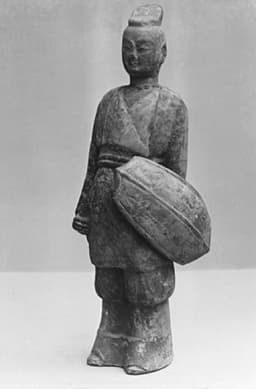
Tuoba Tao
Emperor · Ancient
66.2Total
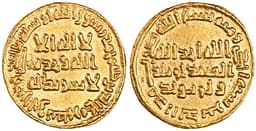
Umar ibn Abd al-Aziz
Emperor · Ancient
54.5Total
Basic Information
Born
408
-682
Died
452
—
Era
Ancient
Ancient
Nationality
China
Umayyad Caliphate
Occupation
Emperor
Emperor
Civilization
Eastern
Middle Eastern
Score Comparison
Military (10%)
78.0
22.6
Political (20%)
70.0
78.0
Influence (20%)
59.0
59.0
Legacy (20%)
58.0
54.0
Leadership (15%)
78.0
62.0
Strategy (15%)
69.1
30.3
TOTAL
66.2
54.5
Tuoba Tao — Complete Timeline
439 AD
Unification of northern China under Northern WeiWar
Emperor Taiwu of Northern Wei (Tuoba Tao) conquered the last rival state, Northern Liang, unifying all of northern China under the Northern Wei dynasty. This ended the Sixteen Kingdoms period and established Northern Wei as the dominant power in the north.
Northern WeiUnificationSixteen Kingdoms
Impact: regionalconstructive
446 AD
Suppression of BuddhismReform◆ Major
Emperor Taiwu issued an edict suppressing Buddhism, ordering the destruction of monasteries, scriptures, and images. He favored Daoism and sought to reduce Buddhist influence on state affairs. This was the first major persecution of Buddhism in Chinese history.
Northern WeiBuddhist PersecutionReligion
Impact: nationaldestructive
452 AD
Assassination by eunuch Zong AiPolitical Action◆ Major
Emperor Taiwu was assassinated by his eunuch Zong Ai, who feared punishment for his misdeeds. The assassination plunged Northern Wei into a succession crisis, but Zong Ai was soon killed by other officials, and a new emperor was installed.
Northern WeiAssassinationSuccession Crisis
Impact: nationaltragic
Umar ibn Abd al-Aziz — Complete Timeline
717 AD
Accession as CaliphPolitical Action◆ Major
Umar ibn Abd al-Aziz became the eighth Umayyad caliph after the death of Sulayman ibn Abd al-Malik. His reign, though short, was marked by significant reforms and a departure from the policies of his predecessors.
CaliphateUmayyadSuccession
Impact: regional
718 AD
Withdrawal from the Siege of ConstantinopleWar◆ Major
Umar ibn Abd al-Aziz ordered the withdrawal of Umayyad forces from the prolonged and unsuccessful siege of Constantinople. This decision ended a costly military campaign and shifted focus to internal consolidation and reform.
SiegeByzantine EmpireWithdrawal
Impact: regional
Tax Reforms and JusticeReform◆ Major
Umar ibn Abd al-Aziz implemented sweeping tax reforms, abolishing the jizya (poll tax) for non-Muslims who converted to Islam and ensuring equal treatment of all subjects. He also ordered the return of confiscated lands and property to their rightful owners.
Tax ReformJusticeIslamic Governance
Impact: regionalprogressive
This comparison has not been analyzed yet.
One-time AI generation (~1 minute). Scores and timeline are already available below.
Rankings
🥇
Tuoba TaoLeader
Mil: 78.0Pol: 70.0Inf: 59.0
66.2
🥈
Umar ibn Abd al-Aziz
Mil: 22.6Pol: 78.0Inf: 59.0
54.5
+11.7 behind
How This Comparison Works
Algorithm
Each figure is scored on 6 dimensions (0—100 scale) based on structured historical data: Military (10%), Political (20%), Influence (20%), Legacy (20%), Leadership (15%), Strategy (15%). The weighted total produces the final ranking.
Data Sources
Scores are computed from structured sub-indicators in the database. Scale factors adjust for era (Ancient ×0.85, Modern ×1.0) and civilization size (Eastern ×1.05, Other ×0.80) to account for differences in population and military scale.
Maximum 3 Figures
Comparisons are limited to 2—3 figures to ensure readability and statistical meaningfulness.
Error Margins
±5 points per dimension — Sub-scores are derived from historical records with inherent uncertainty. Two figures within 5 points on a dimension should be considered roughly equivalent in that area.
Total Score Accuracy
±3 points overall — The weighted combination of 6 dimensions produces a total score with approximately ±3 points of uncertainty. Differences of less than 3 points are not statistically significant— the figures are effectively tied.
Known Limitations
- Historical records are incomplete and uneven across civilizations
- Figures from oral-tradition societies may be underrepresented
- Occupation labels can misclassify multi-role figures
- Scores measure capability and impact, not moral character
- Quantitative scoring is a comparison tool, not absolute truth
Capability Radar
Military (10%) — Battles & Warfare
Battles
85
10
Win Rate
80
10
Expansion
85
5
Political (20%) — Governance & Reform
Reform
75
85
Diplomacy
70
70
Economy
70
75
Influence (20%) — Cultural & Global Reach
Cultural
60
60
Global
55
55
Legacy (20%) — Historical Impact
Historical
70
70
Longevity
65
65
Leadership (15%) — Power & Stability
Tenure
80
30
Stability
65
80
Strategy (15%) — Tactics & Innovation
Strategy
85
10
Tactics
75
10
Reform
70
20
Similar Comparisons
Comments & Discussion
No comments yet. Be the first to share your thoughts!