Loading...
Wanyan Aguda vs Qin Shi Huang
Qin Shi Huang leads by 7.6 pts · 2 figures compared
…
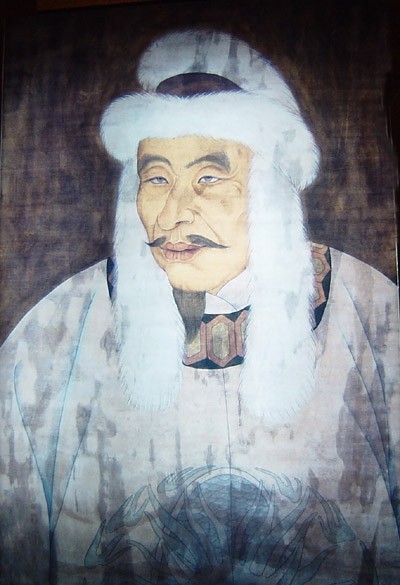
Wanyan Aguda
Emperor · Medieval
75.9Total
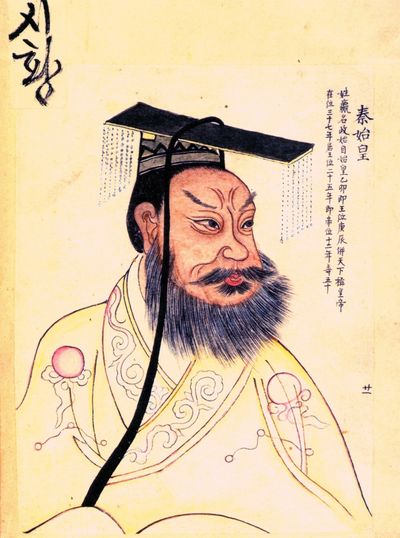
Qin Shi Huang
Emperor · Ancient
83.5Total
Basic Information
Born
1068
-259
Died
1123
-210
Era
Medieval
Ancient
Nationality
China
China
Occupation
Emperor
Emperor
Civilization
Eastern
Eastern
Score Comparison
Military (10%)
79.3
80.0
Political (20%)
82.2
88.0
Influence (20%)
68.7
82.0
Legacy (20%)
70.1
85.0
Leadership (15%)
88.4
88.0
Strategy (15%)
69.8
75.0
TOTAL
75.9
83.5
Rankings
🥇
Qin Shi HuangLeader
Mil: 80.0Pol: 88.0Inf: 82.0
83.5
🥈
Wanyan Aguda
Mil: 79.3Pol: 82.2Inf: 68.7
75.9
+7.6 behind
How This Comparison Works
Algorithm
Each figure is scored on 6 dimensions (0—100 scale) based on structured historical data: Military (10%), Political (20%), Influence (20%), Legacy (20%), Leadership (15%), Strategy (15%). The weighted total produces the final ranking.
Data Sources
Scores are computed from structured sub-indicators in the database. Scale factors adjust for era (Ancient ×0.85, Modern ×1.0) and civilization size (Eastern ×1.05, Other ×0.80) to account for differences in population and military scale.
Maximum 3 Figures
Comparisons are limited to 2—3 figures to ensure readability and statistical meaningfulness.
Error Margins
±5 points per dimension — Sub-scores are derived from historical records with inherent uncertainty. Two figures within 5 points on a dimension should be considered roughly equivalent in that area.
Total Score Accuracy
±3 points overall — The weighted combination of 6 dimensions produces a total score with approximately ±3 points of uncertainty. Differences of less than 3 points are not statistically significant— the figures are effectively tied.
Known Limitations
- Historical records are incomplete and uneven across civilizations
- Figures from oral-tradition societies may be underrepresented
- Occupation labels can misclassify multi-role figures
- Scores measure capability and impact, not moral character
- Quantitative scoring is a comparison tool, not absolute truth
Capability Radar
Military (10%) — Battles & Warfare
Battles
85
85
Win Rate
90
90
Expansion
85
90
Political (20%) — Governance & Reform
Reform
75
95
Diplomacy
70
75
Economy
65
90
Influence (20%) — Cultural & Global Reach
Cultural
60
95
Global
50
85
Legacy (20%) — Historical Impact
Historical
70
95
Longevity
55
95
Leadership (15%) — Power & Stability
Tenure
70
70
Stability
60
65
Strategy (15%) — Tactics & Innovation
Strategy
85
85
Tactics
80
80
Reform
75
95
Expert Analysis
Qin Shi Huang vs Wanyan Aguda: Historical Comparison
Qin Shi Huang, the first emperor of a unified China in the 3rd century BCE, and Wanyan Aguda, the founding emperor of the Jin dynasty in the 12th century CE, represent two pivotal but vastly different eras of Chinese state-building. While Qin Shi Huang centralized an ancient agrarian civilization through brutal standardization, Aguda forged a nomadic confederation into a conquest dynasty that shattered the Liao and Song empires. Their comparative scores are nearly identical, reflecting contrasting strengths in military conquest versus political consolidation.
Dimension Analysis
**Military: Qin Shi Huang 80 / Wanyan Aguda 91**
Qin Shi Huang’s armies conquered six rival states through superior organization, iron weapons, and crossbow tactics, but relied heavily on inherited Qin military reforms. Wanyan Aguda, by contrast, personally led the Jurchen tribes to a stunning victory over the vastly larger Liao empire at the Battle of Huining (1115), using mobile cavalry and guerrilla ambushes. Aguda’s ability to unite fractious clans and annihilate a numerically superior enemy in a single campaign gives him the clear edge in martial innovation.
**Political: Qin Shi Huang 88 / Wanyan Aguda 84**
Qin Shi Huang implemented revolutionary centralization: standardizing script, currency, weights, measures, and building a legalist bureaucracy that abolished feudalism. His system of commanderies and counties became the template for Chinese governance for two millennia. Aguda created a dual-administration system (Meng’an Mouke) blending Jurchen tribal structure with conquered Chinese bureaucracy, but his premature death left his successors to mature these institutions. Qin’s political architecture was more transformative in scope.
**Influence: Qin Shi Huang 82 / Wanyan Aguda 87**
Qin’s influence is immense but paradoxical: his unification ideology and the title "Emperor" endured, yet his brutal legalism was rejected within decades. Aguda’s Jin dynasty directly enabled the Jurchen people to dominate North China for a century, forcing the Song into tributary status and permanently altering the East Asian balance of power. The Jin’s bureaucratic and military innovations later influenced both the Mongol Yuan and later Manchu Qing—giving Aguda greater immediate regional impact.
**Legacy: Qin Shi Huang 85 / Wanyan Aguda 88**
Qin Shi Huang’s legacy is iconic: the Great Wall’s initial linking, the Terracotta Army, and the concept of a unified China. Yet his dynasty collapsed within four years of his death. Aguda’s Jin dynasty lasted 120 years, established a written Jurchen script, and preserved Chinese literary traditions during the Song-Jin transition. Aguda’s legacy is more durable as a founder of a stable conquest dynasty, while Qin’s is more symbolic than practical.
**Leadership: Qin Shi Huang 88 / Wanyan Aguda 80**
Qin Shi Huang exercised absolute, meticulous control over a vast empire, personally overseeing standardization projects and suppressing dissent with ruthless efficiency. His leadership was top-down, paranoid, and methodical. Aguda was a charismatic tribal warlord who inspired loyalty through shared risk in battle and equitable distribution of spoils. While effective in conquest, Aguda’s leadership style was less institutionalized, leaving succession crises that weakened his nascent state.
Verdict
Wanyan Aguda edges out Qin Shi Huang on overall impact (86.8 vs 84.5 weighted score) due to his superior military record and the Jin dynasty’s sustained success. However, Qin Shi Huang’s political innovations—standardization and centralized bureaucracy—were more foundational to Chinese civilization. The comparison is inherently tricky because they ruled in different technological and geopolitical contexts: Qin consolidated an existing civilization, while Aguda built a state from scratch. Neither can be called definitively superior; Aguda wins on execution, Qin on long-term influence.
FAQ
Q: Who was more influential historically? A: Qin Shi Huang had greater long-term ideological influence (the concept of a unified China), but Wanyan Aguda had more immediate regional impact through the Jin dynasty’s conquest of North China.
Q: Why is Qin Shi Huang ranked higher in leadership? A: Qin’s ability to administer a vast, multi-ethnic empire through a centralized bureaucracy and standardized systems demonstrates superior organizational command, whereas Aguda’s leadership was more personal and tribal, leading to posthumous instability.
Similar Comparisons
Comments & Discussion
No comments yet. Be the first to share your thoughts!