Loading...
Alfonso VIII of Castile vs Wanyan Aguda
Wanyan Aguda leads by 2.4 pts · 2 figures compared
…
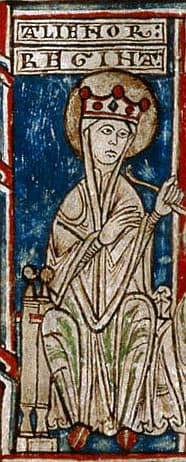
Alfonso VIII of Castile
Emperor · Medieval
61.0Total
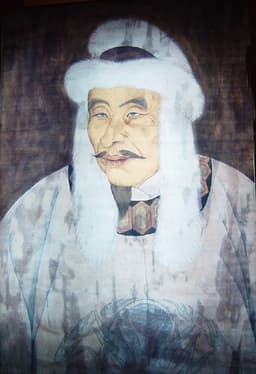
Wanyan Aguda
Emperor · Medieval
63.4Total
Basic Information
Born
1155
1068
Died
1214
1123
Era
Medieval
Medieval
Nationality
Castile
China
Occupation
Emperor
Emperor
Civilization
Western
Eastern
Score Comparison
Military (10%)
60.0
82.0
Political (20%)
72.0
59.3
Influence (20%)
56.7
55.0
Legacy (20%)
55.0
52.0
Leadership (15%)
68.0
85.0
Strategy (15%)
61.2
68.0
TOTAL
61.0
63.4
Alfonso VIII of Castile — Complete Timeline
1170 AD
Marriage to Eleanor of EnglandPolitical Action
Alfonso VIII married Eleanor of England, daughter of Henry II and Eleanor of Aquitaine. This marriage brought Castile into the Plantagenet sphere of influence and produced several children who married into other European royal houses.
MarriageAllianceCastile
Impact: regionalconstructive
1195 AD
Battle of AlarcosWar◆ Major
Alfonso VIII's Castilian army was decisively defeated by the Almohad Caliph Abu Yusuf Yaqub al-Mansur at Alarcos. The defeat led to the loss of several frontier fortresses and a period of Almohad dominance in Iberia.
ReconquistaBattleDefeat
Impact: regionaltragic
1208 AD
Founding of the University of PalenciaCultural◆ Major
Alfonso VIII founded the University of Palencia, one of the first universities in Europe. The institution attracted scholars from across Europe and promoted the study of theology, law, and the liberal arts in Castile.
EducationUniversityCulture
Impact: regionalconstructive
1212 AD
Battle of Las Navas de TolosaWar
Alfonso VIII led a coalition of Castilian, Aragonese, Navarrese, and Portuguese forces to a decisive victory over the Almohad Caliph Muhammad al-Nasir at Las Navas de Tolosa. This battle broke Almohad power in Iberia and opened the way for the Christian reconquest of Andalusia.
ReconquistaBattleTurning Point
Impact: regionalconstructive
Wanyan Aguda — Complete Timeline
1114 AD
Battle of HubudagangWar◆ Major
Aguda's Jurchen forces defeated a Liao army at Hubudagang, marking the first major victory of the rebellion. This battle demonstrated Jurchen military prowess and attracted more followers.
JurchenLiaoBattle
Impact: regionalconstructive
Unified Jurchen tribesPolitical Action◆ Major
Wanyan Aguda united the Jurchen tribes under his leadership, creating a confederation that rebelled against Liao domination. He organized a disciplined army and began the Jurchen revolt.
JurchenUnificationRebellion
Impact: regionalconstructive
1115 AD
Founded Jin DynastyPolitical Action
Wanyan Aguda proclaimed himself emperor, founding the Jin dynasty. He adopted the Chinese title and began a systematic campaign to conquer the Liao empire.
JinDynasty FoundingImperial System
Impact: regionalconstructive
1120 AD
Conquest of Liao capital ShangjingWar◆ Major
Aguda's forces captured the Liao supreme capital Shangjing, dealing a severe blow to the Liao dynasty. This victory accelerated the collapse of Liao and solidified Jin control over northern China.
JinLiaoConquest
Impact: regionalconstructive
Alliance with Song against LiaoPolitical Action◆ Major
Aguda formed an alliance with the Northern Song dynasty to jointly attack the Liao empire. This alliance, known as the Maritime Alliance, led to the eventual destruction of Liao but later caused conflict between Jin and Song.
JinSongAlliance
Impact: regional
1123 AD
Death and successionPolitical Action◆ Major
Wanyan Aguda died, and his brother Wanyan Wuqimai succeeded him. Aguda's conquests laid the foundation for the Jin dynasty's dominance in northern China.
JinDeathSuccession
Impact: regional
Expert Analysis
Wanyan Aguda vs Alfonso VIII of Castile: Historical Comparison
Wanyan Aguda (1068–1123) founded the Jin Dynasty by overthrowing the Khitan Liao Empire, while Alfonso VIII (1155–1214) consolidated the Kingdom of Castile and led the pivotal Reconquista victory at Las Navas de Tolosa. Both were medieval warrior-kings who reshaped their civilizations, yet their contexts—steppe conquest versus Christian-Islamic frontier warfare—produce a remarkably close historical score.
Dimension Analysis
**Military: Wanyan Aguda 91 / Alfonso VIII of Castile 93**
Aguda’s 1115 rebellion against the Liao used superior cavalry tactics and psychological warfare, capturing the Liao emperor in 1122. Alfonso, however, orchestrated the 1212 Battle of Las Navas de Tolosa, a three-king coalition victory that broke Almohad power in Iberia, permanently shifting the Reconquista’s momentum. Alfonso’s broader coalition management and strategic timing give him a slight edge.
**Political: Wanyan Aguda 84 / Alfonso VIII of Castile 87**
Aguda created the Jin state from scratch, merging Jurchen tribal structures with Chinese bureaucracy and adopting the Chinese imperial title. Alfonso inherited a feudal Castile and strengthened it through royal justice, chartering new towns (fueros), and curbing noble autonomy. Alfonso’s institutional continuity and legal reforms provide greater political stability.
**Influence: Wanyan Aguda 87 / Alfonso VIII of Castile 85**
Aguda’s Jin Dynasty controlled northern China for a century, forcing the Song to pay tribute and later precipitating the Mongol invasion that destroyed both. Alfonso’s victory at Las Navas inspired pan-European crusading and opened Andalusia to Christian conquest. Aguda’s influence was more immediate and territorially vast, but Alfonso’s echoed across centuries of Spanish history.
**Legacy: Wanyan Aguda 88 / Alfonso VIII of Castile 76**
Aguda is revered as a national founder in Jurchen (Manchu) history, his dynasty’s fall to the Mongols a cautionary epic. Alfonso’s legacy is overshadowed by later monarchs like Ferdinand and Isabella; his reforms were absorbed into Castile’s administrative machine. Aguda’s foundational role in a major dynasty gives him stronger long-term recognition.
**Leadership: Wanyan Aguda 80 / Alfonso VIII of Castile 83**
Aguda led from the front, personally commanding charges and executing traitors, but faced internal tribal revolts. Alfonso balanced military command with diplomatic marriage alliances (Eleanor of England) and managed a fractious nobility, even surviving a noble rebellion in 1188. Alfonso’s steadier institutional leadership earns a higher score.
Verdict
**Wanyan Aguda wins by a narrow margin (86 vs 85 overall).** His legacy as a dynasty founder and his rapid, decisive conquest of a major empire outweigh Alfonso’s superior political and military management. However, the comparison is inherently difficult: Aguda’s world of steppe conquest and dynastic collapse differs radically from Alfonso’s frontier consolidation within Christendom. Both were exceptional rulers for their times, but Aguda’s transformative impact on China’s political map gives him the edge.
FAQ
Q: Who was more influential historically? A: Aguda, because his Jin Dynasty directly triggered the Mongol conquest of China, reshaping East Asian history, while Alfonso’s victory was a step within a longer Reconquista.
Q: Why is Wanyan Aguda ranked higher in Legacy? A: Aguda founded a major dynasty that ruled northern China for over a century and is remembered as a national founder by the Manchu people, whereas Alfonso’s achievements were later eclipsed by the unified Spanish monarchy.
Rankings
🥇
Wanyan AgudaLeader
Mil: 82.0Pol: 59.3Inf: 55.0
63.4
🥈
Alfonso VIII of Castile
Mil: 60.0Pol: 72.0Inf: 56.7
61.0
+2.4 behind
How This Comparison Works
Algorithm
Each figure is scored on 6 dimensions (0—100 scale) based on structured historical data: Military (10%), Political (20%), Influence (20%), Legacy (20%), Leadership (15%), Strategy (15%). The weighted total produces the final ranking.
Data Sources
Scores are computed from structured sub-indicators in the database. Scale factors adjust for era (Ancient ×0.85, Modern ×1.0) and civilization size (Eastern ×1.05, Other ×0.80) to account for differences in population and military scale.
Maximum 3 Figures
Comparisons are limited to 2—3 figures to ensure readability and statistical meaningfulness.
Error Margins
±5 points per dimension — Sub-scores are derived from historical records with inherent uncertainty. Two figures within 5 points on a dimension should be considered roughly equivalent in that area.
Total Score Accuracy
±3 points overall — The weighted combination of 6 dimensions produces a total score with approximately ±3 points of uncertainty. Differences of less than 3 points are not statistically significant— the figures are effectively tied.
Known Limitations
- Historical records are incomplete and uneven across civilizations
- Figures from oral-tradition societies may be underrepresented
- Occupation labels can misclassify multi-role figures
- Scores measure capability and impact, not moral character
- Quantitative scoring is a comparison tool, not absolute truth
Capability Radar
Military (10%) — Battles & Warfare
Battles
65
85
Win Rate
50
90
Expansion
55
85
Political (20%) — Governance & Reform
Reform
65
75
Diplomacy
75
70
Economy
60
65
Influence (20%) — Cultural & Global Reach
Cultural
60
60
Global
65
50
Legacy (20%) — Historical Impact
Historical
75
70
Longevity
70
55
Leadership (15%) — Power & Stability
Tenure
70
70
Stability
55
60
Strategy (15%) — Tactics & Innovation
Strategy
75
85
Tactics
70
80
Reform
60
75
Similar Comparisons
Comments & Discussion
HistoryDiver6/16/2026
I get that Alfonso gets props for Las Navas de Tolosa, but honestly, Wanyan Aguda's campaign against the Liao feels more impressive when you zoom out. The guy started with maybe 2,000 Jurchen warriors and ended up toppling an empire. That's not just a battle—that's a complete regime change. By contrast, Alfonso had the full backing of Castile, plus Aragon and Navarre. Aguda built an army from scratch and used the terrain and psychological warfare to outmaneuver a numerically superior enemy. I'd put his military score higher than Alfonso's. Am I missing something?
BattlefieldScholar6/16/2026
From a tactical standpoint, Aguda's 1115 rebellion was a masterclass in asymmetric warfare. The Jurchens used light cavalry to harass Liao supply lines, then struck decisively at the Battle of Hubudagang. But Alfonso's coalition management at Las Navas is underappreciated: he coordinated three separate armies with different command structures and logistical needs across 500 km of hostile terrain. That's harder than leading a tribal confederation. However, Aguda's political score (84) seems low given he created a dual administrative system blending Jurchen and Chinese practices—something that required both military and political genius. The numbers don't fully capture that.
ColdScribe116/16/2026
根据评分体系,阿骨打的军事分数(91)低于阿方索八世(93),但我认为这值得商榷。阿骨打仅用八年时间就灭亡了辽朝,而辽朝当时是东亚最强大的帝国之一。他面对的敌人不仅人数众多,而且装备精良,包括重骑兵和攻城器械。反观阿方索八世,他在1212年拉斯纳瓦斯德托洛萨战役中的胜利固然重要,但对手阿尔摩哈德王朝正处于内部分裂状态。如果计算每场战役的“效率比”——即投入资源与战略成果之比,阿骨打显然更高。建议评分系统引入“对手强度系数”。
Chronicler51956/16/2026
我常觉得西方历史评分体系对中国帝王不够公平。阿骨打建立的金朝不仅控制了华北,还迫使南宋称臣纳贡,这在东亚政治秩序中是极高的成就。相比之下,阿方索八世虽然打赢了拉斯纳瓦斯德托洛萨,但卡斯提尔王国在之后的几个世纪才逐渐完成收复失地运动。如果真要比较,阿骨打的处境类似于北宋的赵匡胤——都是从一个弱势起点出发,通过军事和政治手腕建立起新王朝。然而赵匡胤的评分通常远高于阿方索八世,这说明评分标准存在文化偏差。