Loading...
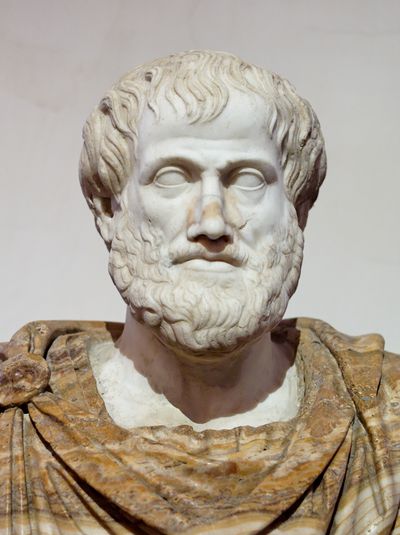
Aristotle
AncientPhilosopherGreece-384 — -322
古希腊哲学家,柏拉图的学生,亚历山大大帝的老师。百科全书式的学者,影响西方学术两千余年。
Compare Aristotle with another historical figure:
Quick Facts
Born
384 BCE
Died
322 BCE
Country
Greece
Era
Ancient
Occupation
Philosopher
Score Overview
Military (10%)9
Political (20%)35
Influence (20%)92
Legacy (20%)87
Leadership (15%)27
Strategy (15%)44
Total Score59.3
Aristotle — Complete Timeline
350 BC
Development of Formal LogicInvention
Aristotle developed the first formal system of logic, including syllogistic logic, in his work 'Organon'. He identified the rules of valid reasoning, such as the syllogism, which became the foundation of Western logic for over two millennia.
LogicPhilosophyScience
Impact: globalprogressive
343 BC
Tutoring Alexander the GreatCultural◆ Major
Philip II of Macedon invited Aristotle to tutor his son Alexander. Aristotle taught Alexander for several years, instilling in him an interest in Greek culture, science, and philosophy. This relationship influenced Alexander's later policies of Hellenization in his conquered territories.
EducationMentorshipHellenization
Impact: globalconstructive
340 BC
Publication of 'Nicomachean Ethics'Cultural◆ Major
Aristotle wrote the 'Nicomachean Ethics', a treatise on virtue ethics. He argued that the highest good is eudaimonia (flourishing) achieved through virtuous activity and practical wisdom. This work became a cornerstone of Western moral philosophy.
EthicsPhilosophyVirtue
Impact: globalconstructive
335 BC
Founding of the LyceumCultural◆ Major
Aristotle founded the Lyceum, a school in Athens dedicated to philosophical and scientific research. He established a library and organized systematic studies across disciplines. The Lyceum became a major center of learning, rivaling Plato's Academy.
SchoolPhilosophyResearch
Impact: globalconstructive
323 BC
Departure from AthensPolitical Action
After Alexander's death, anti-Macedonian sentiment rose in Athens. Aristotle, associated with Macedon, left the city to avoid persecution, saying he would not allow Athens to 'sin twice against philosophy' (referring to Socrates' execution). He died in exile in Chalcis.
ExilePoliticsPhilosophy
Detailed Scores
▶View all detailed scores
Military
Strategy
1
Tactics
1
Battles
1
Army Scale
1
War Impact
1
Political
Governance
3
Reform
3
Stability
3
Policy
3
Power
3
Influence
History
9
Global
9
Culture
9
Ideology
9
Legacy
9
People often compare with
See how Aristotle stacks up against other historical figures