Loading...
Abbas I vs Napoleon Bonaparte
Abbas I leads by 10.5 pts · 2 figures compared
…
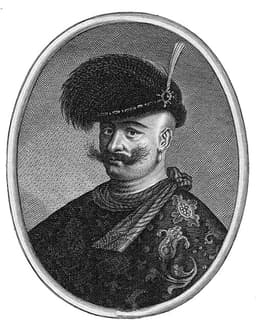
Abbas I
Emperor · Modern
81.4Total

Napoleon Bonaparte
General · Modern
70.9Total
Basic Information
Born
1571
1769
Died
1629
1821
Era
Modern
Modern
Nationality
Persia
France
Occupation
Emperor
General
Civilization
Middle Eastern
Western
Score Comparison
Military (10%)
82.0
94.0
Political (20%)
90.0
72.0
Influence (20%)
75.0
40.0
Legacy (20%)
82.0
80.0
Leadership (15%)
81.7
78.0
Strategy (15%)
82.0
90.0
TOTAL
81.4
70.9
Abbas I — Complete Timeline
1590 AD
Reformed the Army with GhulamsReform
Abbas I created a standing army of ghulams (military slaves) recruited from Christian subjects in the Caucasus, particularly Georgians and Armenians. This reduced reliance on the Qizilbash tribal forces, increased royal control, and modernized the military with firearms and artillery.
Military ReformGhulam SystemCentralization
Impact: nationalconstructive
1598 AD
Relocated Capital to IsfahanPolitical Action
Abbas I moved the Safavid capital from Qazvin to Isfahan, transforming it into a magnificent city with grand architecture, including Naqsh-e Jahan Square, the Shah Mosque, and the Ali Qapu Palace. This relocation became a symbol of Safavid power and cultural flourishing.
Capital RelocationUrban PlanningArchitecture
Impact: globalconstructive
1599 AD
Established Diplomatic Relations with EuropePolitical Action◆ Major
Abbas I sent diplomatic missions to European courts, including those of Philip III of Spain, Rudolf II of the Holy Roman Empire, and Elizabeth I of England, seeking alliances against the Ottoman Empire. These missions opened sustained diplomatic and commercial exchanges between Safavid Persia and Europe.
DiplomacyEuropean RelationsAnti-Ottoman Alliance
Impact: globalconstructive
1605 AD
Battle of SufiyanWar◆ Major
Abbas I defeated an Ottoman army near Sufiyan, securing Safavid control over Azerbaijan and the Caucasus. This victory was part of the Ottoman-Safavid War of 1603-1618, which resulted in the recapture of Tabriz, Nakhchivan, and Yerevan from Ottoman occupation.
Ottoman-Safavid WarBattleTerritorial Recovery
Impact: regional
1622 AD
Expelled Portuguese from HormuzWar◆ Major
Abbas I, with support from the English East India Company, captured the island of Hormuz from Portuguese control. This ended Portuguese dominance in the Persian Gulf and opened direct trade routes for Safavid Persia with Europe, boosting the silk trade.
Persian GulfTradeEuropean Relations
Impact: globalconstructive
1623 AD
Recaptured BaghdadWar◆ Major
Abbas I captured Baghdad from the Ottoman Empire after a siege, restoring Safavid control over Iraq. This victory expanded Safavid territory and gave Abbas control over important Shi'a pilgrimage sites like Najaf and Karbala.
Ottoman-Safavid WarConquestShi'a Sites
Impact: regional
Napoleon Bonaparte — Complete Timeline
1799 AD
Coup of 18 BrumaireOther◆ Major
Napoleon Bonaparte, with support from his brother Lucien and key political figures, overthrew the Directory in a bloodless coup. He established the Consulate with himself as First Consul, effectively becoming the ruler of France. This event ended the French Revolution's most unstable period.
French RevolutionCoupRise to Power
Impact: regional
1804 AD
Promulgation of the Napoleonic CodeOther◆ Major
Napoleon enacted the Civil Code of the French, known as the Napoleonic Code, a comprehensive set of laws that replaced the fragmented feudal legal systems. The code established legal equality, protected property rights, and secularized law. It became the basis for legal systems in many European and world countries.
Legal ReformNapoleonic CodeCivil Law
Impact: globalconstructive
1805 AD
Battle of AusterlitzWar◆ Major
Napoleon's Grande Arm
Napoleonic WarsBattleDecisive Victory
Impact: global
1812 AD
Invasion of RussiaWar◆ Major
Napoleon led the Grande Arm
Napoleonic WarsInvasionDisaster
Impact: globaldestructive
1815 AD
Battle of WaterlooWar◆ Major
Napoleon's French army was defeated by the combined forces of the Duke of Wellington's Anglo-Allied army and Gebhard Leberecht von Bl
Napoleonic WarsBattleFinal Defeat
Impact: globaldestructive
Expert Analysis
abbas-i-vs-napoleon-bonaparte
# The Emperor and the Shah: Two Paths to Greatness
On a June morning in 1815, Napoleon Bonaparte stood on a muddy field near Waterloo, watching his Imperial Guard march into cannon fire for the last time. Two centuries earlier, in a very different world, Shah Abbas I rode through the gates of a city he had transformed into the jewel of Persia. Both men shaped their civilizations with iron wills. Yet one crashed in flames, while the other built something that endured. What made the difference?
Origins
The Corsican who would conquer Europe was born in 1769 on an island that had just become French. Napoleon’s family was minor nobility, struggling and ambitious. His father, a lawyer who had fought for Corsican independence, sent young Napoleon to military school in mainland France, where the other boys mocked his accent and poverty. This outsider’s hunger—to prove, to win, to dominate—never left him.
Shah Abbas I, born in 1571, grew up in a palace of daggers. The Safavid dynasty was young and paranoid. His father, Shah Mohammad Khodabanda, was nearly blind and weak. The real rulers were the Qizilbash tribal chiefs, who fought each other for control. Abbas watched his family members murdered. He learned early that trust was a weapon, and that survival meant striking first.
Rise to Power
Napoleon’s ascent was a blur of speed. At 24, he cleared the streets of royalist rebels with a "whiff of grapeshot." At 26, he commanded an army in Italy and won victories that stunned Europe. The Directory, a corrupt regime desperate for glory, gave him armies to command. He gave them conquests. By 1799, at age 30, he staged a coup and made himself First Consul. The revolution had devoured its children, but Napoleon became its stepfather.
Abbas took power at 16 in 1587, after a coup that deposed his father. But unlike Napoleon, Abbas could not simply seize control. The Safavid state was a patchwork of tribal loyalties, religious authority, and foreign threats. The Ottomans held the west. The Uzbeks raided the east. The Qizilbash chiefs held the real power. Abbas spent his first years as a puppet, smiling while he waited.
Leadership & Governance
Napoleon ruled by brilliance and exhaustion. He reorganized France into departments, created the Bank of France, and—most durably—instituted the Napoleonic Code, a legal system that swept away feudal privileges and established equality before the law. He centralized everything. Prefects answered to him. Judges answered to him. Generals answered to him. "I am the state," he said, and he meant it.
Abbas governed by patience and guile. His masterstroke came in 1590: he reformed the army by creating a corps of *ghulams*—military slaves recruited from Christian subjects in the Caucasus. These men owed loyalty only to the Shah, not to any tribal chief. It was a quiet revolution. Over time, Abbas replaced the Qizilbash commanders with his own men, and the tribes lost their stranglehold on power. He also moved his capital to Isfahan in 1598, building a city that became a monument to Safavid glory—grand mosques, vast plazas, silk routes that connected East and West.
Triumph & Tragedy
Napoleon’s triumphs were blinding. Austerlitz in 1805, where he crushed the Austrian and Russian armies, was his masterpiece. Jena in 1806, where he destroyed the Prussian state. Wagram in 1809, where he broke the Austrians again. By 1810, he controlled Europe from Spain to Poland. But the tragedy was baked into the triumph. He could not stop. The invasion of Russia in 1812 cost half a million men. The defeat at Leipzig in 1813 cost his empire. Waterloo in 1815 cost everything.
Abbas scored his greatest victory in 1605 at the Battle of Sufiyan, where he defeated a larger Ottoman army and secured Azerbaijan and the Caucasus. In 1622, with help from the English East India Company, he expelled the Portuguese from Hormuz, opening Persian trade to the world. In 1623, he recaptured Baghdad from the Ottomans, restoring Safavid control over Iraq. But his tragedy was personal. He suspected his own sons of plotting against him. He blinded one, executed others. The dynasty he built would collapse within a century of his death, partly because he left no capable heir.
Character & Destiny
Napoleon believed in will. "Impossible is not French," he said. He drove himself and his men beyond human limits, and they followed because he made them believe they were part of something immortal. But his character was also his doom. He could not share power. He could not stop conquering. When his enemies finally united against him, he had no allies left—only subjects who hated him and generals who had grown tired of dying.
Abbas believed in calculation. He was ruthless but patient. He made peace when he had to, broke treaties when he could, and never fought a battle he did not need to win. He sent diplomatic missions to Europe in 1599, seeking alliances against the Ottomans. He understood that power was a game of pieces, not a blaze of glory. Where Napoleon burned, Abbas built.
Legacy
Napoleon’s legacy is a paradox. He spread the ideals of the French Revolution—nationalism, legal equality, secular governance—across Europe, but he did so at the point of a bayonet. The Napoleonic Code still shapes law in dozens of countries. His military innovations are studied in war colleges. But his name is also a warning: the man who wanted everything ended with nothing, exiled on a rock in the South Atlantic.
Abbas left a different mark. Isfahan remains one of the most beautiful cities in the world, a testament to his vision. The Safavid dynasty, which he saved and strengthened, lasted another century after his death in 1629. He revived Persian culture, expanded trade, and built a state that balanced central power with local autonomy. He is remembered as "Abbas the Great"—a ruler who knew that the purpose of power was not to conquer but to endure.
Conclusion
Napoleon and Abbas both rose from precarious beginnings to reshape their worlds. But they understood greatness differently. Napoleon saw it as a sprint—a blaze of glory that would illuminate history forever. Abbas saw it as a garden—something to be planted, watered, and tended. The French emperor conquered an empire in a decade and lost it in a year. The Persian shah built a city that still stands, a dynasty that survived him, and a legacy that did not require his death to be a tragedy. Perhaps the difference is this: Napoleon wanted to be remembered. Abbas wanted to be succeeded. History, in its quiet way, has honored both—but one of them rests easier.
Rankings
🥇
Abbas ILeader
Mil: 82.0Pol: 90.0Inf: 75.0
81.4
🥈
Napoleon Bonaparte
Mil: 94.0Pol: 72.0Inf: 40.0
70.9
+10.5 behind
How This Comparison Works
Algorithm
Each figure is scored on 6 dimensions (0—100 scale) based on structured historical data: Military (10%), Political (20%), Influence (20%), Legacy (20%), Leadership (15%), Strategy (15%). The weighted total produces the final ranking.
Data Sources
Scores are computed from structured sub-indicators in the database. Scale factors adjust for era (Ancient ×0.85, Modern ×1.0) and civilization size (Eastern ×1.05, Other ×0.80) to account for differences in population and military scale.
Maximum 3 Figures
Comparisons are limited to 2—3 figures to ensure readability and statistical meaningfulness.
Error Margins
±5 points per dimension — Sub-scores are derived from historical records with inherent uncertainty. Two figures within 5 points on a dimension should be considered roughly equivalent in that area.
Total Score Accuracy
±3 points overall — The weighted combination of 6 dimensions produces a total score with approximately ±3 points of uncertainty. Differences of less than 3 points are not statistically significant— the figures are effectively tied.
Known Limitations
- Historical records are incomplete and uneven across civilizations
- Figures from oral-tradition societies may be underrepresented
- Occupation labels can misclassify multi-role figures
- Scores measure capability and impact, not moral character
- Quantitative scoring is a comparison tool, not absolute truth
Capability Radar
Military (10%) — Battles & Warfare
Battles
85
95
Win Rate
90
90
Expansion
85
95
Political (20%) — Governance & Reform
Reform
95
95
Diplomacy
88
80
Economy
92
85
Influence (20%) — Cultural & Global Reach
Cultural
90
85
Global
80
90
Legacy (20%) — Historical Impact
Historical
88
95
Longevity
85
90
Leadership (15%) — Power & Stability
Tenure
90
85
Stability
85
70
Strategy (15%) — Tactics & Innovation
Strategy
92
95
Tactics
88
98
Reform
95
92
Similar Comparisons
Comments & Discussion
No comments yet. Be the first to share your thoughts!