Loading...
Abe Nobuyuki vs Feng Yuxiang
Feng Yuxiang leads by 13.6 pts · 2 figures compared
…
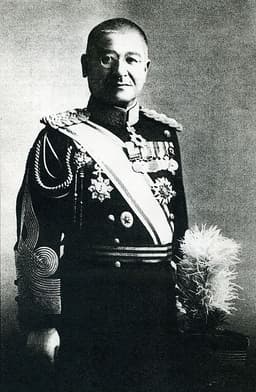
Abe Nobuyuki
General · Modern
43.2Total
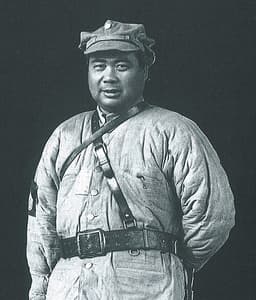
Feng Yuxiang
General · Modern
56.8Total
Basic Information
Born
1875
1882
Died
1953
1948
Era
Modern
Modern
Nationality
Japan
China
Occupation
General
General
Civilization
Eastern
Eastern
Score Comparison
Military (10%)
50.0
50.0
Political (20%)
32.2
62.7
Influence (20%)
51.8
58.0
Legacy (20%)
39.2
50.0
Leadership (15%)
50.7
62.0
Strategy (15%)
30.3
60.7
TOTAL
43.2
56.8
Abe Nobuyuki — Complete Timeline
1939 AD
Service as Prime MinisterPolitical Action◆ Major
Abe Nobuyuki served as Prime Minister from August 1939 to January 1940. His cabinet was formed after the Nomonhan Incident and focused on resolving the conflict with the Soviet Union. He pursued a neutral foreign policy but was unable to control the military.
Prime MinisterNomonhan
Impact: national
1940 AD
Resignation Over Foreign PolicyPolitical Action
Abe resigned as Prime Minister in January 1940 after failing to resolve tensions with the United States over the abrogation of the U.S.-Japan Commercial Treaty. His resignation reflected the growing crisis in Japan's foreign relations.
ResignationU.S.-Japan Relations
Impact: nationaltragic
1944 AD
Governor-General of KoreaPolitical Action◆ Major
Abe served as Governor-General of Korea from 1944 to 1945, during the final years of World War II. He implemented harsh policies to mobilize Korean resources for the war effort, including forced labor and conscription.
Colonial RuleKoreaWar Mobilization
Impact: regionaldestructive
1946 AD
Post-War Purge and Political ComebackPolitical Action
After World War II, Abe was purged from public office by the Allied occupation authorities. However, he later returned to politics and was elected to the House of Representatives in 1952, serving until his death.
Post-WarPurgePolitical Comeback
Impact: national
Feng Yuxiang — Complete Timeline
1914 AD
Conversion to ChristianityCultural
Feng Yuxiang converted to Christianity, earning him the nickname 'The Christian General'. He required his soldiers to attend Christian services and promoted Christian ethics within his army. This conversion was unusual among Chinese warlords and influenced his governance style.
ReligionChristianityWarlord
Impact: regionalconstructive
1924 AD
Beijing Coup of 1924Political Action◆ Major
Feng Yuxiang staged the Beijing Coup, overthrowing the Zhili clique government and capturing Beijing. He invited Sun Yat-sen to discuss national unification. The coup led to the establishment of a provisional government under Duan Qirui and temporarily shifted the balance of power among warlords.
CoupWarlord EraBeijing
Impact: national
1927 AD
Defection to the Nationalist GovernmentPolitical Action◆ Major
Feng Yuxiang defected from the Fengtian clique and allied with the Nationalist government under Chiang Kai-shek. He participated in the Northern Expedition, helping to defeat other warlords. This alliance strengthened the Nationalist cause but also led to conflicts with other warlords.
AllianceNationalistNorthern Expedition
Impact: nationalconstructive
1930 AD
Defeat in the Central Plains WarWar◆ Major
Feng Yuxiang joined the anti-Chiang Kai-shek coalition in the Central Plains War. His forces were defeated by Chiang's National Revolutionary Army. The defeat ended Feng's military power and forced him into retirement. He later fled to the Soviet Union.
WarDefeatWarlord
Impact: nationaldestructive
Expert Analysis
Origins
Abe Nobuyuki was born in 1875 in Kanazawa, Japan, into a samurai family. He graduated from the Imperial Japanese Army Academy in 1897 and later from the Army War College. His early career included service in the Russo-Japanese War (1904-1905), which shaped his military outlook.
Feng Yuxiang was born in 1882 in Baoding, China, into a poor military family. He joined the Qing army as a teenager and rose through the ranks. His conversion to Christianity in 1914 earned him the nickname 'Christian General,' and he required his soldiers to attend Christian services, a unique blend of faith and military discipline.
Rise to Power
Abe Nobuyuki rose through the Japanese military hierarchy, holding key staff positions. He became a general in 1933 and served as Governor-General of Korea from 1944 to 1945. His political peak came when he became Prime Minister in August 1939, after the Nomonhan Incident, but his cabinet lasted only five months due to foreign policy failures.
Feng Yuxiang's rise was more dramatic. In 1924, he staged the Beijing Coup, overthrowing the Zhili clique and capturing Beijing. He then invited Sun Yat-sen to discuss national unification. He later defected to the Nationalist government under Chiang Kai-shek and participated in the Northern Expedition (1926-1928), which consolidated Nationalist control.
Leadership & Governance
Abe Nobuyuki's leadership was cautious and bureaucratic. As Prime Minister, he focused on resolving tensions with the United States over the abrogation of the U.S.-Japan Commercial Treaty but failed, leading to his resignation in January 1940. As Governor-General of Korea, he implemented harsh policies to mobilize Korean resources for the war effort, scoring 50.7 in leadership and 30.3 in strategy.
Feng Yuxiang was a charismatic but erratic leader. He emphasized moral education and required his troops to attend Christian services. He also implemented progressive reforms in areas under his control, such as abolishing opium and promoting education. However, his political maneuvers often backfired, as seen in the Central Plains War (1930), where his coalition was defeated by Chiang Kai-shek. Feng scored 62.0 in leadership and 60.7 in strategy, reflecting his tactical abilities but strategic flaws.
Triumph & Tragedy
Abe Nobuyuki's greatest success was his rise to Prime Minister, but his tenure was a failure. He failed to resolve U.S.-Japan tensions, leading to his resignation. His governorship of Korea was marked by repressive policies that contributed to Korean resentment. After WWII, he was purged by Allied authorities but later returned to politics, showing resilience. His military score of 50.0 reflects mediocrity.
Feng Yuxiang's greatest triumph was the Beijing Coup, which reshaped Chinese politics. His conversion to Christianity and moral reforms were unique. However, his defeat in the Central Plains War was a major setback, and his shifting loyalties earned him a reputation as a turncoat. His legacy is mixed: he is remembered for his reforms but criticized for his opportunism. Feng scored 50.0 in military, 62.7 in political, and 58.0 in influence.
Character & Destiny
Abe Nobuyuki was a product of the Japanese military system—loyal, cautious, and lacking strategic vision. His character was shaped by bureaucratic obedience, which led to his political downfall. He lacked the decisiveness needed during a critical period.
Feng Yuxiang was a complex figure: deeply religious, reform-minded, but politically naive. His conversion to Christianity was genuine, and he tried to instill moral values in his troops. However, his frequent changes of allegiance alienated potential allies. Historians often view him as a well-intentioned but flawed leader who failed to achieve lasting power.
Legacy
Abe Nobuyuki's legacy is minimal. He is remembered as a short-lived prime minister and a harsh governor-general of Korea. His political score of 32.2 and legacy score of 39.2 reflect his limited impact. He is largely forgotten outside of Japanese political history.
Feng Yuxiang's legacy is more significant. He is remembered as the 'Christian General' and a key figure in the warlord era. His reforms in education and opium eradication had lasting effects in areas he controlled. However, his political instability and ultimate defeat diminished his overall impact. Feng scored 50.0 in legacy and 56.8 total, higher than Abe but still modest.
Conclusion
Feng Yuxiang had greater impact than Abe Nobuyuki, with a total score of 56.8 to Abe's 43.2. Feng's role in the Beijing Coup and Northern Expedition shaped China's unification, while Abe's brief premiership and harsh colonial rule left little positive legacy. Despite Feng's flaws, his influence on Chinese history surpasses Abe's. The data supports this: Feng scored higher in political (62.7 vs 32.2), influence (58.0 vs 51.8), and leadership (62.0 vs 50.7). Abe's only comparable score is military (50.0 each), but his strategic and political shortcomings outweigh any balance. Thus, Feng Yuxiang is the more consequential figure.
Rankings
🥇
Feng YuxiangLeader
Mil: 50.0Pol: 62.7Inf: 58.0
56.8
🥈
Abe Nobuyuki
Mil: 50.0Pol: 32.2Inf: 51.8
43.2
+13.6 behind
How This Comparison Works
Algorithm
Each figure is scored on 6 dimensions (0—100 scale) based on structured historical data: Military (10%), Political (20%), Influence (20%), Legacy (20%), Leadership (15%), Strategy (15%). The weighted total produces the final ranking.
Data Sources
Scores are computed from structured sub-indicators in the database. Scale factors adjust for era (Ancient ×0.85, Modern ×1.0) and civilization size (Eastern ×1.05, Other ×0.80) to account for differences in population and military scale.
Maximum 3 Figures
Comparisons are limited to 2—3 figures to ensure readability and statistical meaningfulness.
Error Margins
±5 points per dimension — Sub-scores are derived from historical records with inherent uncertainty. Two figures within 5 points on a dimension should be considered roughly equivalent in that area.
Total Score Accuracy
±3 points overall — The weighted combination of 6 dimensions produces a total score with approximately ±3 points of uncertainty. Differences of less than 3 points are not statistically significant— the figures are effectively tied.
Known Limitations
- Historical records are incomplete and uneven across civilizations
- Figures from oral-tradition societies may be underrepresented
- Occupation labels can misclassify multi-role figures
- Scores measure capability and impact, not moral character
- Quantitative scoring is a comparison tool, not absolute truth
Capability Radar
Military (10%) — Battles & Warfare
Battles
20
55
Win Rate
20
50
Expansion
10
45
Political (20%) — Governance & Reform
Reform
15
60
Diplomacy
20
55
Economy
15
40
Influence (20%) — Cultural & Global Reach
Cultural
10
45
Global
10
35
Legacy (20%) — Historical Impact
Historical
15
50
Longevity
10
40
Leadership (15%) — Power & Stability
Tenure
30
50
Stability
20
35
Strategy (15%) — Tactics & Innovation
Strategy
15
55
Tactics
15
60
Reform
10
65
Similar Comparisons
Comments & Discussion
No comments yet. Be the first to share your thoughts!