Loading...
Ablai Khan vs Napoleon Bonaparte
Napoleon Bonaparte leads by 7.9 pts · 2 figures compared
…
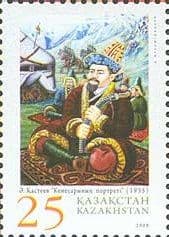
Ablai Khan
Emperor · Modern
63.0Total

Napoleon Bonaparte
General · Modern
70.9Total
Basic Information
Born
1711
1769
Died
1781
1821
Era
Modern
Modern
Nationality
Kazakh Khanate
France
Occupation
Emperor
General
Civilization
Eastern
Western
Score Comparison
Military (10%)
67.3
94.0
Political (20%)
59.3
72.0
Influence (20%)
61.0
40.0
Legacy (20%)
54.0
80.0
Leadership (15%)
80.0
78.0
Strategy (15%)
66.3
90.0
TOTAL
63.0
70.9
Ablai Khan — Complete Timeline
1756 AD
Battle of the Irtysh RiverWar◆ Major
Ablai Khan led Kazakh forces against the Dzungar Khanate at the Irtysh River. The battle was a decisive Kazakh victory, significantly weakening Dzungar power in the region. This victory helped secure Kazakh independence from Dzungar threats.
WarDzungar KhanateBattleVictory
Impact: regional
1757 AD
Diplomatic Relations with the Qing EmpirePolitical Action◆ Major
Ablai Khan established diplomatic relations with the Qing Empire of China. He sent an embassy to Beijing and recognized Qing suzerainty in exchange for trade rights and military support. This balanced Russian influence and secured the eastern borders of the Kazakh Khanate.
DiplomacyQing EmpireTradeSuzerainty
Impact: regionalconstructive
1770 AD
Resistance to Russian ExpansionPolitical Action◆ Major
Ablai Khan resisted Russian attempts to control the Kazakh steppe. He refused to swear allegiance to the Russian Empire and maintained an independent foreign policy. He played Russian and Qing interests against each other to preserve Kazakh autonomy.
DiplomacyRussian EmpireIndependenceBalance of Power
Impact: regional
1771 AD
Unification of the Three JuzesPolitical Action
Ablai Khan was recognized as the supreme khan over all three Kazakh juzes (Senior, Middle, and Junior). This unification was achieved through a combination of military strength, diplomacy, and marriage alliances. It created a unified Kazakh state for the first time in decades.
UnificationKazakh KhanateJuzesState Building
Impact: regionalconstructive
Napoleon Bonaparte — Complete Timeline
1799 AD
Coup of 18 BrumaireOther◆ Major
Napoleon Bonaparte, with support from his brother Lucien and key political figures, overthrew the Directory in a bloodless coup. He established the Consulate with himself as First Consul, effectively becoming the ruler of France. This event ended the French Revolution's most unstable period.
French RevolutionCoupRise to Power
Impact: regional
1804 AD
Promulgation of the Napoleonic CodeOther◆ Major
Napoleon enacted the Civil Code of the French, known as the Napoleonic Code, a comprehensive set of laws that replaced the fragmented feudal legal systems. The code established legal equality, protected property rights, and secularized law. It became the basis for legal systems in many European and world countries.
Legal ReformNapoleonic CodeCivil Law
Impact: globalconstructive
1805 AD
Battle of AusterlitzWar◆ Major
Napoleon's Grande Arm
Napoleonic WarsBattleDecisive Victory
Impact: global
1812 AD
Invasion of RussiaWar◆ Major
Napoleon led the Grande Arm
Napoleonic WarsInvasionDisaster
Impact: globaldestructive
1815 AD
Battle of WaterlooWar◆ Major
Napoleon's French army was defeated by the combined forces of the Duke of Wellington's Anglo-Allied army and Gebhard Leberecht von Bl
Napoleonic WarsBattleFinal Defeat
Impact: globaldestructive
Expert Analysis
ablai-khan-vs-napoleon-bonaparte
# The Eagle and the Lion of the Steppe
On a June morning in 1815, Napoleon Bonaparte surveyed the muddy fields of Waterloo, his Grande Armée poised for what he believed would be one more glorious victory. Half a world away and half a century earlier, another commander—Ablai Khan—had stood on the banks of the Irtysh River in 1756, watching his Kazakh horsemen charge against the Dzungar invaders who had terrorized his people for generations. One man would end his days a prisoner on a remote Atlantic island; the other would die in his own tent, having united a fractured nation. Both sought empire, yet their paths could not have diverged more sharply. What explains the difference between the conqueror who fell from heaven and the unifier who rose from the steppe?
Origins
Napoleon was born into minor Corsican nobility in 1769, a year after France purchased the island from Genoa. The Mediterranean world of his childhood was one of ancient rivalries, where honor was measured in bloodlines and a boy could dream of restoring his family’s lost prestige. He absorbed the Enlightenment’s faith in reason and order, but also its cold calculus of power. By contrast, Ablai Khan entered the world in 1711 as a grandson of the legendary khan Tauke, but his early years were spent in obscurity and flight. The Dzungar Empire, a Mongol confederation from the east, had shattered the Kazakh Khanate, scattering its three juzes—the Senior, Middle, and Junior hordes—across the vast steppe. While Napoleon studied military tactics at the École Militaire in Paris, Ablai learned to survive by reading the wind, the grass, and the intentions of men who could kill him at any moment.
Their eras shaped them as surely as their blood. Napoleon’s France was a powder keg of revolution, where a gifted commoner could rise faster than in any monarchy. Ablai’s Kazakhstan was a world of nomadic tribes, where loyalty was personal, not institutional, and where a leader’s authority depended on his ability to protect his people from three great empires: the Dzungars, the Russians, and the Qing Chinese. Napoleon inherited the chaos of a collapsing old order; Ablai inherited the chaos of a people fighting for survival.
Rise to Power
Napoleon’s ascent was meteoric and theatrical. In 1793, at just twenty-four, he recaptured Toulon from royalist rebels, earning the rank of brigadier general. By 1796, he commanded the Army of Italy, where his lightning campaigns humiliated the Austrians and made him a national hero. The coup of 18 Brumaire in 1799 placed him at the head of France as First Consul, and by 1804, he crowned himself Emperor in Notre-Dame, taking the crown from the Pope’s hands to place it on his own head. Each step was a gamble, a calculated defiance of fate.
Ablai’s rise was slower, more patient, and far more dangerous. He began as a warrior in the Middle Juz, proving himself in skirmishes against the Dzungars. His leadership during the 1756 Battle of the Irtysh River—where he orchestrated a decisive victory against a numerically superior enemy—earned him the loyalty of the Middle Juz’s warriors. But he understood that military victory alone could not secure his people. In 1757, he sent an embassy to Beijing, recognizing Qing suzerainty in exchange for protection against the Dzungars. It was a masterful gambit: he gained a powerful patron without surrendering true autonomy. When the Dzungar threat collapsed, Ablai turned to the Russians, resisting their demands for oaths of allegiance in 1770 while skillfully avoiding open war. His power grew not through conquest, but through the slow, deliberate weaving of alliances.
Leadership & Governance
As emperor, Napoleon governed with the precision of a military engineer. The Napoleonic Code, enacted in 1804, standardized French law, abolished feudal privileges, and established meritocracy. He built roads, founded banks, and reformed education. Yet his governance was inseparable from his ambition: every reform served the war machine. He appointed his brothers as kings of conquered states, treating Europe as a family estate. His military genius was undeniable—his 1805 victory at Austerlitz remains a masterpiece of tactical deception—but he could not stop. Victory demanded more victory.
Ablai Khan governed as a steppe patriarch. He did not impose a new legal code; he revived the traditional Kazakh *adet* (customary law) and the council of elders (*ak saqal*). His military strategy was defensive and mobile: he avoided pitched battles against superior Russian or Qing forces, instead using the vastness of the steppe to exhaust invaders. In 1771, when he was recognized as supreme khan over all three juzes, he achieved what no Kazakh leader had done in decades. He ruled not by decree, but by consensus, mediating between clan chieftains and balancing the interests of neighboring empires. Where Napoleon demanded loyalty to himself, Ablai demanded loyalty to the idea of a united Kazakh people.
Triumph & Tragedy
Napoleon’s greatest triumph was also the seed of his tragedy. In 1812, he invaded Russia with the largest army Europe had ever seen—over 600,000 men. He reached Moscow, but the Russians refused to surrender. The retreat that winter destroyed his Grande Armée, and with it, his aura of invincibility. Exiled to Elba in 1814, he escaped in 1815, only to meet final defeat at Waterloo. His tragedy was not that he failed, but that he could not stop reaching for what he could not hold.
Ablai Khan’s triumph was quieter but more enduring. By uniting the three juzes, he gave his people a political identity that survived his death. Yet his tragedy was that he could not fully free them. He died in 1781, having secured autonomy through diplomacy, but the Kazakh Khanate remained a vassal of both Russia and China. The steppe was never truly independent; it was merely protected. His people would face Russian colonization for centuries after his death.
Character & Destiny
Napoleon was a creature of will. “Impossible is a word to be found only in the dictionary of fools,” he once said. His personality—arrogant, restless, insatiable—drove him to remake the world in his image. But that same will blinded him to limits. He could not share power, could not compromise, could not stop. His destiny was to rise until he fell, a Icarus with a bicorne hat.
Ablai Khan was a creature of patience. He understood that power in the steppe was like water: it could not be forced, only channeled. He was known for his cunning, his ability to say one thing to the Qing emperor and another to the Russian tsar, while keeping his own counsel. His personality was not magnetic like Napoleon’s, but it was resilient. He survived because he knew when to bow and when to strike. His destiny was not to conquer, but to endure.
Legacy
Napoleon’s legacy is written in stone and law. The Napoleonic Code influenced legal systems across Europe and the Americas. His military campaigns are still studied in war colleges. He reshaped the map of Europe and inspired nationalism from Germany to Italy. But his legacy is also one of blood: millions died for his ambition, and his final years were a lonely exile on Saint Helena, dictating memoirs to justify his life.
Ablai Khan’s legacy is written in the memory of a people. He is revered in Kazakhstan as the father of the nation, the leader who held the steppe together when it could have shattered. His diplomatic strategies are taught as models of survival against great powers. But his legacy is also one of limitation: he could not achieve full independence, and the Kazakhs would not gain true sovereignty until the collapse of the Soviet Union in 1991.
Conclusion
Two men, two worlds. Napoleon Bonaparte conquered Europe and lost everything. Ablai Khan united a people and preserved what he could. One built an empire that crumbled in a generation; the other built a nation that outlasted empires. The difference was not in their talent—both were extraordinary—but in their understanding of power. Napoleon saw power as something to be seized and wielded; Ablai saw it as something to be nurtured and balanced. In the end, the eagle fell, and the lion of the steppe endured. Perhaps the greatest lesson of history is that survival is not always glorious, but it is always more lasting than glory.
Rankings
🥇
Napoleon BonaparteLeader
Mil: 94.0Pol: 72.0Inf: 40.0
70.9
🥈
Ablai Khan
Mil: 67.3Pol: 59.3Inf: 61.0
63.0
+7.9 behind
How This Comparison Works
Algorithm
Each figure is scored on 6 dimensions (0—100 scale) based on structured historical data: Military (10%), Political (20%), Influence (20%), Legacy (20%), Leadership (15%), Strategy (15%). The weighted total produces the final ranking.
Data Sources
Scores are computed from structured sub-indicators in the database. Scale factors adjust for era (Ancient ×0.85, Modern ×1.0) and civilization size (Eastern ×1.05, Other ×0.80) to account for differences in population and military scale.
Maximum 3 Figures
Comparisons are limited to 2—3 figures to ensure readability and statistical meaningfulness.
Error Margins
±5 points per dimension — Sub-scores are derived from historical records with inherent uncertainty. Two figures within 5 points on a dimension should be considered roughly equivalent in that area.
Total Score Accuracy
±3 points overall — The weighted combination of 6 dimensions produces a total score with approximately ±3 points of uncertainty. Differences of less than 3 points are not statistically significant— the figures are effectively tied.
Known Limitations
- Historical records are incomplete and uneven across civilizations
- Figures from oral-tradition societies may be underrepresented
- Occupation labels can misclassify multi-role figures
- Scores measure capability and impact, not moral character
- Quantitative scoring is a comparison tool, not absolute truth
Capability Radar
Military (10%) — Battles & Warfare
Battles
65
95
Win Rate
70
90
Expansion
80
95
Political (20%) — Governance & Reform
Reform
60
95
Diplomacy
85
80
Economy
50
85
Influence (20%) — Cultural & Global Reach
Cultural
60
85
Global
45
90
Legacy (20%) — Historical Impact
Historical
70
95
Longevity
55
90
Leadership (15%) — Power & Stability
Tenure
70
85
Stability
65
70
Strategy (15%) — Tactics & Innovation
Strategy
75
95
Tactics
60
98
Reform
55
92
Similar Comparisons
Comments & Discussion
Khan-of-the-Kings6/17/2026
You're comparing a Corsican artilleryman to a steppe warlord who literally redefined what it meant to be Kazakh. Napoleon conquered Europe with logistics and cannons; Ablai won by knowing every spring in the desert and every clan alliance from the Aral Sea to the Altai. That's not "similar ambition" — that's a fight between a chess grandmaster and a goat herder who can read the stars. One built a legacy in code, the other in bloodlines. Guess which one still has descendants on the throne?
草原铁骑6/17/2026
拿破仑输掉滑铁卢时,他手下的波兰枪骑兵还在想念家乡的麦田。而阿布赉汗在1756年击败准噶尔后,哈萨克人有马有羊有自由。拿破仑的帝国建立在四十万人的尸骨上,阿布赉的汗国建立在三玉兹的帐篷里。你说谁更成功?一个是把欧洲烧成灰的疯子,一个是给草原带来百年和平的智者。我选后者。记住:拿破仑的滑铁卢只是一天,阿布赉的战争打了四十年。
Data-Counter6/17/2026
Let's talk numbers. Napoleon's 1812 Russian campaign lost 400,000 men — that's equivalent to the entire population of the Junior Horde at its peak. Ablai's wars against the Dzungars, spanning decades, likely cost 200,000 Kazakh lives total, but those were existential, not expansionist. Napoleon's wars killed civilians proportional to his ambition; Ablai's killed soldiers proportional to survival. One man's body count is a statistic; the other's is a lineage. Don't confuse scale with significance
漠北孤狼6/17/2026
历史课本都骗人:拿破仑是个矮子暴发户,阿布赉汗才是真正的天选之子。你想想,拿破仑靠的是法国大革命的民粹浪潮,阿布赉汗靠的是他在准噶尔囚禁时学会的蒙古剑法。一个被关在科西嘉岛上长大的,一个被抓到敌营里磨炼出来的。谁更有资格谈韧性?还有,拿破仑的将军们最后都背叛了他——阿布赉的战士死在他前头。这不是对比,这是侮辱。
Revisionist-Rooster6/17/2026
Napoleon gets romanticized because Western historians love a tragic elite; Ablai gets footnotes because Central Asia doesn't sell books. But read the primary sources: Ablai didn't just fight — he negotiated. He swore allegiance to the Qing when it suited him, played the Russians against the Jungars, and kept a Kazakh identity alive under two empires. Napoleon's only diplomatic trick was marrying an Austrian. One man mastered survival; the other mastered suicide. You tell me which is smarter.