Loading...
This comparison has not been analyzed yet.
One-time AI generation (~1 minute). Scores and timeline are already available below.
Aditya I vs Albert of Sweden
Aditya I leads by 7.4 pts · 2 figures compared
…
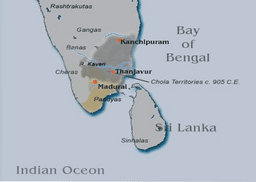
Aditya I
Emperor · Medieval
48.7Total

Albert of Sweden
Emperor · Medieval
41.3Total
Basic Information
Born
871
1338
Died
907
1412
Era
Medieval
Medieval
Nationality
India
Sweden
Occupation
Emperor
Emperor
Civilization
Indian
Western
Score Comparison
Military (10%)
30.0
50.0
Political (20%)
40.8
27.9
Influence (20%)
51.0
47.9
Legacy (20%)
43.3
39.2
Leadership (15%)
67.0
45.0
Strategy (15%)
60.0
35.7
TOTAL
48.7
41.3
Aditya I — Complete Timeline
880 AD
Conquest of Kongu NaduWar
Aditya I conquered the Kongu region (western Tamil Nadu) from the Pandya and Pallava control. This expansion gave the Cholas control over important trade routes and fertile lands, boosting the kingdom's economic base.
Territorial ExpansionKongu NaduChola Conquest
Impact: regionalconstructive
890 AD
Alliance with the Chera KingdomPolitical Action◆ Major
Aditya I formed a marital and military alliance with the Chera kingdom of Kerala, strengthening the Chola position against the Pandya and Rashtrakuta kingdoms. This alliance helped secure the western frontier and facilitated trade.
AllianceChera KingdomDiplomacy
Impact: regionalconstructive
897 AD
Defeat of Aparajita Varman and End of Pallava RuleWar◆ Major
Aditya I defeated and killed the Pallava king Aparajita Varman at the Battle of Tirupati, ending the Pallava dynasty. He annexed the entire Pallava kingdom into the Chola domain, making the Cholas the dominant power in Tamil Nadu.
Pallava ConquestChola ExpansionDynastic Change
Impact: regionaldestructive
Albert of Sweden — Complete Timeline
1364 AD
Election as King of SwedenPolitical Action◆ Major
Albert of Mecklenburg was elected King of Sweden by Swedish nobles who deposed Magnus IV. His election was part of a power struggle between the Mecklenburg dynasty and the Norwegian-backed Magnus IV.
ElectionPower Struggle
Impact: national
1370 AD
Conflict with the Hanseatic LeagueWar
Albert's reign saw conflict with the Hanseatic League over trade privileges and control of Baltic ports. The war weakened his position and led to increased influence of German merchants in Swedish affairs.
WarTrade Conflict
Impact: regionaldestructive
1389 AD
Defeat at the Battle of ÅsleWar
Albert was decisively defeated by Margaret I of Denmark at the Battle of
BattleDepositionKalmar Union
Impact: regionaltragic
Imprisonment and releasePolitical Action
After his defeat, Albert was imprisoned by Margaret I for six years. He was released in 1395 after agreeing to renounce his claims to the Swedish throne and paying a ransom.
ImprisonmentRansom
Impact: nationaltragic
This comparison has not been analyzed yet.
One-time AI generation (~1 minute). Scores and timeline are already available below.
Rankings
🥇
Aditya ILeader
Mil: 30.0Pol: 40.8Inf: 51.0
48.7
🥈
Albert of Sweden
Mil: 50.0Pol: 27.9Inf: 47.9
41.3
+7.4 behind
How This Comparison Works
Algorithm
Each figure is scored on 6 dimensions (0—100 scale) based on structured historical data: Military (10%), Political (20%), Influence (20%), Legacy (20%), Leadership (15%), Strategy (15%). The weighted total produces the final ranking.
Data Sources
Scores are computed from structured sub-indicators in the database. Scale factors adjust for era (Ancient ×0.85, Modern ×1.0) and civilization size (Eastern ×1.05, Other ×0.80) to account for differences in population and military scale.
Maximum 3 Figures
Comparisons are limited to 2—3 figures to ensure readability and statistical meaningfulness.
Error Margins
±5 points per dimension — Sub-scores are derived from historical records with inherent uncertainty. Two figures within 5 points on a dimension should be considered roughly equivalent in that area.
Total Score Accuracy
±3 points overall — The weighted combination of 6 dimensions produces a total score with approximately ±3 points of uncertainty. Differences of less than 3 points are not statistically significant— the figures are effectively tied.
Known Limitations
- Historical records are incomplete and uneven across civilizations
- Figures from oral-tradition societies may be underrepresented
- Occupation labels can misclassify multi-role figures
- Scores measure capability and impact, not moral character
- Quantitative scoring is a comparison tool, not absolute truth
Capability Radar
Military (10%) — Battles & Warfare
Battles
40
20
Win Rate
45
15
Expansion
45
15
Political (20%) — Governance & Reform
Reform
30
20
Diplomacy
45
25
Economy
35
20
Influence (20%) — Cultural & Global Reach
Cultural
30
15
Global
15
10
Legacy (20%) — Historical Impact
Historical
35
20
Longevity
25
15
Leadership (15%) — Power & Stability
Tenure
50
40
Stability
40
15
Strategy (15%) — Tactics & Innovation
Strategy
40
15
Tactics
35
20
Reform
20
10
Similar Comparisons
Comments & Discussion
No comments yet. Be the first to share your thoughts!