Loading...
This comparison has not been analyzed yet.
One-time AI generation (~1 minute). Scores and timeline are already available below.
Adnan Menderes vs Liang Qichao
Liang Qichao leads by 6.8 pts · 2 figures compared
…

Adnan Menderes
Politician · Modern
55.7Total
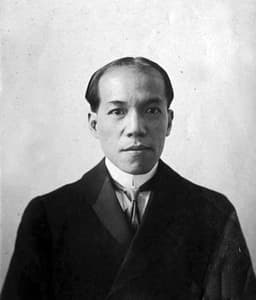
Liang Qichao
Politician · Modern
62.5Total
Basic Information
Born
1899
1873
Died
1961
1929
Era
Modern
Modern
Nationality
Turkey
China
Occupation
Politician
Politician
Civilization
Middle Eastern
Eastern
Score Comparison
Military (10%)
42.8
15.7
Political (20%)
60.0
72.0
Influence (20%)
58.0
88.0
Legacy (20%)
49.2
65.0
Leadership (15%)
74.0
55.3
Strategy (15%)
44.9
36.3
TOTAL
55.7
62.5
Adnan Menderes — Complete Timeline
1950 AD
Appointment as Prime MinisterPolitical Action◆ Major
Adnan Menderes became Prime Minister of Turkey on May 22, 1950, after the Democrat Party's victory in the general election. He served as prime minister for a decade, implementing liberal economic policies and close ties with the West.
Turkish GovernmentDemocrat PartyPrime Minister
Impact: nationalconstructive
1952 AD
NATO Membership for TurkeyPolitical Action◆ Major
Under Menderes' leadership, Turkey became a full member of NATO on February 18, 1952. This decision aligned Turkey firmly with the Western bloc during the Cold War and secured military and economic aid from the United States.
NATOCold WarTurkish Foreign Policy
Impact: globalconstructive
1960 AD
Overthrow in the 1960 CoupPolitical Action◆ Major
Adnan Menderes was overthrown and arrested on May 27, 1960, in a military coup led by Cemal G
1960 CoupTurkish MilitaryDemocrat Party
Impact: nationaldestructive
1961 AD
Execution by HangingOther
Adnan Menderes was executed by hanging on September 17, 1961, on the island of
ExecutionYassıada TrialsTurkish Politics
Impact: nationaltragic
Liang Qichao — Complete Timeline
1898 AD
Fled to Japan after the Hundred Days' ReformPolitical Action◆ Major
After the failure of the Hundred Days' Reform, Liang Qichao fled to Japan to escape persecution. In exile, he continued writing and publishing reformist ideas, becoming a leading voice for change.
ExileReformIntellectual
Impact: nationaltragic
Founded the journal 'Qingyi Bao' (The China Discussion)Cultural◆ Major
Liang Qichao founded 'Qingyi Bao' in Yokohama, Japan, to promote constitutional reform and modern political ideas. The journal circulated widely in China and influenced the reformist movement.
JournalismReformPolitical Thought
Impact: nationalprogressive
1902 AD
Published 'The New Citizen' (Xinmin Shuo)Cultural
Liang Qichao published 'The New Citizen', a series of essays advocating for civic virtue, nationalism, and political reform. The work profoundly influenced Chinese intellectuals and the reform movement.
ReformNationalismPolitical Thought
Impact: nationalprogressive
This comparison has not been analyzed yet.
One-time AI generation (~1 minute). Scores and timeline are already available below.
Rankings
🥇
Liang QichaoLeader
Mil: 15.7Pol: 72.0Inf: 88.0
62.5
🥈
Adnan Menderes
Mil: 42.8Pol: 60.0Inf: 58.0
55.7
+6.8 behind
How This Comparison Works
Algorithm
Each figure is scored on 6 dimensions (0—100 scale) based on structured historical data: Military (10%), Political (20%), Influence (20%), Legacy (20%), Leadership (15%), Strategy (15%). The weighted total produces the final ranking.
Data Sources
Scores are computed from structured sub-indicators in the database. Scale factors adjust for era (Ancient ×0.85, Modern ×1.0) and civilization size (Eastern ×1.05, Other ×0.80) to account for differences in population and military scale.
Maximum 3 Figures
Comparisons are limited to 2—3 figures to ensure readability and statistical meaningfulness.
Error Margins
±5 points per dimension — Sub-scores are derived from historical records with inherent uncertainty. Two figures within 5 points on a dimension should be considered roughly equivalent in that area.
Total Score Accuracy
±3 points overall — The weighted combination of 6 dimensions produces a total score with approximately ±3 points of uncertainty. Differences of less than 3 points are not statistically significant— the figures are effectively tied.
Known Limitations
- Historical records are incomplete and uneven across civilizations
- Figures from oral-tradition societies may be underrepresented
- Occupation labels can misclassify multi-role figures
- Scores measure capability and impact, not moral character
- Quantitative scoring is a comparison tool, not absolute truth
Capability Radar
Military (10%) — Battles & Warfare
Battles
22
13
Win Rate
25
16
Expansion
27
20
Political (20%) — Governance & Reform
Reform
70
75
Diplomacy
60
60
Economy
65
55
Influence (20%) — Cultural & Global Reach
Cultural
40
85
Global
40
70
Legacy (20%) — Historical Impact
Historical
55
80
Longevity
30
75
Leadership (15%) — Power & Stability
Tenure
65
20
Stability
20
30
Strategy (15%) — Tactics & Innovation
Strategy
29
21
Tactics
34
25
Reform
36
30
Similar Comparisons
Comments & Discussion
No comments yet. Be the first to share your thoughts!