Loading...
Adolf Frederick vs Napoleon Bonaparte
Napoleon Bonaparte leads by 31.5 pts · 2 figures compared
…
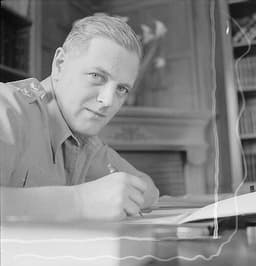
Adolf Frederick
Emperor · Modern
39.4Total

Napoleon Bonaparte
General · Modern
70.9Total
Basic Information
Born
1710
1769
Died
1771
1821
Era
Modern
Modern
Nationality
Sweden
France
Occupation
Emperor
General
Civilization
Western
Western
Score Comparison
Military (10%)
48.8
94.0
Political (20%)
30.7
72.0
Influence (20%)
45.5
40.0
Legacy (20%)
34.2
80.0
Leadership (15%)
31.2
78.0
Strategy (15%)
53.1
90.0
TOTAL
39.4
70.9
Adolf Frederick — Complete Timeline
1751 AD
Coronation of Adolf FrederickPolitical Action◆ Major
Adolf Frederick was crowned King of Sweden after the death of Frederick I. His coronation was conditional on the 1720 constitution, which left him with little real power, as the Riksdag dominated governance.
CoronationConstitutionAge of Liberty
Impact: national
1756 AD
December Crisis (1756)Political Action
Adolf Frederick attempted to increase royal power by dismissing the Hat party government, but the Riksdag forced him to back down. The crisis highlighted the weakness of the monarchy during the Age of Liberty.
CrisisConstitutional Conflict
Impact: national
1771 AD
Death from OvereatingOther
Adolf Frederick died in Stockholm after consuming a large meal of lobster, caviar, sauerkraut, and champagne, followed by 14 servings of his favorite dessert. His death was attributed to digestive issues, symbolizing his weak and indulgent rule.
DeathOvereating
Impact: nationaltragic
Napoleon Bonaparte — Complete Timeline
1799 AD
Coup of 18 BrumaireOther◆ Major
Napoleon Bonaparte, with support from his brother Lucien and key political figures, overthrew the Directory in a bloodless coup. He established the Consulate with himself as First Consul, effectively becoming the ruler of France. This event ended the French Revolution's most unstable period.
French RevolutionCoupRise to Power
Impact: regional
1804 AD
Promulgation of the Napoleonic CodeOther◆ Major
Napoleon enacted the Civil Code of the French, known as the Napoleonic Code, a comprehensive set of laws that replaced the fragmented feudal legal systems. The code established legal equality, protected property rights, and secularized law. It became the basis for legal systems in many European and world countries.
Legal ReformNapoleonic CodeCivil Law
Impact: globalconstructive
1805 AD
Battle of AusterlitzWar◆ Major
Napoleon's Grande Arm
Napoleonic WarsBattleDecisive Victory
Impact: global
1812 AD
Invasion of RussiaWar◆ Major
Napoleon led the Grande Arm
Napoleonic WarsInvasionDisaster
Impact: globaldestructive
1815 AD
Battle of WaterlooWar◆ Major
Napoleon's French army was defeated by the combined forces of the Duke of Wellington's Anglo-Allied army and Gebhard Leberecht von Bl
Napoleonic WarsBattleFinal Defeat
Impact: globaldestructive
Expert Analysis
adolf-frederick-vs-napoleon-bonaparte
# The Emperor Who Conquered Europe and the King Who Conquered a Meal
On June 18, 1815, a cannonade rolled across the muddy fields of Waterloo, and the greatest military mind of the age watched his empire crumble. Napoleon Bonaparte, who had once marched from Corsica to Moscow, was finished. Fifty-six years earlier and a thousand miles to the north, another monarch sat down to dinner in Stockholm. Adolf Frederick of Sweden, a king so powerless that his own parliament had stripped him of authority, consumed a legendary feast of lobster, caviar, sauerkraut, champagne, and fourteen servings of his favorite semla buns. Then he died. One man reshaped the world; the other merely filled his stomach. What drove such wildly different outcomes?
Origins
Napoleon Bonaparte was born in 1769 on the island of Corsica, a land recently annexed by France. His family was minor nobility, but Corsica was a backwater, and young Napoleon spoke French with a thick accent that aristocrats mocked. He entered military school at nine, a poor outsider among the sons of French nobles. This early humiliation forged a relentless drive. He devoured history and military theory, studied Alexander and Caesar, and absorbed the Enlightenment ideals of merit and order. His world was one of revolution—the old order crumbling, opportunity for those bold enough to seize it.
Adolf Frederick, born in 1710, was a prince of the House of Holstein-Gottorp, a minor German dynasty. He was invited to become King of Sweden in 1751 after the previous monarch died without an heir. Sweden was not a land of revolution; it was a land of stagnation. The Age of Liberty had made the Riksdag, Sweden's parliament, the true power. The king was a figurehead, a constitutional ornament. Adolf Frederick had been raised to be agreeable, not ambitious. His world was one of compromise, where a monarch's greatest virtue was to stay out of the way.
Rise to Power
Napoleon's rise was a thunderbolt. In 1795, at twenty-six, he saved the revolutionary government from a royalist mob with a "whiff of grapeshot"—cannon fire into Parisian streets. By 1796, he commanded the French army in Italy and stunned Europe with a campaign of dazzling speed and audacity. He defeated larger Austrian armies, negotiated his own treaties, and returned to France a hero. In 1799, he seized power in a coup, becoming First Consul. By 1804, he crowned himself Emperor in Notre Dame, taking the crown from the Pope's hands and placing it on his own head. He was not chosen by birth; he took what he wanted.
Adolf Frederick's rise was a formality. He was crowned in 1751, but his coronation was conditional: he had to swear to uphold the 1720 constitution that made him a puppet. The Hat party controlled the Riksdag, and they had invited him precisely because they expected obedience. He had no army to command, no treasury to spend, no policy to shape. He was a king in name, a prisoner in practice.
Leadership & Governance
Napoleon governed with the same ferocity he brought to battle. He centralized the French state, created the Bank of France to stabilize the economy, and most famously produced the Napoleonic Code—a legal system based on merit, property rights, and secular law that influenced nations from Italy to Louisiana. He appointed officials based on talent, not birth. "The tools to him that can handle them," he said. His military genius was unmatched: at Austerlitz in 1805, he destroyed a combined Russian-Austrian army with a feigned retreat that remains a textbook maneuver. He conquered most of Europe, installed his brothers on thrones, and redrew the map.
Adolf Frederick governed by signing papers the Riksdag placed before him. In 1756, he attempted a desperate act: he dismissed the Hat government and tried to restore royal power. The Riksdag retaliated instantly. They forced him to recall the ministers, stripped his remaining privileges, and imposed a new constitution that made him even weaker. The December Crisis of 1756 was his one rebellion, and it failed utterly. After that, he retreated into domestic life, his political score of 53.4 a generous estimate of his influence.
Triumph & Tragedy
Napoleon's greatest triumph was his empire at its height in 1810, stretching from Spain to Poland. His tragedy was hubris. In 1812, he invaded Russia with 600,000 men. The Russians refused to fight a decisive battle, burned Moscow, and let the Russian winter do the killing. Only 100,000 returned. The disaster emboldened his enemies, and by 1814, Paris fell. He was exiled to Elba, escaped, raised another army, and met his final defeat at Waterloo. His military score of 94.0 and strategy score of 93.0 reflect a genius who, in the end, overreached.
Adolf Frederick's triumph was surviving. In an era when monarchs were deposed and executed, he remained king for twenty years. His tragedy was not death in battle but death at the dinner table. On February 12, 1771, he consumed his infamous meal—lobster, caviar, sauerkraut, champagne, and semla buns—and died of digestive complications. His legacy score of 46.5 is a historian's polite way of saying he is remembered mainly as the king who ate himself to death.
Character & Destiny
Napoleon was driven by an insatiable hunger for glory. "Impossible is a word to be found only in the dictionary of fools," he said. He was ruthless, brilliant, and utterly convinced of his own destiny. His personality demanded conquest; he could not stop. That same drive that made him emperor also made him a prisoner on Saint Helena, writing memoirs and dying slowly of stomach cancer at fifty-one.
Adolf Frederick was driven by appetite—not for power, but for comfort. He was a gentle man in a brutal age, a king who preferred hunting and eating to ruling. His personality suited his circumstances: he was weak because he had been trained to be weak, and the system rewarded his passivity. He died at sixty-one, not in exile but in his own bed, having eaten what he pleased.
Legacy
Napoleon's legacy is colossal. The Napoleonic Code shapes legal systems across the world. He destroyed the Holy Roman Empire, spread nationalism across Europe, and inspired modern warfare. He is both a hero of meritocracy and a cautionary tale of ambition. His influence score of 82.0 and legacy score of 78.0 understate his impact; he is one of the most studied figures in history.
Adolf Frederick's legacy is a footnote. The Age of Liberty ended after his death, and Sweden eventually returned to a stronger monarchy under Gustav III. He is remembered in trivia: the king who ate himself to death. His influence score of 62.6 is generous, reflecting not his actions but the era's historical interest.
Conclusion
Two monarchs, two centuries, two fates. Napoleon Bonaparte reached for the impossible and nearly grasped it; Adolf Frederick reached for a semla bun and found his end. One died in exile, the other in digestion. But their stories are not merely contrasts of genius and mediocrity. They are mirrors of their times. Napoleon's era was one of upheaval, where a Corsican outsider could become emperor through will and war. Adolf Frederick's era was one of stability, where a king's greatest duty was to stay out of the way. History rewards the bold, but it also consumes them. Napoleon conquered Europe and was devoured by his own ambition. Adolf Frederick conquered a meal and was devoured by it. In the end, both were consumed by what they could not resist.
Rankings
🥇
Napoleon BonaparteLeader
Mil: 94.0Pol: 72.0Inf: 40.0
70.9
🥈
Adolf Frederick
Mil: 48.8Pol: 30.7Inf: 45.5
39.4
+31.5 behind
How This Comparison Works
Algorithm
Each figure is scored on 6 dimensions (0—100 scale) based on structured historical data: Military (10%), Political (20%), Influence (20%), Legacy (20%), Leadership (15%), Strategy (15%). The weighted total produces the final ranking.
Data Sources
Scores are computed from structured sub-indicators in the database. Scale factors adjust for era (Ancient ×0.85, Modern ×1.0) and civilization size (Eastern ×1.05, Other ×0.80) to account for differences in population and military scale.
Maximum 3 Figures
Comparisons are limited to 2—3 figures to ensure readability and statistical meaningfulness.
Error Margins
±5 points per dimension — Sub-scores are derived from historical records with inherent uncertainty. Two figures within 5 points on a dimension should be considered roughly equivalent in that area.
Total Score Accuracy
±3 points overall — The weighted combination of 6 dimensions produces a total score with approximately ±3 points of uncertainty. Differences of less than 3 points are not statistically significant— the figures are effectively tied.
Known Limitations
- Historical records are incomplete and uneven across civilizations
- Figures from oral-tradition societies may be underrepresented
- Occupation labels can misclassify multi-role figures
- Scores measure capability and impact, not moral character
- Quantitative scoring is a comparison tool, not absolute truth
Capability Radar
Military (10%) — Battles & Warfare
Battles
22
95
Win Rate
27
90
Expansion
28
95
Political (20%) — Governance & Reform
Reform
5
95
Diplomacy
10
80
Economy
5
85
Influence (20%) — Cultural & Global Reach
Cultural
5
85
Global
5
90
Legacy (20%) — Historical Impact
Historical
10
95
Longevity
5
90
Leadership (15%) — Power & Stability
Tenure
5
85
Stability
10
70
Strategy (15%) — Tactics & Innovation
Strategy
36
95
Tactics
35
98
Reform
38
92
Similar Comparisons
Comments & Discussion
No comments yet. Be the first to share your thoughts!