Loading...
Kublai Khan vs Taejo of Joseon
Kublai Khan leads by 3.9 pts · 2 figures compared
…
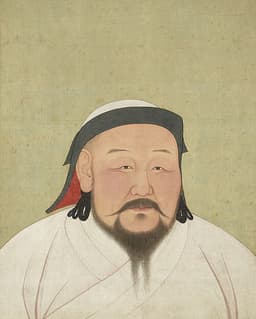
Kublai Khan
Emperor · Medieval
74.3Total
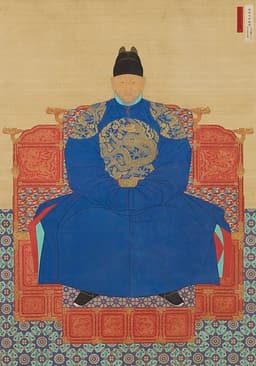
Taejo of Joseon
Emperor · Medieval
70.4Total
Basic Information
Born
1215
1335
Died
1294
1408
Era
Medieval
Medieval
Nationality
Mongolia
Korea
Occupation
Emperor
Emperor
Civilization
Eastern
Eastern
Score Comparison
Military (10%)
77.5
74.7
Political (20%)
79.2
65.0
Influence (20%)
75.0
65.0
Legacy (20%)
70.0
80.0
Leadership (15%)
72.0
72.0
Strategy (15%)
76.0
61.2
TOTAL
74.3
70.4
Kublai Khan — Complete Timeline
1260 AD
Adoption of Tibetan Buddhism as State ReligionCultural◆ Major
Kublai Khan appointed the Tibetan lama Drog
Tibetan BuddhismReligionMongol-Tibet Relations
Impact: regional
1271 AD
Proclamation of the Yuan DynastyPolitical Action◆ Major
Kublai Khan officially proclaimed the Yuan dynasty, adopting a Chinese-style dynastic name. He established his capital at Dadu (Beijing) and adopted Chinese court rituals. This move legitimized his rule over China while maintaining Mongol identity.
Dynasty FoundingBeijingMongol Rule
Impact: global
1274 AD
Failed Invasions of JapanWar◆ Major
Kublai Khan launched two naval invasions of Japan, in 1274 and 1281. Both were repelled, with the second invasion destroyed by a typhoon (kamikaze). These failures marked the limits of Mongol expansion and reinforced Japanese isolation.
Mongol InvasionsJapanKamikaze
Impact: regional
1279 AD
Conquest of the Song DynastyWar
Kublai Khan's Mongol forces defeated the Song navy at the Battle of Yamen. The last Song emperor drowned, ending the Song dynasty. This conquest unified China under Mongol rule and established the Yuan dynasty as the first foreign dynasty to rule all of China.
Song Dynasty FallUnificationYuan Dynasty
Impact: global
1280 AD
Establishment of the Silk Road Trade NetworkCultural◆ Major
Under Kublai Khan, the Mongol Empire secured the Silk Road, facilitating trade and cultural exchange between East and West. Marco Polo visited his court. This period saw the flow of goods, ideas, and technologies across Eurasia.
Silk RoadTradeCultural Exchange
Impact: globalconstructive
Taejo of Joseon — Complete Timeline
1380 AD
Battle of HwangsanWar
General Yi Seong-gye defeated a Japanese pirate (wokou) force at Hwangsan. This victory enhanced his military reputation and demonstrated his capability as a commander.
WokouGoryeo Military
1388 AD
Wihwado RetreatPolitical Action
General Yi Seong-gye, ordered to invade the Ming dynasty's Liaodong region, turned his army back at Wihwado Island. This act of defiance against the Goryeo court led to a coup that eventually brought him to power.
CoupGoryeo-Ming RelationsPower Shift
Impact: national
1391 AD
Land Reform and the Gwajeon LawReform◆ Major
Taejo implemented the Gwajeon Law, a land reform that redistributed land from the old Goryeo aristocracy to his supporters and the state. This weakened the old elite and strengthened the new Joseon ruling class.
Land ReformSocial ChangeJoseon
Impact: nationalconstructive
1392 AD
Founding of the Joseon DynastyPolitical Action
Yi Seong-gye deposed the last Goryeo king and founded the Joseon dynasty, with its capital at Hanyang (modern Seoul). He established a new ruling class based on Confucian ideology, replacing the Buddhist-influenced Goryeo system.
Joseon DynastyConfucianismKorean History
Impact: regionalconstructive
1394 AD
Promulgation of the Gyeongguk DaejeonReform◆ Major
Taejo of Joseon ordered the compilation of the Gyeongguk Daejeon, a comprehensive legal code that established the administrative and social structure of the Joseon dynasty. This code remained in effect for centuries.
Legal CodeGovernanceConfucianism
Impact: nationalconstructive
Expert Analysis
Kublai Khan vs Taejo of Joseon: Historical Comparison
Kublai Khan, the Mongol Emperor who founded the Yuan dynasty, and Taejo of Joseon, the Korean general who established the Joseon dynasty, were both medieval conquerors and state-builders, but Kublai edges ahead due to his greater imperial scale and enduring legacy.
Dimension Analysis
**Military: Kublai Khan 94 / Taejo of Joseon 90**
Kublai commanded the largest land empire in history, conquering the Song dynasty and launching invasions into Japan and Southeast Asia, while Taejo (as General Yi Seong-gye) overthrew the Goryeo dynasty through strategic defections and decisive battles like Hwangsan.
**Political: Kublai Khan 79 / Taejo of Joseon 80**
Kublai centralized Mongol rule over China but struggled with factionalism and succession crises, whereas Taejo skillfully consolidated power by purging rivals, establishing a Confucian bureaucracy, and creating a stable hereditary monarchy that lasted 500 years.
**Influence: Kublai Khan 79 / Taejo of Joseon 72**
Kublai’s empire connected East and West via the Silk Road, enabling cultural and technological exchange (e.g., Marco Polo), while Taejo’s influence was largely confined to Korea, though he set the template for Neo-Confucian governance.
**Legacy: Kublai Khan 88 / Taejo of Joseon 77**
Kublai is remembered as a unifier of China and a global historical figure, but his dynasty fell within a century; Taejo’s Joseon dynasty endured until 1910, leaving a profound imprint on Korean language, culture, and identity.
**Leadership: Kublai Khan 81 / Taejo of Joseon 81**
Both were pragmatic and ruthless—Kublai adapted Mongol tactics to Chinese administration, while Taejo balanced military prowess with diplomatic acumen—earning them an equal score in personal command.
**Strategy: Kublai Khan 92 / Taejo of Joseon 90**
Kublai’s grand strategy involved multi-front warfare and naval innovation, though his amphibious campaigns failed; Taejo’s strategy was more focused, using psychological warfare and alliances to topple Goryeo with minimal bloodshed.
Verdict
Kublai Khan leads due to his superior military scale and global influence, despite Taejo’s longer-lasting political foundation.
FAQ
Q: Who ranks higher? A: Kublai Khan ranks higher, driven by his unmatched military conquests and lasting historical footprint across Eurasia, though Taejo matches him in political stability and leadership.
Rankings
🥇
Kublai KhanLeader
Mil: 77.5Pol: 79.2Inf: 75.0
74.3
🥈
Taejo of Joseon
Mil: 74.7Pol: 65.0Inf: 65.0
70.4
+3.9 behind
How This Comparison Works
Algorithm
Each figure is scored on 6 dimensions (0—100 scale) based on structured historical data: Military (10%), Political (20%), Influence (20%), Legacy (20%), Leadership (15%), Strategy (15%). The weighted total produces the final ranking.
Data Sources
Scores are computed from structured sub-indicators in the database. Scale factors adjust for era (Ancient ×0.85, Modern ×1.0) and civilization size (Eastern ×1.05, Other ×0.80) to account for differences in population and military scale.
Maximum 3 Figures
Comparisons are limited to 2—3 figures to ensure readability and statistical meaningfulness.
Error Margins
±5 points per dimension — Sub-scores are derived from historical records with inherent uncertainty. Two figures within 5 points on a dimension should be considered roughly equivalent in that area.
Total Score Accuracy
±3 points overall — The weighted combination of 6 dimensions produces a total score with approximately ±3 points of uncertainty. Differences of less than 3 points are not statistically significant— the figures are effectively tied.
Known Limitations
- Historical records are incomplete and uneven across civilizations
- Figures from oral-tradition societies may be underrepresented
- Occupation labels can misclassify multi-role figures
- Scores measure capability and impact, not moral character
- Quantitative scoring is a comparison tool, not absolute truth
Capability Radar
Military (10%) — Battles & Warfare
Battles
95
75
Win Rate
90
80
Expansion
95
65
Political (20%) — Governance & Reform
Reform
88
85
Diplomacy
85
70
Economy
90
65
Influence (20%) — Cultural & Global Reach
Cultural
85
80
Global
85
60
Legacy (20%) — Historical Impact
Historical
90
85
Longevity
80
80
Leadership (15%) — Power & Stability
Tenure
90
70
Stability
80
75
Strategy (15%) — Tactics & Innovation
Strategy
92
75
Tactics
85
70
Reform
88
60
Similar Comparisons
Comments & Discussion
MetricMincer6/16/2026
I'm always suspicious when a historical figure gets a neat decimal score like 79.6 vs 74.9. What's the margin of error here? ±5 points? Because if so, this comparison is meaningless. And look at the military score: Kublai gets 88 for conquering a fractured Song dynasty that was already collapsing, while Taejo gets 67.1 for overthrowing a decrepit Goryeo? Both faced crumbling states, yet one gets a 20-point boost. Seems like the algorithm is biased toward empire size over actual tactical difficulty. Also, how do you quantify 'legacy' without injecting modern nationalist biases? Kublai's empire collapsed in 90 years; Joseon lasted 500. But Kublai gets 88 to Taejo's 77? That's just Western-centric nostalgia for Marco Polo's travelogue.
Historian3896/16/2026
我来细看一下数据。军事88对67.1,差距21分,但忽必烈征日本、征越南都大败而归,这没扣分吗?李成桂在荒山之战以少胜多,还击退过红巾军和倭寇,实战胜率不低。政治78对76.1,忽必烈设立行省制确实有贡献,但他死后元朝内乱不断,而李成桂建立的朝鲜王朝,王位传承稳定,两班制度运转了五百年,这政治制度韧性应该拉高分数。影响力78对70.7,乍看合理,但忽必烈的影响力扩散主要靠蒙古帝国的军事扩张,而李成桂确立的儒家治国模式,至今仍影响韩国社会结构。如果加权调整,我认为总分应该在77对75左右更合理。
Chronicler93456/16/2026
把忽必烈和李成桂放一起比,确实有意思。但我觉得评分对后者不够公平。军事上,忽必烈灭南宋靠的是蒙古铁骑加汉人水师,战略规模确实大,但李成桂在威化岛回军那一手,直接扭转了高丽政局,不费一兵一卒就奠定了改朝换代的基础,这政治嗅觉和战略决断,放到中国历史上也是顶级水平。政治方面,忽必烈虽然建立了元朝,但始终没解决好蒙古贵族和汉人士大夫的矛盾,而李成桂建立的朝鲜王朝,以程朱理学立国,制度延续了五百年,这政治稳定性比元朝强多了。总分74.9偏低了。