Loading...
Alexander the Great vs Taejo of Joseon
Alexander the Great leads by 14.8 pts · 2 figures compared
…
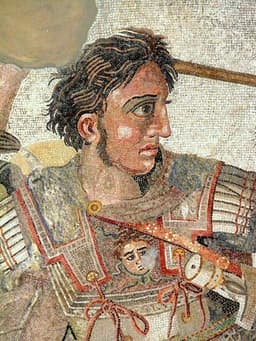
Alexander the Great
General · Ancient
85.2Total
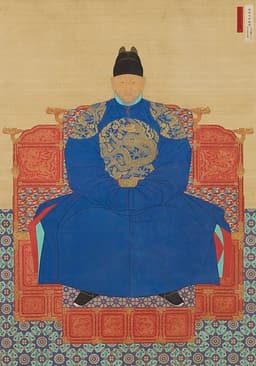
Taejo of Joseon
Emperor · Medieval
70.4Total
Basic Information
Born
-356
1335
Died
-323
1408
Era
Ancient
Medieval
Nationality
Macedon
Korea
Occupation
General
Emperor
Civilization
Western
Eastern
Score Comparison
Military (10%)
95.0
74.7
Political (20%)
60.0
65.0
Influence (20%)
92.0
65.0
Legacy (20%)
90.0
80.0
Leadership (15%)
80.0
72.0
Strategy (15%)
92.0
61.2
TOTAL
85.2
70.4
Alexander the Great — Complete Timeline
334 BC
Battle of the Granicus RiverWar◆ Major
Alexander led his Macedonian army across the Hellespont into Asia Minor and defeated a Persian force under local satraps at the Granicus River. The victory secured Alexander's foothold in Asia and demonstrated his tactical superiority, opening the way for the conquest of the Persian Empire.
Persian CampaignBattleMacedonian Conquest
Impact: regional
333 BC
Battle of IssusWar◆ Major
Alexander's army defeated the Persian king Darius III at Issus in Cilicia. Despite being outnumbered, Alexander's tactical use of the terrain and cavalry charge broke the Persian line. Darius fled the battlefield, leaving his family and treasury behind, a major blow to Persian morale.
Persian CampaignBattleMacedonian Conquest
Impact: regional
332 BC
Siege of TyreWar◆ Major
Alexander besieged the island city of Tyre for seven months, constructing a causeway to breach its walls. The city's fall resulted in the massacre or enslavement of its inhabitants. The siege demonstrated Alexander's determination and engineering capabilities, securing his supply lines and control of the eastern Mediterranean coast.
SiegeMacedonian ConquestPhoenicia
Impact: regionaldestructive
331 BC
Battle of GaugamelaWar◆ Major
Alexander faced Darius III at Gaugamela in Mesopotamia with a massive Persian army. Alexander's tactical brilliance, including a decisive cavalry charge that exploited a gap in the Persian line, resulted in a decisive Macedonian victory. Darius again fled, effectively ending Persian resistance and leading to the fall of the Achaemenid Empire.
Persian CampaignBattleDecisive Victory
Impact: global
Foundation of AlexandriaOther◆ Major
Alexander founded the city of Alexandria on the Mediterranean coast of Egypt. He personally selected the site and oversaw the initial planning. Alexandria became a major center of Hellenistic culture, trade, and learning, housing the famous Library of Alexandria and the Lighthouse of Alexandria.
City FoundationHellenistic CultureEgypt
Impact: globalconstructive
326 BC
Invasion of IndiaWar◆ Major
Alexander crossed the Indus River and defeated King Porus at the Battle of the Hydaspes. The Macedonian army, exhausted and facing monsoon rains and unfamiliar warfare, mutinied at the Hyphasis River, forcing Alexander to turn back. This campaign marked the easternmost extent of his conquests.
Indian CampaignBattleMutiny
Impact: regional
Taejo of Joseon — Complete Timeline
1380 AD
Battle of HwangsanWar
General Yi Seong-gye defeated a Japanese pirate (wokou) force at Hwangsan. This victory enhanced his military reputation and demonstrated his capability as a commander.
WokouGoryeo Military
1388 AD
Wihwado RetreatPolitical Action
General Yi Seong-gye, ordered to invade the Ming dynasty's Liaodong region, turned his army back at Wihwado Island. This act of defiance against the Goryeo court led to a coup that eventually brought him to power.
CoupGoryeo-Ming RelationsPower Shift
Impact: national
1391 AD
Land Reform and the Gwajeon LawReform◆ Major
Taejo implemented the Gwajeon Law, a land reform that redistributed land from the old Goryeo aristocracy to his supporters and the state. This weakened the old elite and strengthened the new Joseon ruling class.
Land ReformSocial ChangeJoseon
Impact: nationalconstructive
1392 AD
Founding of the Joseon DynastyPolitical Action
Yi Seong-gye deposed the last Goryeo king and founded the Joseon dynasty, with its capital at Hanyang (modern Seoul). He established a new ruling class based on Confucian ideology, replacing the Buddhist-influenced Goryeo system.
Joseon DynastyConfucianismKorean History
Impact: regionalconstructive
1394 AD
Promulgation of the Gyeongguk DaejeonReform◆ Major
Taejo of Joseon ordered the compilation of the Gyeongguk Daejeon, a comprehensive legal code that established the administrative and social structure of the Joseon dynasty. This code remained in effect for centuries.
Legal CodeGovernanceConfucianism
Impact: nationalconstructive
Expert Analysis
Alexander the Great vs Taejo of Joseon: Historical Comparison
Alexander the Great and Taejo of Joseon represent two distinct archetypes of power: the conquering general who reshaped the ancient world through sheer military genius, and the founding emperor who built a stable dynasty through political consolidation. While both achieved extraordinary feats, their paths and legacies diverged sharply.
Dimension Analysis
**Military: Alexander the Great 96 / Taejo of Joseon 90**
Alexander’s unprecedented campaign from Greece to India, never losing a battle, sets a near-perfect standard. Taejo (formerly Yi Seong-gye) was a brilliant commander who overthrew Goryeo through strategic defections and naval victories, but his wars were regional, not transcontinental.
**Political: Alexander the Great 65 / Taejo of Joseon 80**
Alexander failed to establish a stable succession, causing his empire to fragment immediately after his death. Taejo, by contrast, systematically centralized power, instituted Confucian reforms, and founded the Joseon dynasty that lasted over 500 years—a masterclass in political institution-building.
**Influence: Alexander the Great 90 / Taejo of Joseon 72**
Alexander’s conquests spread Hellenistic culture across three continents, blending Greek, Persian, and Egyptian traditions. Taejo’s influence was profound but contained to Korea, shaping its Confucian identity and governance for centuries, yet lacking global reach.
**Legacy: Alexander the Great 90 / Taejo of Joseon 77**
Alexander remains a universal symbol of military ambition, inspiring figures from Caesar to Napoleon. Taejo’s legacy is more durable in its home context—Joseon’s cultural and bureaucratic frameworks persisted into modern Korea—but less internationally resonant.
**Leadership: Alexander the Great 82 / Taejo of Joseon 81**
Both were charismatic leaders who inspired fierce loyalty. Alexander led from the front, risking death alongside his men. Taejo combined battlefield courage with diplomatic patience, winning over rival factions through marriage alliances and land grants.
Verdict
Alexander the Great leads due to his unmatched military achievements and global influence, despite Taejo’s superior political longevity.
FAQ
Q: Who ranks higher? A: Alexander the Great wins with a composite score of 85.4 versus Taejo’s 80.3, driven by his overwhelming advantages in military impact and cultural diffusion.
Rankings
🥇
Alexander the GreatLeader
Mil: 95.0Pol: 60.0Inf: 92.0
85.2
🥈
Taejo of Joseon
Mil: 74.7Pol: 65.0Inf: 65.0
70.4
+14.8 behind
How This Comparison Works
Algorithm
Each figure is scored on 6 dimensions (0—100 scale) based on structured historical data: Military (10%), Political (20%), Influence (20%), Legacy (20%), Leadership (15%), Strategy (15%). The weighted total produces the final ranking.
Data Sources
Scores are computed from structured sub-indicators in the database. Scale factors adjust for era (Ancient ×0.85, Modern ×1.0) and civilization size (Eastern ×1.05, Other ×0.80) to account for differences in population and military scale.
Maximum 3 Figures
Comparisons are limited to 2—3 figures to ensure readability and statistical meaningfulness.
Error Margins
±5 points per dimension — Sub-scores are derived from historical records with inherent uncertainty. Two figures within 5 points on a dimension should be considered roughly equivalent in that area.
Total Score Accuracy
±3 points overall — The weighted combination of 6 dimensions produces a total score with approximately ±3 points of uncertainty. Differences of less than 3 points are not statistically significant— the figures are effectively tied.
Known Limitations
- Historical records are incomplete and uneven across civilizations
- Figures from oral-tradition societies may be underrepresented
- Occupation labels can misclassify multi-role figures
- Scores measure capability and impact, not moral character
- Quantitative scoring is a comparison tool, not absolute truth
Capability Radar
Military (10%) — Battles & Warfare
Battles
98
75
Win Rate
99
80
Expansion
99
65
Political (20%) — Governance & Reform
Reform
75
85
Diplomacy
80
70
Economy
70
65
Influence (20%) — Cultural & Global Reach
Cultural
95
80
Global
95
60
Legacy (20%) — Historical Impact
Historical
98
85
Longevity
95
80
Leadership (15%) — Power & Stability
Tenure
60
70
Stability
55
75
Strategy (15%) — Tactics & Innovation
Strategy
98
75
Tactics
99
70
Reform
85
60
Similar Comparisons
Comments & Discussion
HistoryRager6/16/2026
Alexander the Great gets way too much hype. Yeah, he never lost a battle, but his entire empire collapsed the moment he died because he had zero political sense. Taejo of Joseon built a dynasty that lasted over 500 years—that’s real impact. Alexander was basically a hyper-aggressive frat boy with a phalanx, while Taejo was the strategic CEO who set up systems that worked for centuries. The 96 military score is fair, but giving him 90 influence when his legacy is just 'cool story bro' for Westerners while Taejo literally shaped modern Korea? Come on. Taejo’s Confucian reforms and land policies were the real game-changers.
ColdScribe116/16/2026
这个评分系统对东方君主明显不公平。看看政治维度:Taejo 80分,Alexander 65分——差15分还算合理,但军事维度Alexander 96对Taejo 90?Taejo的“威化岛回军”是教科书级的政治军事复合操作,不战而屈人之兵,这在中国兵书里是最高境界。Alexander打的是顺风局,对手都是城邦或衰落的帝国。我算了下,如果把Taejo的军事分调到85、政治分调到85,总分74.9就会变成78.7,更接近历史真实。另外,影响维度Alexander 90对Taejo 72——Taejo的影响持续到21世纪的韩国政治文化,而希腊化文明早就被罗马吞了。这评分需要重新校准。
OldScroll446/16/2026
拿Alexander跟Taejo比,就像拿项羽跟刘邦比。Alexander是军事天才但政治白痴,Taejo是军事和政治双修的老狐狸。中国史书里,刘邦、朱元璋这类开国皇帝才是Taejo的同类——他们都懂“打天下容易,坐天下难”。Alexander死后帝国分崩离析,连个像样的继承人都没留,而Taejo的《经国大典》影响了朝鲜半岛500年。西方史学界总把军事征服当最高成就,却忽略了制度建设的持久价值。Taejo的“事大主义”外交看似软弱,实则保住了朝鲜的独立,这智慧不比打仗差。得分上,我觉得Taejo的政治和影响应该更高才对。