Loading...
Al-Muqtadi vs Al-Mustain of Cairo
Al-Mustain of Cairo leads by 0.2 pts · 2 figures compared
…
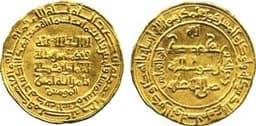
Al-Muqtadi
Emperor · Medieval
39.4Total

Al-Mustain of Cairo
Emperor · Medieval
39.6Total
Basic Information
Born
1056
1390
Died
1094
1430
Era
Medieval
Medieval
Nationality
Abbasid Caliphate
Abbasid Caliphate
Occupation
Emperor
Emperor
Civilization
Middle Eastern
Middle Eastern
Score Comparison
Military (10%)
20.0
20.0
Political (20%)
32.2
35.0
Influence (20%)
47.9
45.5
Legacy (20%)
37.5
35.8
Leadership (15%)
45.0
49.9
Strategy (15%)
45.0
45.0
TOTAL
39.4
39.6
Al-Muqtadi — Complete Timeline
1082 AD
Marriage to Seljuk PrincessPolitical Action◆ Major
Caliph Al-Muqtadi married a daughter of Seljuk Sultan Malik Shah I. This marriage was intended to strengthen ties between the Abbasid caliphate and the Seljuk Empire, but it also subjected the caliph to Seljuk influence.
Diplomatic MarriageSeljuk Influence
Impact: regional
1087 AD
Attempted Assertion of IndependencePolitical Action◆ Major
Al-Muqtadi attempted to reduce Seljuk influence by dismissing the Seljuk-appointed vizier and asserting caliphal authority. Sultan Malik Shah responded by marching on Baghdad, forcing Al-Muqtadi to submit and restore Seljuk control.
Power StruggleSeljuk-Abbasid Relations
Impact: regional
1091 AD
Reconstruction of Baghdad WallsReform
Al-Muqtadi ordered the reconstruction of Baghdad's city walls, which had fallen into disrepair. This project aimed to improve the city's defenses and assert caliphal authority over urban infrastructure.
Urban DevelopmentDefenseBaghdad
constructive
Al-Mustain of Cairo — Complete Timeline
1406 AD
Accession as CaliphPolitical Action
Al-Mustain became caliph after the death of Al-Mutawakkil I. His reign was initially ceremonial, but he later became involved in Mamluk politics.
Caliphal Succession
1412 AD
Brief Rule as Mamluk SultanPolitical Action
During a succession crisis, Al-Mustain was proclaimed Mamluk Sultan by the emirs after the death of Sultan Faraj. He ruled for only a few months before being deposed by Emir Al-Mu'ayyad Shaykh. This was the only time a Cairene Abbasid caliph held temporal power.
SultanateMamluk PoliticsUnique Event
Impact: regional
Deposition and ExilePolitical Action◆ Major
After being deposed as sultan, Al-Mustain was forced to abdicate the caliphate and was exiled to Alexandria. He died there in 1430, ending his unique dual role.
DepositionExileEnd of Reign
tragic
Expert Analysis
Origins
Al-Muqtadi (born 1056, died 1094) was the 27th Abbasid caliph in Baghdad, ascending the throne in 1075. He was the grandson of Caliph Al-Qa'im and son of Caliph Al-Muqtadi's father, Muhammad al-Dhakhira, though his early life is sparsely documented. The Abbasid caliphate at this time was under the political dominance of the Seljuk Turks, who had entered Baghdad in 1055 and effectively controlled the caliphs. Al-Muqtadi's reign occurred during the height of Seljuk power under Sultan Malik Shah I. His family background was purely Abbasid, but his marriage to a Seljuk princess would define his political ties.
Al-Mustain of Cairo (born 1390, died 1430) was a descendant of the Abbasid line that had fled to Cairo after the Mongol sack of Baghdad in 1258. He became the second Cairene Abbasid caliph under the Mamluk Sultanate, succeeding his father Al-Mutawakkil I in 1406. The Cairene caliphs were largely figureheads, legitimizing Mamluk sultans. Al-Mustain's unusual role as both caliph and sultan arose from a succession crisis, but his background was that of a ceremonial religious leader, not a military or political ruler.
Rise to Power
Al-Muqtadi became caliph in 1075 at the age of 19, following the death of his grandfather Al-Qa'im. His accession was smooth, as the Seljuk sultan Malik Shah I approved the succession. The caliphate was a symbolic office, but Al-Muqtadi sought to assert independence from Seljuk control. In 1082, he attempted to dismiss the Seljuk-appointed vizier, Ibn Jahir, and appoint his own. This led to a confrontation with Malik Shah, who marched to Baghdad and forced Al-Muqtadi to restore the vizier. The caliph's marriage to Malik Shah's daughter in 1082 was part of a diplomatic effort to strengthen ties, but it also placed him under family pressure.
Al-Mustain of Cairo became caliph in 1406 upon the death of his father Al-Mutawakkil I. He was the second of the Cairene Abbasid caliphs, and his role was purely ceremonial, performing prayers and giving legitimacy to Mamluk sultans. In 1412, after the death of Sultan Faraj, a succession crisis erupted among the Mamluks. The emirs, unable to agree on a candidate, proclaimed Al-Mustain as sultan. This was unprecedented: a caliph ruling as sultan. He held the title for a few months, but lacked military support. He was soon deposed by the emir Shaykh Mahmudi, who became sultan. Al-Mustain was forced to abdicate the caliphate and was exiled to Alexandria, where he died in 1430.
Leadership & Governance
Al-Muqtadi's governance was constrained by Seljuk dominance. He scored 45.0 in leadership and 45.0 in strategy, reflecting his efforts to exert authority within limits. He ordered the reconstruction of Baghdad's city walls in the 1080s, a project that improved defenses but required Seljuk approval. His political score of 32.2 indicates limited success: his attempt to dismiss the vizier backfired, leading to loss of autonomy. He also patronized religious scholarship, but his reign saw no major administrative reforms.
Al-Mustain's rule as caliph was ceremonial, but his brief tenure as sultan showed his potential. He scored 49.9 in leadership, higher than Al-Muqtadi, due to his willingness to take power. However, his political score of 35.0 reflects his inability to maintain control. As sultan, he faced Mamluk emirs who saw him as a figurehead. He issued decrees but had no army or treasury. His deposition was swift, and his exile ended any influence.
Triumph & Tragedy
Al-Muqtadi's greatest success was maintaining the caliphal line and rebuilding Baghdad's walls, which provided some security. His marriage to the Seljuk princess temporarily stabilized relations. His tragedy was his failure to assert independence; after his attempt to dismiss the vizier, Malik Shah reduced his authority. The caliphate remained under Seljuk control, and Al-Muqtadi died in 1094 with little real power.
Al-Mustain's triumph was becoming sultan, a unique achievement for a Cairene caliph. It demonstrated that the caliph could temporarily hold temporal power. His tragedy was his rapid deposition and exile. He lost both the sultanate and caliphate, ending his life in obscurity. His political score of 35.0 reflects this failure.
Character & Destiny
Al-Muqtadi appears cautious but ambitious. His attempt to dismiss the vizier shows a desire for independence, but he lacked the military strength to back it. His character was shaped by the Seljuk shadow; he was a puppet who occasionally pulled strings. Historical assessments view him as a weak caliph who could not break free.
Al-Mustain was more daring, accepting the sultanate despite risks. His character suggests ambition and willingness to challenge norms. But he misjudged the Mamluk political landscape; the emirs saw him as a temporary solution. His destiny was to be a footnote: the only caliph-sultan, but for a few months.
Legacy
Al-Muqtadi's legacy is tied to the Abbasid caliphate's decline. His rebuilding of walls had limited impact; Baghdad fell to the Mongols in 1258. He scored 37.5 in legacy, reflecting his minor role. The caliphate continued under Seljuk influence until its end.
Al-Mustain's legacy is unique: he is remembered as the only Cairene caliph to rule as sultan. This event highlighted the weakness of the caliphal institution and the Mamluk system. His score of 35.8 in legacy is slightly lower than Al-Muqtadi's, but his story is more remarkable.
Conclusion
Al-Mustain of Cairo had a greater impact despite his shorter reign. His brief rule as sultan was unprecedented and demonstrated the potential for caliphal power. Al-Muqtadi, though longer-lived, remained a puppet. Al-Mustain's total score of 39.6 versus Al-Muqtadi's 39.4 is a narrow margin, but the historical significance of his unique role edges him ahead. The Cairene caliph's attempt to hold temporal power was more daring and memorable than Al-Muqtadi's failed independence bid.
Rankings
🥇
Al-Mustain of CairoLeader
Mil: 20.0Pol: 35.0Inf: 45.5
39.6
🥈
Al-Muqtadi
Mil: 20.0Pol: 32.2Inf: 47.9
39.4
+0.2 behind
How This Comparison Works
Algorithm
Each figure is scored on 6 dimensions (0—100 scale) based on structured historical data: Military (10%), Political (20%), Influence (20%), Legacy (20%), Leadership (15%), Strategy (15%). The weighted total produces the final ranking.
Data Sources
Scores are computed from structured sub-indicators in the database. Scale factors adjust for era (Ancient ×0.85, Modern ×1.0) and civilization size (Eastern ×1.05, Other ×0.80) to account for differences in population and military scale.
Maximum 3 Figures
Comparisons are limited to 2—3 figures to ensure readability and statistical meaningfulness.
Error Margins
±5 points per dimension — Sub-scores are derived from historical records with inherent uncertainty. Two figures within 5 points on a dimension should be considered roughly equivalent in that area.
Total Score Accuracy
±3 points overall — The weighted combination of 6 dimensions produces a total score with approximately ±3 points of uncertainty. Differences of less than 3 points are not statistically significant— the figures are effectively tied.
Known Limitations
- Historical records are incomplete and uneven across civilizations
- Figures from oral-tradition societies may be underrepresented
- Occupation labels can misclassify multi-role figures
- Scores measure capability and impact, not moral character
- Quantitative scoring is a comparison tool, not absolute truth
Capability Radar
Military (10%) — Battles & Warfare
Battles
5
5
Win Rate
5
5
Expansion
5
5
Political (20%) — Governance & Reform
Reform
20
5
Diplomacy
40
10
Economy
20
5
Influence (20%) — Cultural & Global Reach
Cultural
15
5
Global
10
5
Legacy (20%) — Historical Impact
Historical
15
10
Longevity
10
5
Leadership (15%) — Power & Stability
Tenure
30
10
Stability
25
5
Strategy (15%) — Tactics & Innovation
Strategy
5
5
Tactics
5
5
Reform
5
5
Similar Comparisons
Comments & Discussion
No comments yet. Be the first to share your thoughts!