Loading...
Al-Muqtadi vs Yusuf Adil Shah
Yusuf Adil Shah leads by 18.0 pts · 2 figures compared
…
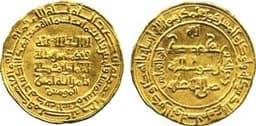
Al-Muqtadi
Emperor · Medieval
39.4Total
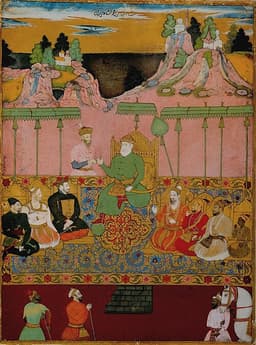
Yusuf Adil Shah
Emperor · Medieval
57.4Total
Basic Information
Born
1056
1490
Died
1094
1510
Era
Medieval
Medieval
Nationality
Abbasid Caliphate
India
Occupation
Emperor
Emperor
Civilization
Middle Eastern
Indian
Score Comparison
Military (10%)
20.0
50.0
Political (20%)
32.2
68.0
Influence (20%)
47.9
56.4
Legacy (20%)
37.5
47.5
Leadership (15%)
45.0
68.0
Strategy (15%)
45.0
60.0
TOTAL
39.4
57.4
Al-Muqtadi — Complete Timeline
1082 AD
Marriage to Seljuk PrincessPolitical Action◆ Major
Caliph Al-Muqtadi married a daughter of Seljuk Sultan Malik Shah I. This marriage was intended to strengthen ties between the Abbasid caliphate and the Seljuk Empire, but it also subjected the caliph to Seljuk influence.
Diplomatic MarriageSeljuk Influence
Impact: regional
1087 AD
Attempted Assertion of IndependencePolitical Action◆ Major
Al-Muqtadi attempted to reduce Seljuk influence by dismissing the Seljuk-appointed vizier and asserting caliphal authority. Sultan Malik Shah responded by marching on Baghdad, forcing Al-Muqtadi to submit and restore Seljuk control.
Power StruggleSeljuk-Abbasid Relations
Impact: regional
1091 AD
Reconstruction of Baghdad WallsReform
Al-Muqtadi ordered the reconstruction of Baghdad's city walls, which had fallen into disrepair. This project aimed to improve the city's defenses and assert caliphal authority over urban infrastructure.
Urban DevelopmentDefenseBaghdad
constructive
Yusuf Adil Shah — Complete Timeline
1490 AD
Foundation of the Adil Shahi dynastyPolitical Action
Yusuf Adil Shah declared independence from the Bahmani Sultanate and established the Adil Shahi dynasty with its capital at Bijapur. This marked the beginning of a new sultanate in the Deccan.
FoundingIndependence
Impact: regionalconstructive
1495 AD
Construction of the Bijapur FortCultural◆ Major
Yusuf Adil Shah began the construction of the Bijapur Fort, a massive citadel with walls and bastions. The fort became the center of Adil Shahi power and a symbol of the dynasty's strength.
ArchitectureFortification
Impact: regionalconstructive
1500 AD
War against the Vijayanagara EmpireWar◆ Major
Yusuf Adil Shah fought a war against the Vijayanagara Empire, capturing the fort of Raichur. The conflict established Bijapur as a major military power in the Deccan.
WarVijayanagaraTerritorial Expansion
Impact: regional
1510 AD
Alliance with the PortuguesePolitical Action
Yusuf Adil Shah formed an alliance with the Portuguese governor Afonso de Albuquerque, allowing the Portuguese to establish a trading post at Goa. This facilitated the import of horses and firearms.
DiplomacyTradePortuguese
Impact: regional
Expert Analysis
Origins
Al-Muqtadi (born 1056 CE) was the Abbasid caliph in Baghdad, a position that had become largely ceremonial under Seljuk suzerainty. He was the grandson of Caliph Al-Qa'im and ascended to the caliphate at age 19. His family background was steeped in the traditions of the Abbasid Caliphate, but real power was held by the Seljuk sultans. His marriage to a Seljuk princess was a political arrangement to placate the Seljuk Sultan Malik Shah I.
Yusuf Adil Shah (born 1450 CE) was a Georgian slave who rose through the ranks of the Bahmani Sultanate in India. He was purchased by the Bahmani vizier Mahmud Gawan and later became a governor. His early life was marked by the fall of Constantinople and the rise of the Ottoman Empire, which influenced his military thinking. He founded the Adil Shahi dynasty in 1489 CE after the fragmentation of the Bahmani Sultanate.
Rise to Power
Al-Muqtadi became caliph in 1075 CE at age 19, following the death of his grandfather. His rise was managed by the Seljuk vizier Nizam al-Mulk, who controlled the caliphate's affairs. Al-Muqtadi's marriage to Malik Shah's daughter in 1082 CE was an attempt to secure his position, but it also increased Seljuk control. His attempt to dismiss the Seljuk-appointed vizier in 1091 CE led to a confrontation with Malik Shah, who forced him to submit.
Yusuf Adil Shah's rise was more dramatic. After the death of Bahmani Sultan Mahmood Shah in 1481 CE, Yusuf declared independence in Bijapur. He consolidated power by defeating rival factions and forming alliances. In 1489 CE, he formally founded the Adil Shahi dynasty. He scored 68.0 in political acumen, reflecting his ability to navigate the complex politics of the Deccan.
Leadership & Governance
Al-Muqtadi's leadership was constrained by Seljuk dominance. He attempted to assert caliphal authority by ordering the reconstruction of Baghdad's walls (completed in 1091 CE) and dismissing the Seljuk vizier, but these moves were reversed. His governance was largely symbolic, with scores of 45.0 in leadership and 45.0 in strategy. He lacked the military power to enforce his will.
Yusuf Adil Shah, in contrast, was an effective ruler. He built the Bijapur Fort, a massive structure that became the center of his power. He established a stable administration, patronized Shia Islam, and formed strategic alliances, including with the Portuguese (allowing them a trading post at Goa in 1510 CE). His military score of 50.0 and leadership score of 68.0 reflect his success in building a state.
Triumph & Tragedy
Al-Muqtadi's greatest triumph was the reconstruction of Baghdad's walls, which temporarily improved the city's defenses. His tragedy was his inability to break free from Seljuk control; his attempt to assert independence led to humiliation by Malik Shah. He died in 1094 CE, possibly poisoned, with little lasting impact.
Yusuf Adil Shah's greatest triumph was founding the Adil Shahi dynasty, which lasted until 1686 CE. His capture of Raichur fort from the Vijayanagara Empire in 1508 CE established Bijapur as a major power. His tragedy was his alliance with the Portuguese, which allowed European influence in India. He died in 1510 CE, leaving a strong state.
Character & Destiny
Al-Muqtadi was cautious and indecisive, often yielding to Seljuk pressure. His character led to his subordination; he scored 47.9 in influence but could not translate it into power. Historical assessments view him as a figurehead.
Yusuf Adil Shah was ambitious and pragmatic. He was a skilled diplomat and military leader, shaping his destiny by seizing independence. His scores reflect a balanced leader: 60.0 in strategy, 68.0 in political skill.
Legacy
Al-Muqtadi's legacy is minimal. He is remembered as a weak caliph who failed to restore Abbasid authority. His scores: legacy 37.5, influence 47.9. No significant institutions or ideas outlasted him.
Yusuf Adil Shah's legacy is substantial. The Adil Shahi dynasty ruled for nearly two centuries, and Bijapur became a center of culture and architecture. His alliance with the Portuguese had long-term consequences for Indian history. His legacy score of 47.5 reflects this enduring impact.
Conclusion
Yusuf Adil Shah had greater impact. With a total score of 57.4 versus Al-Muqtadi's 39.4, he demonstrated superior leadership and political skill. While Al-Muqtadi was constrained by his era, Yusuf Adil Shah built a dynasty that shaped the Deccan for generations. His military and political achievements outshine the caliph's nominal authority.
Rankings
🥇
Yusuf Adil ShahLeader
Mil: 50.0Pol: 68.0Inf: 56.4
57.4
🥈
Al-Muqtadi
Mil: 20.0Pol: 32.2Inf: 47.9
39.4
+18.0 behind
How This Comparison Works
Algorithm
Each figure is scored on 6 dimensions (0—100 scale) based on structured historical data: Military (10%), Political (20%), Influence (20%), Legacy (20%), Leadership (15%), Strategy (15%). The weighted total produces the final ranking.
Data Sources
Scores are computed from structured sub-indicators in the database. Scale factors adjust for era (Ancient ×0.85, Modern ×1.0) and civilization size (Eastern ×1.05, Other ×0.80) to account for differences in population and military scale.
Maximum 3 Figures
Comparisons are limited to 2—3 figures to ensure readability and statistical meaningfulness.
Error Margins
±5 points per dimension — Sub-scores are derived from historical records with inherent uncertainty. Two figures within 5 points on a dimension should be considered roughly equivalent in that area.
Total Score Accuracy
±3 points overall — The weighted combination of 6 dimensions produces a total score with approximately ±3 points of uncertainty. Differences of less than 3 points are not statistically significant— the figures are effectively tied.
Known Limitations
- Historical records are incomplete and uneven across civilizations
- Figures from oral-tradition societies may be underrepresented
- Occupation labels can misclassify multi-role figures
- Scores measure capability and impact, not moral character
- Quantitative scoring is a comparison tool, not absolute truth
Capability Radar
Military (10%) — Battles & Warfare
Battles
5
55
Win Rate
5
60
Expansion
5
55
Political (20%) — Governance & Reform
Reform
20
50
Diplomacy
40
55
Economy
20
50
Influence (20%) — Cultural & Global Reach
Cultural
15
40
Global
10
30
Legacy (20%) — Historical Impact
Historical
15
45
Longevity
10
40
Leadership (15%) — Power & Stability
Tenure
30
60
Stability
25
45
Strategy (15%) — Tactics & Innovation
Strategy
5
55
Tactics
5
50
Reform
5
45
Similar Comparisons
Comments & Discussion
No comments yet. Be the first to share your thoughts!