Loading...
Al-Nasir vs Harold Godwinson
Al-Nasir leads by 14.5 pts · 2 figures compared
…
Al-Nasir
Emperor · Medieval
60.3Total
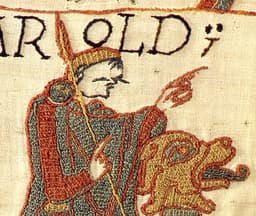
Harold Godwinson
Emperor · Medieval
45.8Total
Basic Information
Born
1158
1022
Died
1225
1066
Era
Medieval
Medieval
Nationality
Abbasid Caliphate
England
Occupation
Emperor
Emperor
Civilization
Middle Eastern
Western
Score Comparison
Military (10%)
70.0
47.5
Political (20%)
60.0
35.1
Influence (20%)
60.0
54.1
Legacy (20%)
52.0
49.2
Leadership (15%)
72.0
31.2
Strategy (15%)
55.0
52.5
TOTAL
60.3
45.8
Al-Nasir — Complete Timeline
1180 AD
Restoration of Caliphal PowerPolitical Action
Al-Nasir began his reign by consolidating caliphal power in Baghdad and reducing the influence of the Seljuk sultan. He reorganized the administration and built a strong military, laying the foundation for a revived caliphate.
Caliphal RevivalConsolidationBaghdad
Impact: regionalconstructive
1194 AD
Conflict with the Khwarezmian EmpireWar◆ Major
Al-Nasir allied with the Ghurids against the Khwarezmian Empire, which had become a major power. The conflict weakened the Khwarezmians but also drained caliphal resources, leading to a stalemate.
Khwarezmian WarGhurid AlliancePower Struggle
Impact: regional
1207 AD
Reform of the Futuwwa OrdersReform◆ Major
Al-Nasir reformed the futuwwa (chivalric) orders, incorporating them into the caliphal administration. He made himself the supreme head of the futuwwa, using it to spread caliphal influence across the Islamic world.
FutuwwaReformCaliphal Influence
Impact: regionalconstructive
1210 AD
Suppression of the IsmailisPolitical Action◆ Major
Al-Nasir launched a campaign against the Ismaili sect in the mountains of Iran, destroying their fortresses. This action aimed to eliminate a rival religious and political force and assert Sunni orthodoxy.
Ismaili SuppressionReligious CampaignSunni Orthodoxy
Impact: regionaldestructive
1217 AD
Diplomatic Overtures to the MongolsPolitical Action◆ Major
Al-Nasir sent an embassy to the Mongol ruler Genghis Khan, seeking an alliance against the Khwarezmian Empire. This diplomatic move failed to prevent the Mongol invasion of the Islamic world.
Mongol DiplomacyGenghis KhanAlliance Attempt
Impact: global
1225 AD
Death and LegacyOther◆ Major
Al-Nasir died after a 45-year reign, leaving the caliphate stronger than it had been for centuries. His policies restored caliphal authority in Iraq and expanded its influence, but the Mongol threat loomed.
DeathLegacyCaliphal Revival
Impact: regionalconstructive
Harold Godwinson — Complete Timeline
1066 AD
Battle of Stamford BridgeWar◆ Major
Harold defeated an invading Norwegian army under King Harald Hardrada at Stamford Bridge in Yorkshire. The victory was decisive, but Harold's army was weakened and exhausted.
BattleVictoryViking Invasion
Impact: national
Battle of HastingsWar
Harold's army was defeated by William of Normandy at Hastings on October 14. Harold was killed in the battle, traditionally by an arrow in the eye, ending Anglo-Saxon rule in England.
BattleDefeatNorman Conquest
Impact: globaltragic
Coronation of Harold GodwinsonPolitical Action◆ Major
Harold was crowned king of England on January 6, 1066, the day after Edward the Confessor's death. His claim was contested by William of Normandy and Harald Hardrada of Norway.
CoronationSuccessionContested Claim
Impact: national
Expert Analysis
Origins
Al-Nasir (born 1158) was the 34th Abbasid caliph, ascending to the throne in 1180 at age 22. He inherited a caliphate that had been under Seljuk tutelage for decades, with real power held by sultans. His father, al-Mustadi, had begun restoring caliphal authority, but Al-Nasir would take this further. He was educated in Islamic jurisprudence and administration, but his early life was marked by court intrigue.
Harold Godwinson (born c. 1022) was the son of Godwin, Earl of Wessex, the most powerful noble in England under King Edward the Confessor. Harold grew up immersed in Anglo-Saxon politics and military campaigns. He was a skilled warrior and diplomat, serving as Edward's chief advisor. His sister Edith married Edward, linking the Godwinsons to the throne. Harold's formative experiences included exile in 1051 and a return to power in 1052, when he and his father forced Edward to restore their lands.
Rise to Power
Al-Nasir's rise was a gradual consolidation. Upon becoming caliph, he immediately moved to reduce Seljuk influence. In 1180, he abolished the title of Sultan, asserting his own supremacy. He reorganized the administration, appointing loyalists to key positions. His turning point came in the 1190s when he reformed the futuwwa orders, making himself their supreme head. This gave him a network of loyal followers across the Islamic world, independent of the Seljuks. By 1194, when the Seljuk sultan Toghrul III was killed, Al-Nasir's authority was unchallenged in Baghdad.
Harold's rise was marked by the death of his father in 1053. He succeeded as Earl of Wessex and became the de facto ruler of England under Edward. He led campaigns in Wales (1063) and secured the succession of the childless Edward. On Edward's death on January 5, 1066, Harold claimed the throne and was crowned the next day. His claim was contested by William of Normandy and Harald Hardrada of Norway. Harold's decisive victory at Stamford Bridge on September 25, 1066, against Hardrada cemented his military reputation, but the timing left him vulnerable.
Leadership & Governance
Al-Nasir governed through a combination of religious authority and administrative reform. He restored the caliph's role as a spiritual leader, but also centralized power. He built a new capital, the Dār al-Khilāfa, and patronized scholars. His political score of 60.0 reflects his success in outmaneuvering rivals, but his military score of 70.0 is limited by his reliance on diplomacy and alliances rather than direct conquest. He allied with the Ghurids against the Khwarezmians and sent an embassy to Genghis Khan in 1217, a bold but ultimately failed diplomatic move.
Harold's leadership was tested in his brief nine-month reign. He had a political score of 35.1, indicating his failure to secure his throne against multiple claimants. He attempted to build alliances but faced opposition from his own brother Tostig. His leadership score of 31.2 reflects his tactical skill at Stamford Bridge but strategic weakness in leaving his army exhausted and underprepared for Hastings. He relied on the fyrd system, but his governance was cut short.
Triumph & Tragedy
Al-Nasir's greatest triumph was restoring Abbasid power. He ruled for 45 years, longer than any other Abbasid caliph. He successfully suppressed the Ismailis, destroying their fortresses in the 1190s, and reformed the futuwwa orders, which spread across the Islamic world. His tragedy was his failure to prevent the Mongol invasion. His embassy to Genghis Khan did not secure an alliance, and the Mongols sacked Baghdad in 1258, after his death. His policies may have inadvertently weakened the Khwarezmians, but the Mongols proved unstoppable.
Harold's triumph was his victory at Stamford Bridge, where he defeated Harald Hardrada and his own brother Tostig. It was a decisive battle that saved England from Norwegian invasion. His tragedy was his defeat and death at Hastings on October 14, 1066. He was killed, traditionally by an arrow in the eye, and his army was routed. His reign lasted only 283 days, and his failure to consolidate power led to the Norman Conquest.
Character & Destiny
Al-Nasir was cunning and patient, traits that served him well in the complex politics of the Islamic world. He was a master of symbolism, using the futuwwa to bind diverse groups to his person. His character was shaped by a desire to restore caliphal glory, but his diplomacy with the Mongols showed a miscalculation. Historians assess him as an effective ruler who delayed but could not prevent the caliphate's decline. His total score of 60.3 reflects his moderate success.
Harold was bold and decisive, as shown by his rapid march to Stamford Bridge. But he was also overconfident, failing to wait for reinforcements before Hastings. His character was shaped by loyalty to his family and ambition for the crown. History remembers him as the last Anglo-Saxon king, a tragic figure whose defeat changed English history. His total score of 45.8 reflects his short reign and ultimate failure.
Legacy
Al-Nasir's legacy is the revival of the Abbasid caliphate as a spiritual institution. The futuwwa orders he reformed influenced later chivalric traditions in the Islamic world. His reign is seen as a golden age of Abbasid revival, but his long-term impact was limited by the Mongol conquest. He scored 52.0 in legacy, indicating his influence was significant but not enduring.
Harold's legacy is immense in English history. His defeat at Hastings marked the end of Anglo-Saxon rule and the beginning of Norman control. He is remembered as a symbol of English resistance. His legacy score of 49.2 reflects his role in a pivotal event, even if his reign was short. The Battle of Hastings is one of the most famous battles in history.
Conclusion
Al-Nasir had greater impact than Harold Godwinson. His total score of 60.3 versus 45.8 reflects a longer reign, more effective governance, and a lasting influence on Islamic institutions. Harold's defeat was a turning point in English history, but his reign was too brief to achieve lasting change. Al-Nasir restored caliphal power for a generation, while Harold's legacy is defined by his failure. The data supports Al-Nasir as the more impactful figure.
Rankings
🥇
Al-NasirLeader
Mil: 70.0Pol: 60.0Inf: 60.0
60.3
🥈
Harold Godwinson
Mil: 47.5Pol: 35.1Inf: 54.1
45.8
+14.5 behind
How This Comparison Works
Algorithm
Each figure is scored on 6 dimensions (0—100 scale) based on structured historical data: Military (10%), Political (20%), Influence (20%), Legacy (20%), Leadership (15%), Strategy (15%). The weighted total produces the final ranking.
Data Sources
Scores are computed from structured sub-indicators in the database. Scale factors adjust for era (Ancient ×0.85, Modern ×1.0) and civilization size (Eastern ×1.05, Other ×0.80) to account for differences in population and military scale.
Maximum 3 Figures
Comparisons are limited to 2—3 figures to ensure readability and statistical meaningfulness.
Error Margins
±5 points per dimension — Sub-scores are derived from historical records with inherent uncertainty. Two figures within 5 points on a dimension should be considered roughly equivalent in that area.
Total Score Accuracy
±3 points overall — The weighted combination of 6 dimensions produces a total score with approximately ±3 points of uncertainty. Differences of less than 3 points are not statistically significant— the figures are effectively tied.
Known Limitations
- Historical records are incomplete and uneven across civilizations
- Figures from oral-tradition societies may be underrepresented
- Occupation labels can misclassify multi-role figures
- Scores measure capability and impact, not moral character
- Quantitative scoring is a comparison tool, not absolute truth
Capability Radar
Military (10%) — Battles & Warfare
Battles
55
60
Win Rate
60
55
Expansion
60
40
Political (20%) — Governance & Reform
Reform
75
20
Diplomacy
70
40
Economy
65
30
Influence (20%) — Cultural & Global Reach
Cultural
55
35
Global
45
30
Legacy (20%) — Historical Impact
Historical
60
55
Longevity
50
40
Leadership (15%) — Power & Stability
Tenure
85
15
Stability
60
20
Strategy (15%) — Tactics & Innovation
Strategy
65
60
Tactics
50
65
Reform
70
30
Similar Comparisons
Comments & Discussion
No comments yet. Be the first to share your thoughts!