Loading...
Harold Godwinson vs Sebuk Tigin
Sebuk Tigin leads by 10.2 pts · 2 figures compared
…
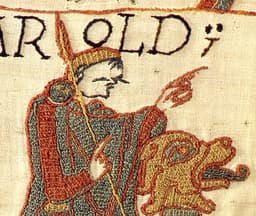
Harold Godwinson
Emperor · Medieval
45.8Total
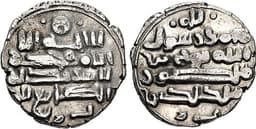
Sebuk Tigin
Emperor · Medieval
56.0Total
Basic Information
Born
1022
942
Died
1066
997
Era
Medieval
Medieval
Nationality
England
Ghaznavid Empire
Occupation
Emperor
Emperor
Civilization
Western
Middle Eastern
Score Comparison
Military (10%)
47.5
72.5
Political (20%)
35.1
68.0
Influence (20%)
54.1
58.0
Legacy (20%)
49.2
49.2
Leadership (15%)
31.2
40.0
Strategy (15%)
52.5
57.5
TOTAL
45.8
56.0
Harold Godwinson — Complete Timeline
1066 AD
Battle of Stamford BridgeWar◆ Major
Harold defeated an invading Norwegian army under King Harald Hardrada at Stamford Bridge in Yorkshire. The victory was decisive, but Harold's army was weakened and exhausted.
BattleVictoryViking Invasion
Impact: national
Battle of HastingsWar
Harold's army was defeated by William of Normandy at Hastings on October 14. Harold was killed in the battle, traditionally by an arrow in the eye, ending Anglo-Saxon rule in England.
BattleDefeatNorman Conquest
Impact: globaltragic
Coronation of Harold GodwinsonPolitical Action◆ Major
Harold was crowned king of England on January 6, 1066, the day after Edward the Confessor's death. His claim was contested by William of Normandy and Harald Hardrada of Norway.
CoronationSuccessionContested Claim
Impact: national
Sebuk Tigin — Complete Timeline
977 AD
Consolidation of the Ghaznavid StatePolitical Action◆ Major
Sebuk Tigin succeeded his father-in-law Alp Tigin as ruler of Ghazni and consolidated the Ghaznavid state. He defeated rival Turkic commanders, secured the borders against the Samanids and Karakhanids, and established a stable succession.
ConsolidationGhaznavidSuccession
Impact: regionalconstructive
986 AD
Expansion into IndiaWar◆ Major
Sebuk Tigin launched the first Ghaznavid campaigns into the Indian subcontinent, defeating the Hindu Shahi kingdom of Kabul. He annexed the region of Peshawar and established Ghaznavid control over the Khyber Pass, opening the way for future invasions.
Indian CampaignHindu ShahiExpansion
Impact: regional
994 AD
Defeat of the Samanids at the Battle of BalkhWar
Sebuk Tigin allied with the Samanid ruler Nuh II to defeat the rebel Fa'iq at Balkh. This victory secured Ghaznavid influence over Khorasan and marked the beginning of Ghaznavid expansion into Central Asia.
BattleSamanidKhorasan
Impact: regional
Expert Analysis
Origins
Harold Godwinson was born around 1022 into the most powerful noble family in England. His father, Godwin, Earl of Wessex, was the dominant figure in the court of King Edward the Confessor. Harold grew up immersed in Anglo-Saxon politics, gaining experience as an earl and military commander. He was educated in the traditions of English kingship and warfare, but lacked formal training in statecraft beyond the confines of his insular kingdom.
Sebuk Tigin was born around 942 in what is now Kyrgyzstan, of Turkic origin. He was captured as a slave and rose through military ranks under the Samanid Empire. His talent brought him to the attention of Alp Tigin, a powerful Turkic general who later founded an independent state in Ghazni. Sebuk Tigin married Alp Tigin's daughter and eventually succeeded him, blending Turkic military traditions with Persian administrative practices.
Rise to Power
Harold Godwinson's rise was marked by his family's influence. After his father's exile and return, Harold became Earl of East Anglia and later Wessex. He led campaigns against the Welsh and secured his position as Edward's most trusted advisor. Upon Edward's death in January 1066, Harold claimed the throne, citing Edward's deathbed promise and the support of the Witenagemot. His coronation on January 6, 1066, was immediate but contested by William of Normandy and Harald Hardrada.
Sebuk Tigin's ascent was more gradual. He proved his military skill in Samanid campaigns, eventually becoming a commander under Alp Tigin. When Alp Tigin died in 963, Sebuk Tigin initially served his son, but after a period of instability, he took control of Ghazni in 977. He defeated rival Turkic commanders and secured recognition from the Samanids, consolidating his rule over a growing domain. His political acumen scored 68.0, significantly higher than Harold's 35.1.
Leadership & Governance
Harold Godwinson's leadership was tested immediately. He faced two invasions in 1066: Harald Hardrada's Norwegian army in September and William's Norman force in October. Harold's military strategy scored 52.5, reflecting his success at Stamford Bridge but his failure at Hastings. He governed through traditional Anglo-Saxon institutions, relying on the fyrd (militia) and thegns. His kingship lasted only nine months, limiting his ability to implement reforms.
Sebuk Tigin ruled for over 20 years (977-997). He centralized power in Ghazni, created a professional army of Turkic slave soldiers (ghilman), and established a stable administration. He expanded Ghaznavid territory into Khorasan and launched campaigns into India, defeating the Hindu Shahi kingdom and annexing Peshawar. His military score of 72.5 reflects his consistent success in both defensive and offensive operations.
Triumph & Tragedy
Harold's greatest triumph was the Battle of Stamford Bridge (September 25, 1066), where he defeated Harald Hardrada's invasion with a forced march and surprise attack. However, his greatest tragedy followed three weeks later at Hastings. Harold's army, exhausted and depleted, faced William's combined forces. Harold was killed, traditionally by an arrow to the eye, and his kingdom fell. His death marked the end of Anglo-Saxon rule.
Sebuk Tigin's triumphs include his Indian campaigns, which began the Ghaznavid tradition of plundering and expanding into the subcontinent. He also secured Ghaznavid dominance over Khorasan at the Battle of Balkh (994). His tragedy lies in his relatively early death (around 55) and the subsequent succession struggles among his sons, though his son Mahmud would later become the greatest Ghaznavid ruler.
Character & Destiny
Harold Godwinson was a capable warrior but a flawed politician. His decision to march south immediately after Stamford Bridge, refusing to wait for reinforcements, contributed to his defeat at Hastings. He scored 31.2 in leadership, reflecting his inability to unify his kingdom against external threats. His character was shaped by his reliance on personal loyalty rather than institutional strength.
Sebuk Tigin was more calculating and patient. He built alliances with the Samanids while expanding his own power. His leadership score of 40.0 reflects his ability to maintain control over a diverse empire. He was known for his piety and justice, which helped legitimize his rule. His destiny was to found a dynasty that would dominate the region for centuries.
Legacy
Harold Godwinson's legacy is primarily as the last Anglo-Saxon king. His defeat at Hastings led to Norman rule, which transformed English language, law, and culture. He is remembered as a tragic figure, but his short reign left little institutional impact. His influence score of 54.1 reflects the symbolic importance of 1066.
Sebuk Tigin's legacy is more substantial. He established the Ghaznavid Empire, which became a major power in Central Asia and India. His military campaigns laid the groundwork for his son Mahmud's famous invasions. The Ghaznavid state influenced later Turkic dynasties like the Seljuks. His legacy score of 49.2 is comparable to Harold's, but his institutional contributions were greater.
Conclusion
Sebuk Tigin had a greater impact than Harold Godwinson. His total score of 56.0 exceeds Harold's 45.8 by 10.2 points. While Harold's defeat at Hastings changed English history, Sebuk Tigin's deliberate state-building and expansion created a durable empire that shaped Central and South Asia. Harold's leadership was reactive and short-lived; Sebuk Tigin's was proactive and sustained. The Ghaznavid model influenced subsequent Islamic empires, while Harold's legacy is largely negative (the loss of Anglo-Saxon England). Sebuk Tigin's higher military, political, and strategy scores reflect his more effective governance. Therefore, Sebuk Tigin stands as the more consequential figure.
Rankings
🥇
Sebuk TiginLeader
Mil: 72.5Pol: 68.0Inf: 58.0
56.0
🥈
Harold Godwinson
Mil: 47.5Pol: 35.1Inf: 54.1
45.8
+10.2 behind
How This Comparison Works
Algorithm
Each figure is scored on 6 dimensions (0—100 scale) based on structured historical data: Military (10%), Political (20%), Influence (20%), Legacy (20%), Leadership (15%), Strategy (15%). The weighted total produces the final ranking.
Data Sources
Scores are computed from structured sub-indicators in the database. Scale factors adjust for era (Ancient ×0.85, Modern ×1.0) and civilization size (Eastern ×1.05, Other ×0.80) to account for differences in population and military scale.
Maximum 3 Figures
Comparisons are limited to 2—3 figures to ensure readability and statistical meaningfulness.
Error Margins
±5 points per dimension — Sub-scores are derived from historical records with inherent uncertainty. Two figures within 5 points on a dimension should be considered roughly equivalent in that area.
Total Score Accuracy
±3 points overall — The weighted combination of 6 dimensions produces a total score with approximately ±3 points of uncertainty. Differences of less than 3 points are not statistically significant— the figures are effectively tied.
Known Limitations
- Historical records are incomplete and uneven across civilizations
- Figures from oral-tradition societies may be underrepresented
- Occupation labels can misclassify multi-role figures
- Scores measure capability and impact, not moral character
- Quantitative scoring is a comparison tool, not absolute truth
Capability Radar
Military (10%) — Battles & Warfare
Battles
60
55
Win Rate
55
60
Expansion
40
65
Political (20%) — Governance & Reform
Reform
20
45
Diplomacy
40
50
Economy
30
55
Influence (20%) — Cultural & Global Reach
Cultural
35
40
Global
30
40
Legacy (20%) — Historical Impact
Historical
55
50
Longevity
40
45
Leadership (15%) — Power & Stability
Tenure
15
60
Stability
20
55
Strategy (15%) — Tactics & Innovation
Strategy
60
55
Tactics
65
50
Reform
30
40
Similar Comparisons
Comments & Discussion
No comments yet. Be the first to share your thoughts!