Loading...
Al-Qahir vs Alp Arslan
Alp Arslan leads by 17.7 pts · 2 figures compared
…
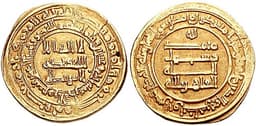
Al-Qahir
Emperor · Medieval
56.5Total
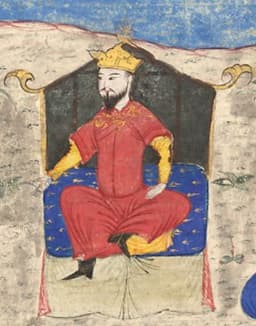
Alp Arslan
Emperor · Medieval
74.2Total
Basic Information
Born
899
1029
Died
950
1072
Era
Medieval
Medieval
Nationality
Abbasid Caliphate
Seljuk Empire
Occupation
Emperor
Emperor
Civilization
Middle Eastern
Middle Eastern
Score Comparison
Military (10%)
33.0
82.0
Political (20%)
64.5
65.0
Influence (20%)
55.6
82.0
Legacy (20%)
57.3
72.0
Leadership (15%)
62.2
72.0
Strategy (15%)
60.0
70.0
TOTAL
56.5
74.2
Al-Qahir — Complete Timeline
932 AD
Accession of Al-QahirPolitical Action◆ Major
Al-Qahir became caliph after the assassination of his brother Al-Muqtadir. His reign was brief and marked by tyranny and paranoia, as he executed many officials and family members to secure his position.
AccessionTyrannyPurge
Impact: nationaldestructive
934 AD
Deposition and Blinding of Al-QahirPolitical Action◆ Major
Al-Qahir was deposed by court officials and military commanders after only two years. He was blinded and imprisoned, later living as a beggar in Baghdad. This event highlighted the powerlessness of the caliph against the military.
DepositionBlindingFall
Impact: nationaltragic
Life as a BeggarOther
After his deposition and blinding, Al-Qahir was released from prison and lived as a beggar in the streets of Baghdad. He was occasionally recognized and given alms by former subjects, a stark contrast to his former status.
BeggarHumiliationPost-Caliph
tragic
Alp Arslan — Complete Timeline
1070 AD
Conquest of Aleppo and SyriaWar◆ Major
Alp Arslan led campaigns into Syria, capturing Aleppo and extending Seljuk control to the Mediterranean coast. He defeated the Fatimid Caliphate's forces and established Seljuk dominance over the Levant.
ConquestSyriaFatimid
Impact: regional
1071 AD
Battle of ManzikertWar
Alp Arslan defeated the Byzantine Emperor Romanos IV Diogenes at the Battle of Manzikert in eastern Anatolia. The Byzantine army was destroyed and Romanos captured, leading to the Seljuk conquest of Anatolia and the beginning of Turkic settlement in the region.
BattleByzantineAnatolia
Impact: global
1072 AD
AssassinationOther◆ Major
Alp Arslan was assassinated by a captured fortress commander while on campaign in Transoxiana. His death at the height of his power led to a succession struggle and the eventual fragmentation of the Seljuk Empire under his son Malik Shah I.
AssassinationDeathSuccession
Impact: regionaltragic
Expert Analysis
Origins
Al-Qahir (born 899) was the son of the Abbasid caliph al-Mu'tadid and a concubine. He grew up in the opulent but volatile Abbasid court in Baghdad, where power struggles and assassinations were common. His brother al-Muqtadir became caliph in 908, but al-Qahir was sidelined, living in relative obscurity until his unexpected accession. Alp Arslan (born 1029) was the son of Chaghri Beg, a Seljuk prince, and nephew of Tughril Beg, the founder of the Seljuk Empire. He was born into a nomadic Turkic warrior culture on the steppes of Central Asia. His early years were spent in military campaigns alongside his father, learning the art of war and leadership. Both men were thrust into positions of power by the deaths of their predecessors, but their backgrounds shaped their vastly different fates.
Rise to Power
Al-Qahir became caliph in 932 after his brother al-Muqtadir was assassinated by the powerful general Mu'nis al-Khadim. However, the Abbasid caliphate was already in decline, with real power held by military commanders and court officials. Al-Qahir's reign began with a purge of those he suspected of disloyalty, including the execution of Mu'nis. His paranoia and cruelty alienated the very factions that had elevated him. After only two years, in 934, he was deposed by a coalition of officials and soldiers, blinded, and imprisoned. Alp Arslan rose to power after the death of his uncle Tughril in 1063. He faced a succession struggle against his cousin Kutalmish, whom he defeated in battle. By 1064, he was the undisputed sultan of the Seljuk Empire. His rise was built on military prowess and the loyalty of his Turkic commanders, contrasting sharply with al-Qahir's reliance on a fractured court.
Leadership & Governance
Al-Qahir's governance was marked by terror and mistrust. He executed officials, confiscated property, and ruled through fear. His brief reign saw no significant reforms or military campaigns; his focus was solely on consolidating his own power, which ultimately backfired. In contrast, Alp Arslan was a pragmatic and decisive leader. He delegated authority to capable viziers like Nizam al-Mulk, who implemented administrative reforms and promoted education. Alp Arslan personally led campaigns, inspiring loyalty through his courage and fairness. While al-Qahir's political score is 64.5, reflecting his short but ruthless tenure, Alp Arslan's political score of 65.0 is similar but supported by a more effective governance structure. Alp Arslan's leadership score of 72.0 far exceeds al-Qahir's 62.2, as he commanded respect rather than fear.
Triumph & Tragedy
Al-Qahir's greatest 'triumph' was surviving his brother's assassination and briefly holding the caliphate, but his tragedy was total: he was blinded, imprisoned, and later released to live as a beggar in Baghdad. His nadir came when he was recognized by a former subject who gave him alms. Alp Arslan's greatest triumph was the Battle of Manzikert in 1071, where he defeated the Byzantine Emperor Romanos IV Diogenes, capturing him and paving the way for Turkish settlement in Anatolia. His military score of 82.0 reflects this decisive victory. However, his tragedy was his assassination in 1072 by a captured fortress commander, just as he was planning further campaigns. His death at age 42 cut short the Seljuk expansion and led to a succession crisis.
Character & Destiny
Al-Qahir was paranoid, cruel, and short-sighted. His character led him to alienate allies and create enemies, sealing his fate. Historical accounts describe him as tyrannical and unstable. In contrast, Alp Arslan was calculated, brave, and magnanimous in victory. He spared the Byzantine emperor and negotiated a favorable peace. His character inspired loyalty and fear in equal measure. Alp Arslan's total score of 74.2 dwarfs al-Qahir's 56.5, reflecting not just achievements but also the traits that drove them. Al-Qahir's destiny was to be a cautionary tale, while Alp Arslan's was to be a conqueror whose decisions shaped the medieval world.
Legacy
Al-Qahir's legacy is negligible. His brief reign is a footnote in Abbasid history, remembered for his blinding and subsequent beggary. The caliphate continued its decline, and his name is rarely invoked. Alp Arslan's legacy is immense. His victory at Manzikert opened Anatolia to Turkish settlement, leading to the founding of the Seljuk Sultanate of Rum and eventually the Ottoman Empire. His influence score of 82.0 and legacy score of 72.0 underscore his impact. The institutions he supported, like the Nizamiyya madrasas, shaped Islamic education for centuries. While al-Qahir scored 57.3 in legacy, Alp Arslan's legacy transformed the geopolitical landscape of the Middle East.
Conclusion
Alp Arslan had far greater impact. His military and political achievements reshaped the medieval world, while al-Qahir's reign was a disaster that ended in personal ruin. The score gap of 17.7 points (74.2 vs 56.5) reflects this disparity. Alp Arslan's victory at Manzikert changed the course of history, leading to centuries of Turkish presence in Anatolia. Al-Qahir, by contrast, is a minor figure remembered for his tragic fall. The clear position is that Alp Arslan was the more significant and effective ruler.
Rankings
🥇
Alp ArslanLeader
Mil: 82.0Pol: 65.0Inf: 82.0
74.2
🥈
Al-Qahir
Mil: 33.0Pol: 64.5Inf: 55.6
56.5
+17.7 behind
How This Comparison Works
Algorithm
Each figure is scored on 6 dimensions (0—100 scale) based on structured historical data: Military (10%), Political (20%), Influence (20%), Legacy (20%), Leadership (15%), Strategy (15%). The weighted total produces the final ranking.
Data Sources
Scores are computed from structured sub-indicators in the database. Scale factors adjust for era (Ancient ×0.85, Modern ×1.0) and civilization size (Eastern ×1.05, Other ×0.80) to account for differences in population and military scale.
Maximum 3 Figures
Comparisons are limited to 2—3 figures to ensure readability and statistical meaningfulness.
Error Margins
±5 points per dimension — Sub-scores are derived from historical records with inherent uncertainty. Two figures within 5 points on a dimension should be considered roughly equivalent in that area.
Total Score Accuracy
±3 points overall — The weighted combination of 6 dimensions produces a total score with approximately ±3 points of uncertainty. Differences of less than 3 points are not statistically significant— the figures are effectively tied.
Known Limitations
- Historical records are incomplete and uneven across civilizations
- Figures from oral-tradition societies may be underrepresented
- Occupation labels can misclassify multi-role figures
- Scores measure capability and impact, not moral character
- Quantitative scoring is a comparison tool, not absolute truth
Capability Radar
Military (10%) — Battles & Warfare
Battles
33
85
Win Rate
32
90
Expansion
38
85
Political (20%) — Governance & Reform
Reform
59
70
Diplomacy
62
80
Economy
63
70
Influence (20%) — Cultural & Global Reach
Cultural
67
65
Global
78
75
Legacy (20%) — Historical Impact
Historical
73
80
Longevity
77
70
Leadership (15%) — Power & Stability
Tenure
58
75
Stability
66
70
Strategy (15%) — Tactics & Innovation
Strategy
41
85
Tactics
42
80
Reform
48
70
Similar Comparisons
Comments & Discussion
No comments yet. Be the first to share your thoughts!