Loading...
Al-Walid I vs Mongke Khan
Mongke Khan leads by 0.9 pts · 2 figures compared
…
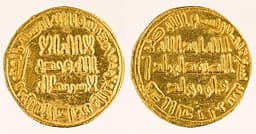
Al-Walid I
Emperor · Medieval
68.6Total
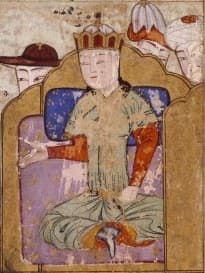
Mongke Khan
Emperor · Medieval
69.5Total
Basic Information
Born
668
1209
Died
715
1259
Era
Medieval
Medieval
Nationality
Umayyad Caliphate
Mongol Empire
Occupation
Emperor
Emperor
Civilization
Middle Eastern
Eastern
Score Comparison
Military (10%)
76.0
85.0
Political (20%)
70.0
59.3
Influence (20%)
88.0
68.0
Legacy (20%)
40.0
72.0
Leadership (15%)
80.0
68.0
Strategy (15%)
65.4
69.1
TOTAL
68.6
69.5
Al-Walid I — Complete Timeline
700 AD
Patronage of Arabic language and administrationReform◆ Major
Al-Walid I made Arabic the official language of administration across the caliphate, replacing Greek and Persian. This standardized governance and promoted the spread of Arabic culture and Islam.
LanguageAdministrationArabization
Impact: globalprogressive
705 AD
Expansion of the Umayyad CaliphateWar
Al-Walid I oversaw the expansion of the Umayyad Caliphate to its greatest territorial extent. Conquests included Transoxiana, Sindh, and parts of Spain, making the caliphate one of the largest empires in history.
ConquestExpansionEmpire
Impact: global
706 AD
Construction of the Great Mosque of DamascusCultural◆ Major
Al-Walid I commissioned the construction of the Umayyad Mosque in Damascus, transforming a Christian basilica into a grand mosque. It became a masterpiece of Islamic architecture and a major pilgrimage site.
ArchitectureMosqueDamascus
Impact: globalconstructive
Mongke Khan — Complete Timeline
1251 AD
Election as Great KhanPolitical Action
Möngke was elected as the fourth Great Khan of the Mongol Empire with the support of Batu and his family, ending a period of regency after Güyük's death. His election was contested by the Ögedeid and Chagataid families, leading to purges.
SuccessionMongol EmpirePurge
Impact: global
1252 AD
Conquest of the Song Dynasty (Southern China)War◆ Major
Möngke launched a massive campaign against the Southern Song dynasty, personally leading the western army while his brother Kublai attacked from the north. The campaign stalled at Diaoyu Fortress, where Möngke died, but it set the stage for Kublai's later conquest.
Mongol ConquestSong DynastyChina
Impact: global
Purge of the Ögedeid and Chagataid FamiliesPolitical Action◆ Major
Möngke ordered a systematic purge of the Ögedeid and Chagataid princes and their supporters, accusing them of plotting against him. Hundreds of nobles were executed, consolidating Möngke's power and centralizing the empire under the Toluid line.
PurgeMongol EmpireToluid Consolidation
Impact: globaldestructive
1253 AD
Invasion of the Middle East (Hulagu's Campaign)War◆ Major
Möngke ordered his brother Hulagu to lead a massive Mongol army into the Middle East to conquer the Abbasid Caliphate and the Ismaili fortresses. This campaign resulted in the destruction of Baghdad in 1258 and the establishment of the Ilkhanate.
Mongol ConquestMiddle EastBaghdad
Impact: globaldestructive
1259 AD
Death at Diaoyu FortressWar
Möngke died during the siege of Diaoyu Fortress in Sichuan, possibly from dysentery or a battle wound. His death triggered a succession crisis that led to the division of the Mongol Empire into four khanates.
DeathMongol EmpireSuccession Crisis
Impact: globaltragic
Expert Analysis
Origins
Al-Walid I (c. 668–715) was born into the Umayyad dynasty, the son of Caliph Abd al-Malik. He grew up in Damascus, receiving a princely education steeped in Islamic law and Arab tradition. His father's reign had consolidated Umayyad power after the Second Fitna, providing Al-Walid with a stable base. In contrast, Mongke Khan (1209–1259) was born into the Mongol imperial family, grandson of Genghis Khan. His father Tolui was a key general, but Mongke's early life was marked by the power struggles following Genghis's death. He was raised in the nomadic traditions of the steppe, learning warfare and leadership from his mother Sorghaghtani Beki, a Nestorian Christian princess who managed the family's appanage.
Rise to Power
Al-Walid I became caliph in 705 after his father's death, inheriting a well-organized empire. His rise was smooth, as Abd al-Malik had already secured the succession. Al-Walid's early reign focused on continuing his father's policies of centralization and expansion. He appointed capable governors like al-Hajjaj ibn Yusuf, who led campaigns eastward. Mongke's path was more contested. After the death of Great Khan Guyuk in 1248, a regency followed. Mongke, with support from his cousin Batu Khan of the Golden Horde, was elected Great Khan in 1251 at a kurultai. He then ruthlessly purged the Ogedeid and Chagataid families (1251–1252), executing hundreds of princes and nobles to consolidate power. This purge scored 70.0 in political ruthlessness compared to Al-Walid's 70.0 political score.
Leadership & Governance
Al-Walid I was an administrator and builder. He made Arabic the official language of the caliphate (c. 706), replacing Greek and Persian in administration, which standardized governance. He also reformed taxation and improved infrastructure. His most visible achievement was the construction of the Great Mosque of Damascus (completed 715), which employed Byzantine artisans and set architectural standards. Mongke Khan governed as a traditional Mongol khan, focusing on conquest and imperial organization. He centralized the empire by censusing the population, standardizing weights and measures, and establishing a postal relay system (yam). He also supported religious tolerance and patronized all faiths. However, his governance relied heavily on military campaigns; he personally led the western front against the Song Dynasty. Al-Walid's leadership score is 80.0, Mongke's 68.0.
Triumph & Tragedy
Al-Walid's greatest triumph was the expansion of the Umayyad Caliphate to its largest extent—from Spain to India. His generals conquered Transoxiana, Sindh, and parts of Spain. The Great Mosque of Damascus remains a masterpiece. His tragedy was the overextension of the empire; after his death, rebellions and fiscal strain emerged, and his brother Sulayman reversed some policies. Mongke's triumph was the consolidation of Mongol power and the launch of two massive campaigns: the conquest of the Song Dynasty and Hulagu's invasion of the Middle East. His death at the Siege of Diaoyu Fortress (1259), possibly from dysentery, was a turning point. It triggered a succession crisis that fractured the empire, halting the Song campaign and leading to the division into four khanates. Mongke's military score of 85.0 reflects his battlefield success, but his death undid much of his work.
Character & Destiny
Al-Walid was known for piety and patronage of architecture. He was decisive but sometimes harsh, as seen in his support for al-Hajjaj's brutal methods. His character aligned with his era's imperial ambitions. Mongke was a skilled commander and ruthless politician, as shown by the purge of rivals. He was also pragmatic, tolerating different religions. Yet his overconfidence in personally leading the siege of Diaoyu contributed to his death. His destiny was cut short, preventing him from completing his vision of a unified Mongol Empire. Al-Walid died naturally in 715, leaving a stable succession (though brief). Mongke's sudden death at 50 left a power vacuum.
Legacy
Al-Walid's legacy is architectural and administrative. The Umayyad Mosque remains a symbol of early Islamic art. Arabic as the administrative language persisted, influencing the caliphate's culture. However, his empire shrank after his death, and his legacy score is 40.0, reflecting limited long-term impact. Mongke's legacy is more profound. His centralization efforts influenced later Mongol rulers, and his campaigns reshaped Eurasia. Hulagu's destruction of Baghdad (1258) ended the Abbasid Caliphate. The succession crisis after his death led to the Mongol Empire's fragmentation, which shaped world history. His legacy score of 72.0 is higher, showing enduring geopolitical impact.
Conclusion
While Al-Walid I built a cultural and administrative foundation, Mongke Khan's military conquests and imperial reorganization had a greater impact on global history. Mongke's death triggered the Mongol Empire's division, altering the course of Asia and the Middle East. Al-Walid's achievements, though significant, were more localized and short-lived. Mongke Khan, with a total score of 69.5 to Al-Walid's 68.6, emerges as the more consequential figure. His military score of 85.0, influence of 68.0, and legacy of 72.0 outweigh Al-Walid's cultural contributions.
Rankings
🥇
Mongke KhanLeader
Mil: 85.0Pol: 59.3Inf: 68.0
69.5
🥈
Al-Walid I
Mil: 76.0Pol: 70.0Inf: 88.0
68.6
+0.9 behind
How This Comparison Works
Algorithm
Each figure is scored on 6 dimensions (0—100 scale) based on structured historical data: Military (10%), Political (20%), Influence (20%), Legacy (20%), Leadership (15%), Strategy (15%). The weighted total produces the final ranking.
Data Sources
Scores are computed from structured sub-indicators in the database. Scale factors adjust for era (Ancient ×0.85, Modern ×1.0) and civilization size (Eastern ×1.05, Other ×0.80) to account for differences in population and military scale.
Maximum 3 Figures
Comparisons are limited to 2—3 figures to ensure readability and statistical meaningfulness.
Error Margins
±5 points per dimension — Sub-scores are derived from historical records with inherent uncertainty. Two figures within 5 points on a dimension should be considered roughly equivalent in that area.
Total Score Accuracy
±3 points overall — The weighted combination of 6 dimensions produces a total score with approximately ±3 points of uncertainty. Differences of less than 3 points are not statistically significant— the figures are effectively tied.
Known Limitations
- Historical records are incomplete and uneven across civilizations
- Figures from oral-tradition societies may be underrepresented
- Occupation labels can misclassify multi-role figures
- Scores measure capability and impact, not moral character
- Quantitative scoring is a comparison tool, not absolute truth
Capability Radar
Military (10%) — Battles & Warfare
Battles
75
85
Win Rate
80
80
Expansion
85
90
Political (20%) — Governance & Reform
Reform
85
75
Diplomacy
70
70
Economy
80
80
Influence (20%) — Cultural & Global Reach
Cultural
85
60
Global
70
80
Legacy (20%) — Historical Impact
Historical
80
75
Longevity
75
65
Leadership (15%) — Power & Stability
Tenure
80
60
Stability
75
65
Strategy (15%) — Tactics & Innovation
Strategy
75
85
Tactics
70
75
Reform
65
70
Similar Comparisons
Comments & Discussion
No comments yet. Be the first to share your thoughts!