Loading...
Alan Brooke vs Fidel V. Ramos
Alan Brooke leads by 6.5 pts · 2 figures compared
…
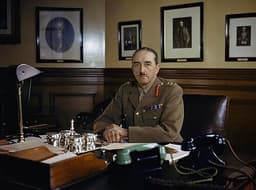
Alan Brooke
General · Modern
64.5Total
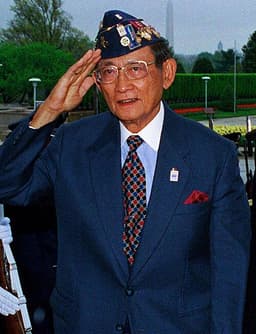
Fidel V. Ramos
General · Modern
58.0Total
Basic Information
Born
1883
1928
Died
1963
—
Era
Modern
Modern
Nationality
United Kingdom
Philippines
Occupation
General
General
Civilization
Western
Eastern
Score Comparison
Military (10%)
55.0
45.0
Political (20%)
72.0
70.3
Influence (20%)
61.0
57.2
Legacy (20%)
55.0
47.5
Leadership (15%)
80.0
72.0
Strategy (15%)
72.0
60.0
TOTAL
64.5
58.0
Alan Brooke — Complete Timeline
1941 AD
Appointed Chief of the Imperial General StaffOther◆ Major
In December 1941, Alan Brooke was appointed Chief of the Imperial General Staff (CIGS), the professional head of the British Army. He served in this role throughout World War II, overseeing military strategy and operations, and was a key member of the Chiefs of Staff Committee that advised Prime Minister Winston Churchill.
World War IIBritish ArmyMilitary Leadership
Impact: global
1943 AD
Participated in the Casablanca ConferenceOther◆ Major
In January 1943, Brooke attended the Casablanca Conference with Churchill and Roosevelt, where Allied strategy for the remainder of World War II was discussed. The conference agreed on the policy of 'unconditional surrender' for the Axis powers and the invasion of Sicily, with Brooke playing a key role in shaping military plans.
World War IIAllied StrategyCasablanca
Impact: global
Attended the Tehran ConferenceOther◆ Major
In November-December 1943, Brooke attended the Tehran Conference with Churchill, Roosevelt, and Stalin. The conference coordinated Allied military strategy against Germany, including the timing of the cross-channel invasion (Operation Overlord) and the Soviet offensive, with Brooke providing military advice on the feasibility of operations.
World War IIAllied StrategyTehran
Impact: global
1944 AD
Oversaw the D-Day PlanningOther◆ Major
As CIGS, Brooke was instrumental in planning the Normandy landings (D-Day) on June 6, 1944. He coordinated with Allied commanders to develop the invasion strategy, including the selection of landing beaches and the allocation of forces, which led to the successful liberation of Western Europe from Nazi occupation.
World War IID-DayNormandy Invasion
Impact: globalconstructive
Promoted to Field MarshalOther◆ Major
On January 1, 1944, Alan Brooke was promoted to the rank of Field Marshal, the highest rank in the British Army. This promotion recognized his exceptional service as CIGS and his contributions to Allied victory in World War II.
World War IIPromotionField Marshal
Impact: nationalconstructive
Fidel V. Ramos — Complete Timeline
1992 AD
Elected President of the PhilippinesPolitical Action◆ Major
Fidel V. Ramos won the Philippine presidential election, succeeding Corazon Aquino. His victory marked the first peaceful transfer of power after the EDSA Revolution, and he focused on economic reforms and national reconciliation.
PresidencyPeaceful TransitionEconomic Reform
Impact: nationalconstructive
1993 AD
Implemented the Philippines 2000 economic programReform◆ Major
Ramos launched the Philippines 2000 program, a comprehensive economic liberalization plan that included deregulation, privatization, and trade liberalization. The program led to sustained GDP growth of over 5% annually.
Economic ReformLiberalizationGrowth
Impact: nationalconstructive
1996 AD
Signed the Final Peace Agreement with the Moro National Liberation FrontPolitical Action◆ Major
Ramos signed a peace agreement with the Moro National Liberation Front, ending decades of armed conflict in Mindanao. The agreement established the Autonomous Region in Muslim Mindanao and granted amnesty to MNLF fighters.
Peace AgreementMindanaoMNLF
Impact: regionalconstructive
Hosted the Asia-Pacific Economic Cooperation summitPolitical Action◆ Major
Ramos hosted the APEC summit in Subic Bay, Philippines, showcasing the country's economic recovery. The summit focused on trade liberalization and economic cooperation among Pacific Rim economies.
APECTradeEconomic Diplomacy
Impact: regionalconstructive
1998 AD
Established the National Anti-Poverty CommissionReform
Ramos created the National Anti-Poverty Commission to coordinate poverty reduction programs across government agencies. The commission aimed to improve social services and livelihood opportunities for the poor.
Poverty ReductionSocial PolicyGovernment Reform
Impact: nationalconstructive
Expert Analysis
Origins
Alan Brooke, born in 1883 in France to a British military family, was educated at the Royal Military Academy, Woolwich. He served in the Royal Artillery and saw combat in World War I, where he developed a reputation for meticulous planning. His early career was shaped by the British Army's institutional culture and the trauma of trench warfare. Fidel V. Ramos, born in 1928 in Pangasinan, Philippines, studied civil engineering at the University of the Philippines and later at the US Military Academy at West Point. He served in the Philippine Army and fought as a guerrilla during World War II. Ramos's formative years were marked by the Japanese occupation and the post-independence political turmoil.
Rise to Power
Brooke rose through the ranks during the interwar period, becoming a key figure in the development of British armored warfare doctrine. His appointment as Chief of the Imperial General Staff (CIGS) in December 1941 placed him at the center of Allied strategy. He quickly became Churchill's primary military advisor, shaping the overall direction of the war. Ramos, after a distinguished military career, supported Corazon Aquino during the People Power Revolution in 1986. He served as her Chief of Staff and later as Secretary of National Defense. In 1992, he won the presidential election, succeeding Aquino and becoming the first Protestant president in a predominantly Catholic country.
Leadership & Governance
Brooke's leadership was characterized by strategic patience and a strong focus on logistics. He clashed with Churchill over the timing of the cross-channel invasion, advocating for a more cautious approach that ultimately led to the successful D-Day landings. His governance style was collaborative but firm, often mediating between Allied commanders with competing interests. Ramos, in contrast, was a pragmatic reformer. He implemented the "Philippines 2000" economic program, which deregulated industries, privatized state assets, and opened the economy to foreign investment. His leadership style was technocratic and inclusive, seeking consensus among political factions and business leaders.
Triumph & Tragedy
Brooke's greatest triumph was his role in planning and executing D-Day, the largest amphibious invasion in history. His meticulous coordination ensured the success of Operation Overlord. However, his tragedy lay in his strained relationship with Churchill, which sometimes led to poor communication and missed opportunities. He also failed to secure a field command, remaining in a staff role throughout the war. Ramos's triumph was the peaceful resolution of the Moro conflict in Mindanao, signing a final peace agreement with the Moro National Liberation Front in 1996. His economic reforms led to sustained growth, with GDP averaging 5% annually. However, his presidency was marred by allegations of cronyism and failure to address deep-seated poverty, as the benefits of growth were not evenly distributed.
Character & Destiny
Brooke was known for his analytical mind, discipline, and occasional pessimism. His strategic foresight was crucial in winning the war, but his bluntness often alienated allies. His destiny was to be the architect of victory, yet he remains less famous than the commanders he served. Ramos was characterized by his integrity, calm demeanor, and focus on results. He was seen as a unifier, bridging divides between the military and civilian sectors. His destiny was to lead a nation in transition, stabilizing democracy and spurring economic growth, but his legacy is often overshadowed by more charismatic successors.
Legacy
Brooke's legacy is embedded in the institutional memory of the British Army and the Allied victory in World War II. His emphasis on joint planning and logistics influenced post-war military doctrine. The Brooke scale, a measure of strategic risk, is still studied in military academies. Ramos's legacy is tied to the modernization of the Philippine economy. His liberalization policies laid the groundwork for the country's integration into global trade. The peace agreement with the MNLF remains a cornerstone of efforts to resolve the Mindanao conflict. However, his economic reforms also contributed to inequality and corruption.
Conclusion
While both men were effective leaders in their respective domains, Alan Brooke had a greater impact on global history. His strategic decisions during World War II directly influenced the outcome of a conflict that reshaped the world order. With a leadership score of 80 compared to Ramos's 72, Brooke's ability to coordinate multinational forces and manage complex logistics was unparalleled. Ramos, though transformative for the Philippines, operated on a smaller stage and left a mixed legacy. Therefore, Alan Brooke emerges as the more historically significant figure.
Rankings
🥇
Alan BrookeLeader
Mil: 55.0Pol: 72.0Inf: 61.0
64.5
🥈
Fidel V. Ramos
Mil: 45.0Pol: 70.3Inf: 57.2
58.0
+6.5 behind
How This Comparison Works
Algorithm
Each figure is scored on 6 dimensions (0—100 scale) based on structured historical data: Military (10%), Political (20%), Influence (20%), Legacy (20%), Leadership (15%), Strategy (15%). The weighted total produces the final ranking.
Data Sources
Scores are computed from structured sub-indicators in the database. Scale factors adjust for era (Ancient ×0.85, Modern ×1.0) and civilization size (Eastern ×1.05, Other ×0.80) to account for differences in population and military scale.
Maximum 3 Figures
Comparisons are limited to 2—3 figures to ensure readability and statistical meaningfulness.
Error Margins
±5 points per dimension — Sub-scores are derived from historical records with inherent uncertainty. Two figures within 5 points on a dimension should be considered roughly equivalent in that area.
Total Score Accuracy
±3 points overall — The weighted combination of 6 dimensions produces a total score with approximately ±3 points of uncertainty. Differences of less than 3 points are not statistically significant— the figures are effectively tied.
Known Limitations
- Historical records are incomplete and uneven across civilizations
- Figures from oral-tradition societies may be underrepresented
- Occupation labels can misclassify multi-role figures
- Scores measure capability and impact, not moral character
- Quantitative scoring is a comparison tool, not absolute truth
Capability Radar
Military (10%) — Battles & Warfare
Battles
60
25
Win Rate
55
30
Expansion
20
20
Political (20%) — Governance & Reform
Reform
60
75
Diplomacy
80
70
Economy
50
80
Influence (20%) — Cultural & Global Reach
Cultural
30
30
Global
65
45
Legacy (20%) — Historical Impact
Historical
75
40
Longevity
60
35
Leadership (15%) — Power & Stability
Tenure
70
60
Stability
85
65
Strategy (15%) — Tactics & Innovation
Strategy
90
40
Tactics
75
35
Reform
85
45
Similar Comparisons
Comments & Discussion
No comments yet. Be the first to share your thoughts!