Loading...
Fidel V. Ramos vs Napoleon Bonaparte
Napoleon Bonaparte leads by 12.9 pts · 2 figures compared
…
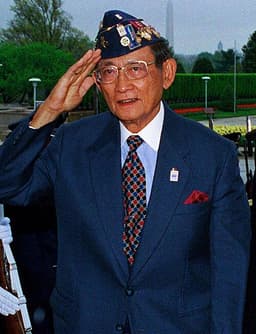
Fidel V. Ramos
General · Modern
58.0Total

Napoleon Bonaparte
General · Modern
70.9Total
Basic Information
Born
1928
1769
Died
—
1821
Era
Modern
Modern
Nationality
Philippines
France
Occupation
General
General
Civilization
Eastern
Western
Score Comparison
Military (10%)
45.0
94.0
Political (20%)
70.3
72.0
Influence (20%)
57.2
40.0
Legacy (20%)
47.5
80.0
Leadership (15%)
72.0
78.0
Strategy (15%)
60.0
90.0
TOTAL
58.0
70.9
Fidel V. Ramos — Complete Timeline
1992 AD
Elected President of the PhilippinesPolitical Action◆ Major
Fidel V. Ramos won the Philippine presidential election, succeeding Corazon Aquino. His victory marked the first peaceful transfer of power after the EDSA Revolution, and he focused on economic reforms and national reconciliation.
PresidencyPeaceful TransitionEconomic Reform
Impact: nationalconstructive
1993 AD
Implemented the Philippines 2000 economic programReform◆ Major
Ramos launched the Philippines 2000 program, a comprehensive economic liberalization plan that included deregulation, privatization, and trade liberalization. The program led to sustained GDP growth of over 5% annually.
Economic ReformLiberalizationGrowth
Impact: nationalconstructive
1996 AD
Signed the Final Peace Agreement with the Moro National Liberation FrontPolitical Action◆ Major
Ramos signed a peace agreement with the Moro National Liberation Front, ending decades of armed conflict in Mindanao. The agreement established the Autonomous Region in Muslim Mindanao and granted amnesty to MNLF fighters.
Peace AgreementMindanaoMNLF
Impact: regionalconstructive
Hosted the Asia-Pacific Economic Cooperation summitPolitical Action◆ Major
Ramos hosted the APEC summit in Subic Bay, Philippines, showcasing the country's economic recovery. The summit focused on trade liberalization and economic cooperation among Pacific Rim economies.
APECTradeEconomic Diplomacy
Impact: regionalconstructive
1998 AD
Established the National Anti-Poverty CommissionReform
Ramos created the National Anti-Poverty Commission to coordinate poverty reduction programs across government agencies. The commission aimed to improve social services and livelihood opportunities for the poor.
Poverty ReductionSocial PolicyGovernment Reform
Impact: nationalconstructive
Napoleon Bonaparte — Complete Timeline
1799 AD
Coup of 18 BrumaireOther◆ Major
Napoleon Bonaparte, with support from his brother Lucien and key political figures, overthrew the Directory in a bloodless coup. He established the Consulate with himself as First Consul, effectively becoming the ruler of France. This event ended the French Revolution's most unstable period.
French RevolutionCoupRise to Power
Impact: regional
1804 AD
Promulgation of the Napoleonic CodeOther◆ Major
Napoleon enacted the Civil Code of the French, known as the Napoleonic Code, a comprehensive set of laws that replaced the fragmented feudal legal systems. The code established legal equality, protected property rights, and secularized law. It became the basis for legal systems in many European and world countries.
Legal ReformNapoleonic CodeCivil Law
Impact: globalconstructive
1805 AD
Battle of AusterlitzWar◆ Major
Napoleon's Grande Arm
Napoleonic WarsBattleDecisive Victory
Impact: global
1812 AD
Invasion of RussiaWar◆ Major
Napoleon led the Grande Arm
Napoleonic WarsInvasionDisaster
Impact: globaldestructive
1815 AD
Battle of WaterlooWar◆ Major
Napoleon's French army was defeated by the combined forces of the Duke of Wellington's Anglo-Allied army and Gebhard Leberecht von Bl
Napoleonic WarsBattleFinal Defeat
Impact: globaldestructive
Expert Analysis
fidel-v-ramos-vs-napoleon-bonaparte
# The General's Two Paths: Napoleon and Ramos
On a June morning in 1815, Napoleon Bonaparte watched his magnificent army shatter on the muddy fields of Waterloo, the dream of a united Europe dying with each retreating soldier. One hundred seventy-seven years later, on a different continent entirely, another general named Fidel Ramos stood in the halls of Malacañang Palace, not as a conqueror but as a democratically elected president, his nation's battered economy beginning to stir back to life. Both men wore the uniform of a general. Both seized history by the throat. But their paths diverged so radically that they seem to belong to different species of ambition. What drove one to ruin and the other to reform?
Origins
Napoleon Bonaparte was born in 1769 on the island of Corsica, a place that had only recently become French. His family was minor nobility, but they were poor, proud, and fiercely resentful of the French mainland that had swallowed their homeland. The young Napoleon grew up speaking Italian-accented French, an outsider in a nation that would one day bow to him. He entered military school at nine, a small, intense boy with a volcanic temper, mocked by wealthier classmates for his accent and provincial manners. France's ancien régime was cracking, and the Revolution of 1789 blew the doors open for men of talent rather than birth. Napoleon, barely twenty, stepped through.
Fidel Valdez Ramos was born in 1928 in Pangasinan, a province in the northern Philippines. His father was a journalist and diplomat, his mother a teacher. The Ramos family was educated, connected, and deeply embedded in the American-influenced Philippine establishment. Young Fidel attended the Philippine Military Academy, then studied civil engineering in the United States, absorbing not just technical knowledge but a worldview shaped by American institutions and democratic ideals. He fought as a young officer in the Korean War, a conflict that taught him the limits of military power and the necessity of alliances. Where Napoleon's early life was shaped by revolution and resentment, Ramos's was shaped by bureaucracy, discipline, and the quiet faith that systems could be fixed.
Rise to Power
Napoleon's ascent was a thunderbolt. In 1793, at age twenty-four, he drove the British out of Toulon and was promoted to brigadier general. By 1796, he commanded the French army in Italy, where he shattered Austrian armies and forced peace treaties that stunned Europe. Each victory fed the next: Egypt, the coup of 18 Brumaire in 1799, First Consul, then Emperor in 1804. He did not wait for power; he seized it, stage by stage, with a speed that left his rivals gasping.
Ramos's rise was slower, more patient, and more political. He served under Ferdinand Marcos, the dictator who ruled the Philippines from 1965 to 1986. As chief of the Philippine Constabulary, Ramos enforced martial law, a role that history judges harshly. But in 1986, when the People Power Revolution erupted, Ramos made a choice. He defected from Marcos, joined Corazon Aquino's opposition, and helped topple a dictatorship without a civil war. That decision—to abandon power for principle—defined him. He did not become president until 1992, at age sixty-four, after a narrow electoral victory. He had spent decades inside the system, learning its levers, before he could lead.
Leadership & Governance
Napoleon governed as he conquered: with audacity, centralization, and relentless energy. He reformed French law through the Napoleonic Code, which standardized legal systems across Europe and enshrined principles of equality before the law, property rights, and secular administration. He built roads, established the Bank of France, and created a meritocratic civil service. But his governance was inseparable from war. Every reform was funded by plunder, every domestic achievement overshadowed by the next campaign. He ruled from horseback, and his empire was a military machine that consumed itself.
Ramos governed as a technocrat and peacemaker. His "Philippines 2000" program, launched in 1993, deregulated industries, privatized state enterprises, and opened the economy to foreign investment. He signed a final peace agreement with the Moro National Liberation Front in 1996, ending decades of rebellion in Mindanao. He hosted the APEC summit in Subic Bay in 1996, showcasing a nation rebounding from economic collapse. Where Napoleon centralized power, Ramos decentralized it, devolving authority to local governments. Where Napoleon demanded absolute loyalty, Ramos built coalitions. His military score of 61.8 is modest; his leadership score of 86.3 reflects a different kind of strength—the ability to persuade, not command.
Triumph & Tragedy
Napoleon's greatest moment was Austerlitz in 1805, where he annihilated a combined Russian and Austrian army, a victory so complete it became a synonym for military genius. His tragedy was the invasion of Russia in 1812, a catastrophic campaign that cost half a million lives and destroyed his Grand Army. He never recovered. Exiled to Elba, he escaped, returned, and was finally defeated at Waterloo in 1815, then sent to die on the remote island of Saint Helena in 1821.
Ramos's triumph was the peace agreement with the Moro National Liberation Front, a settlement that ended a conflict that had killed over 100,000 people. His tragedy was less dramatic: the Asian financial crisis of 1997, which battered the Philippine economy just as his term ended. He left office in 1998 with high approval ratings, but the gains of his reforms were fragile. He did not die in exile or disgrace; he lived to see his successors build—and sometimes squander—his legacy.
Character & Destiny
Napoleon was driven by an insatiable hunger for glory. "I love power," he once said, "as a musician loves his violin." He could not stop. Every victory demanded another, every frontier invited conquest. His personality was a forge of ambition, brilliance, and paranoia. He trusted no one fully and believed his destiny was to rule Europe. That belief, which made him great, also destroyed him.
Ramos was driven by a different engine: duty, pragmatism, and a quiet faith in institutions. He had seen what dictatorship did to his country and chose to be a reformer, not a revolutionary. His personality was steady, disciplined, almost bureaucratic. He did not seek immortality; he sought stability. His destiny was not to conquer but to rebuild.
Legacy
Napoleon's legacy is immense and contradictory. He is remembered as a military genius, a reformer who spread the ideals of the French Revolution across Europe, and a tyrant who drowned the continent in blood. The Napoleonic Code influences legal systems from Brazil to Japan. His name is engraved in the Arc de Triomphe, his body entombed in Les Invalides. But his empire lasted barely a decade.
Ramos's legacy is quieter but perhaps more durable. He is remembered as the man who stabilized Philippine democracy after the chaos of the Marcos years, who made peace with Muslim separatists, who opened the economy to the world. His name does not echo through centuries of military history, but his work underpins the modern Philippines. He died in 2022, a former president who had served his term, respected if not revered.
Conclusion
Napoleon and Ramos were both generals, but they lived in different worlds. Napoleon's world was one of absolute power, constant war, and the intoxicating dream of empire. Ramos's world was one of fragile institutions, democratic transitions, and the slow, unglamorous work of reform. One sought to conquer history; the other sought to serve it. Their lives remind us that the same uniform can clothe very different ambitions. The question is not whether a general can lead a nation, but what kind of nation he chooses to build.
Rankings
🥇
Napoleon BonaparteLeader
Mil: 94.0Pol: 72.0Inf: 40.0
70.9
🥈
Fidel V. Ramos
Mil: 45.0Pol: 70.3Inf: 57.2
58.0
+12.9 behind
How This Comparison Works
Algorithm
Each figure is scored on 6 dimensions (0—100 scale) based on structured historical data: Military (10%), Political (20%), Influence (20%), Legacy (20%), Leadership (15%), Strategy (15%). The weighted total produces the final ranking.
Data Sources
Scores are computed from structured sub-indicators in the database. Scale factors adjust for era (Ancient ×0.85, Modern ×1.0) and civilization size (Eastern ×1.05, Other ×0.80) to account for differences in population and military scale.
Maximum 3 Figures
Comparisons are limited to 2—3 figures to ensure readability and statistical meaningfulness.
Error Margins
±5 points per dimension — Sub-scores are derived from historical records with inherent uncertainty. Two figures within 5 points on a dimension should be considered roughly equivalent in that area.
Total Score Accuracy
±3 points overall — The weighted combination of 6 dimensions produces a total score with approximately ±3 points of uncertainty. Differences of less than 3 points are not statistically significant— the figures are effectively tied.
Known Limitations
- Historical records are incomplete and uneven across civilizations
- Figures from oral-tradition societies may be underrepresented
- Occupation labels can misclassify multi-role figures
- Scores measure capability and impact, not moral character
- Quantitative scoring is a comparison tool, not absolute truth
Capability Radar
Military (10%) — Battles & Warfare
Battles
25
95
Win Rate
30
90
Expansion
20
95
Political (20%) — Governance & Reform
Reform
75
95
Diplomacy
70
80
Economy
80
85
Influence (20%) — Cultural & Global Reach
Cultural
30
85
Global
45
90
Legacy (20%) — Historical Impact
Historical
40
95
Longevity
35
90
Leadership (15%) — Power & Stability
Tenure
60
85
Stability
65
70
Strategy (15%) — Tactics & Innovation
Strategy
40
95
Tactics
35
98
Reform
45
92
Similar Comparisons
Comments & Discussion
CORSICAN GREMLIN6/17/2026
Let’s be real—Napoleon was a brilliant tactician on the battlefield, but he was a trash strategist long-term. Waterloo wasn’t a fluke; it was the predictable result of overreach and hubris. Ramos, on the other hand, knew when to put down the sword and pick up a spreadsheet. One guy united Europe through conquest that lasted a decade; the other rebuilt an economy through policy that’s still felt today. Ambition without wisdom is just a bigger mess.
数字解密者6/17/2026
数据不说谎:拿破仑打了60多场仗,赢了大部分,但最终身陷孤岛,法国元气大伤。拉莫斯执政六年,菲律宾GDP从负增长飙升至5%以上,外资涌入。谁说将军只会搞破坏?拉莫斯证明,调兵遣将的脑子也能搞经济。拿破仑的军装留着血与灰,拉莫斯的西装沾着数位笔——后者才叫真转型。
SALONIC SCHOLAR6/17/2026
Both men faced a choice between the sword and the pen. Napoleon chose the sword until the pen wrote his exile. Ramos, a West Point grad, somehow intuited that the best way to finish a war is to start a peace. The irony? Ramos fought against martial law under Marcos, then used democracy to fix what the gun couldn’t. Napoleon never grasped that final lesson: power isn’t about taking more ground—it’s about making the ground you’ve got work.
历史驳壳枪6/17/2026
别被‘伟大将军’光环骗了。拿破仑是历史网红,拉莫斯才是角落里的工匠。拿破仑的滑铁卢留下一地鸡毛,拉莫斯的EDSA革命却造就了亚洲最稳定的民主之一。一个是表演家,一个是建设者。如果你问我会跟谁吃晚饭?拉莫斯。至少他不会在这之后派我去送死。
REVISIONIST WATCHDOG6/17/2026
You’re comparing a man who crowned himself emperor to a guy who ran a post-coup transition. That’s like comparing a wildfire to a matchstick. Napoleon’s ambition was epic tragedy; Ramos’s ambition was quiet pragmatism. But let’s not romanticize Ramos—he inherited a mess from Marcos and Aquino, and his neoliberal reforms widened inequality. Still, I’d take his dirty compromises over Napoleon’s glorious dead any day. Sometimes the boring general wins the real war.