Loading...
This comparison has not been analyzed yet.
One-time AI generation (~1 minute). Scores and timeline are already available below.
Albert I of Germany vs Sweyn Forkbeard
Albert I of Germany leads by 0.1 pts · 2 figures compared
…
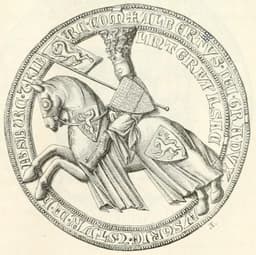
Albert I of Germany
Emperor · Medieval
46.1Total

Sweyn Forkbeard
Emperor · Medieval
46.0Total
Basic Information
Born
1255
960
Died
1308
1014
Era
Medieval
Medieval
Nationality
Holy Roman Empire
Denmark
Occupation
Emperor
Emperor
Civilization
Western
Western
Score Comparison
Military (10%)
55.0
45.0
Political (20%)
37.9
35.1
Influence (20%)
50.2
53.3
Legacy (20%)
41.7
43.3
Leadership (15%)
51.9
51.9
Strategy (15%)
41.7
43.3
TOTAL
46.1
46.0
Albert I of Germany — Complete Timeline
1298 AD
Election as King of GermanyPolitical Action◆ Major
Following the death of Adolf of Nassau at the Battle of G
ElectionHabsburg Restoration
Impact: national
1301 AD
Conflict with the Rhineland ElectorsWar◆ Major
Albert I waged war against the archbishops of Mainz, Cologne, and Trier, who formed a coalition against him. He defeated them, asserting royal authority over the ecclesiastical princes.
WarEcclesiastical Princes
Impact: regional
1308 AD
Assassination by John ParricidaPolitical Action
Albert I was murdered by his nephew John Parricida, whom he had deprived of his inheritance. The assassination occurred near Windisch, Switzerland, and led to a period of instability.
AssassinationDynastic Feud
Impact: nationaltragic
Sweyn Forkbeard — Complete Timeline
985 AD
Rebelled against Harald BluetoothPolitical Action◆ Major
Sweyn Forkbeard led a rebellion against his father, King Harald Bluetooth, forcing him into exile. This uprising was driven by opposition to Harald's Christianization policies and centralized rule, and it resulted in Sweyn seizing the Danish throne.
RebellionDynastic ConflictPower Transition
Impact: regionaldestructive
1013 AD
Invaded EnglandWar◆ Major
Sweyn Forkbeard launched a full-scale invasion of England, leading a Danish fleet. He conquered large parts of the country, forcing King
InvasionEnglandViking Conquest
Impact: regional
Crowned King of EnglandPolitical Action◆ Major
After his successful invasion, Sweyn Forkbeard was crowned King of England in late 1013. He ruled England for only a few weeks before his death in February 1014, but his conquest paved the way for his son Cnut the Great's later rule over England.
CoronationEnglandDanish Rule
Impact: regional
1014 AD
Died suddenly in GainsboroughOther◆ Major
Sweyn Forkbeard died suddenly in Gainsborough, Lincolnshire, in February 1014, after ruling England for only about five weeks. His death led to the temporary restoration of
DeathSuccession CrisisEngland
Impact: regionaltragic
This comparison has not been analyzed yet.
One-time AI generation (~1 minute). Scores and timeline are already available below.
Rankings
🥇
Albert I of GermanyLeader
Mil: 55.0Pol: 37.9Inf: 50.2
46.1
🥈
Sweyn Forkbeard
Mil: 45.0Pol: 35.1Inf: 53.3
46.0
+0.1 behind
How This Comparison Works
Algorithm
Each figure is scored on 6 dimensions (0—100 scale) based on structured historical data: Military (10%), Political (20%), Influence (20%), Legacy (20%), Leadership (15%), Strategy (15%). The weighted total produces the final ranking.
Data Sources
Scores are computed from structured sub-indicators in the database. Scale factors adjust for era (Ancient ×0.85, Modern ×1.0) and civilization size (Eastern ×1.05, Other ×0.80) to account for differences in population and military scale.
Maximum 3 Figures
Comparisons are limited to 2—3 figures to ensure readability and statistical meaningfulness.
Error Margins
±5 points per dimension — Sub-scores are derived from historical records with inherent uncertainty. Two figures within 5 points on a dimension should be considered roughly equivalent in that area.
Total Score Accuracy
±3 points overall — The weighted combination of 6 dimensions produces a total score with approximately ±3 points of uncertainty. Differences of less than 3 points are not statistically significant— the figures are effectively tied.
Known Limitations
- Historical records are incomplete and uneven across civilizations
- Figures from oral-tradition societies may be underrepresented
- Occupation labels can misclassify multi-role figures
- Scores measure capability and impact, not moral character
- Quantitative scoring is a comparison tool, not absolute truth
Capability Radar
Military (10%) — Battles & Warfare
Battles
30
45
Win Rate
35
50
Expansion
40
55
Political (20%) — Governance & Reform
Reform
30
25
Diplomacy
40
35
Economy
30
30
Influence (20%) — Cultural & Global Reach
Cultural
25
30
Global
15
20
Legacy (20%) — Historical Impact
Historical
30
35
Longevity
20
25
Leadership (15%) — Power & Stability
Tenure
45
40
Stability
20
25
Strategy (15%) — Tactics & Innovation
Strategy
25
45
Tactics
30
40
Reform
20
20
Similar Comparisons
Comments & Discussion
No comments yet. Be the first to share your thoughts!