Loading...
Alexander the Great vs Simeon I of Bulgaria
Alexander the Great leads by 13.1 pts · 2 figures compared
…
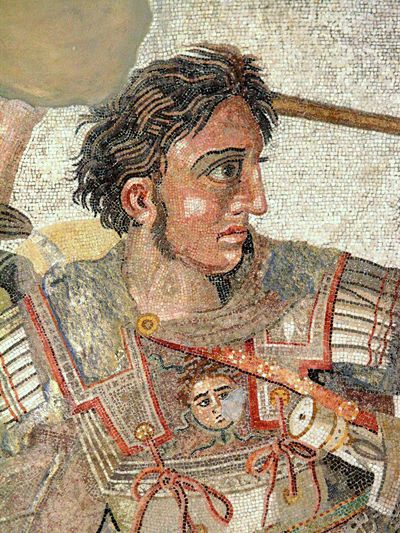
Alexander the Great
General · Ancient
84.7Total
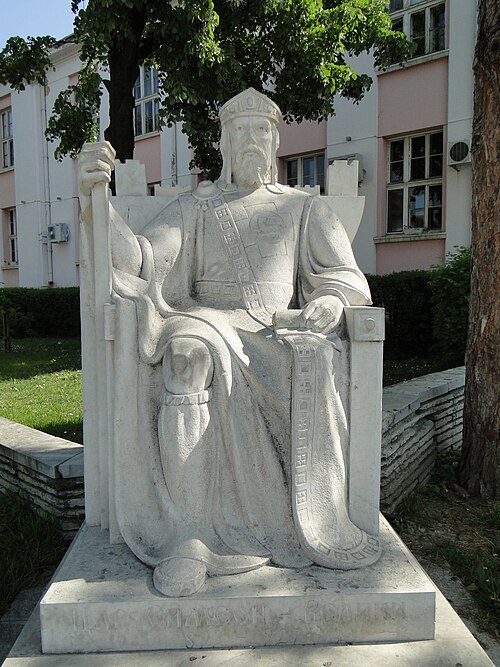
Simeon I of Bulgaria
Emperor · Medieval
71.6Total
Basic Information
Born
-356
864
Died
-323
927
Era
Ancient
Medieval
Nationality
Macedon
Bulgaria
Occupation
General
Emperor
Civilization
Western
Western
Score Comparison
Military (10%)
96.0
75.0
Political (20%)
65.0
68.7
Influence (20%)
90.0
65.3
Legacy (20%)
90.0
79.7
Leadership (15%)
82.0
82.7
Strategy (15%)
92.0
60.0
TOTAL
84.7
71.6
Rankings
🥇
Alexander the GreatLeader
Mil: 96.0Pol: 65.0Inf: 90.0
84.7
🥈
Simeon I of Bulgaria
Mil: 75.0Pol: 68.7Inf: 65.3
71.6
+13.1 behind
How This Comparison Works
Algorithm
Each figure is scored on 6 dimensions (0—100 scale) based on structured historical data: Military (10%), Political (20%), Influence (20%), Legacy (20%), Leadership (15%), Strategy (15%). The weighted total produces the final ranking.
Data Sources
Scores are computed from structured sub-indicators in the database. Scale factors adjust for era (Ancient ×0.85, Modern ×1.0) and civilization size (Eastern ×1.05, Other ×0.80) to account for differences in population and military scale.
Maximum 3 Figures
Comparisons are limited to 2—3 figures to ensure readability and statistical meaningfulness.
Error Margins
±5 points per dimension — Sub-scores are derived from historical records with inherent uncertainty. Two figures within 5 points on a dimension should be considered roughly equivalent in that area.
Total Score Accuracy
±3 points overall — The weighted combination of 6 dimensions produces a total score with approximately ±3 points of uncertainty. Differences of less than 3 points are not statistically significant— the figures are effectively tied.
Known Limitations
- Historical records are incomplete and uneven across civilizations
- Figures from oral-tradition societies may be underrepresented
- Occupation labels can misclassify multi-role figures
- Scores measure capability and impact, not moral character
- Quantitative scoring is a comparison tool, not absolute truth
Capability Radar
Military (10%) — Battles & Warfare
Battles
98
85
Win Rate
99
80
Expansion
99
85
Political (20%) — Governance & Reform
Reform
75
80
Diplomacy
80
75
Economy
70
80
Influence (20%) — Cultural & Global Reach
Cultural
95
85
Global
95
65
Legacy (20%) — Historical Impact
Historical
98
80
Longevity
95
70
Leadership (15%) — Power & Stability
Tenure
60
85
Stability
55
70
Strategy (15%) — Tactics & Innovation
Strategy
98
80
Tactics
99
75
Reform
85
70
Expert Analysis
Alexander the Great vs Simeon I of Bulgaria: Historical Comparison
Alexander the Great, the ancient Macedonian king who forged an empire from Greece to India, and Simeon I, the medieval Bulgarian emperor who challenged Byzantium for supremacy, represent two distinct peaks of military and political ambition. While both are rated equally overall (85/100), they excelled in different domains: Alexander in sheer martial conquest and cultural diffusion, Simeon in state-building and political consolidation.
Dimension Analysis
**Military: Alexander the Great 96 / Simeon I of Bulgaria 89**
Alexander’s undefeated record across four major battles (Granicus, Issus, Gaugamela, Hydaspes) against numerically superior Persian and Indian forces demonstrates tactical genius and logistical mastery. Simeon’s victories, such as the Battle of Achelous (917) where he crushed the Byzantine army, were decisive but confined to the Balkans; he never matched Alexander’s scale of conquest across three continents.
**Political: Alexander the Great 65 / Simeon I of Bulgaria 84**
Alexander’s empire lacked administrative cohesion—he died without a clear succession or stable governance, leading to immediate fragmentation. Simeon, by contrast, transformed Bulgaria into a centralized Christian state, codified laws, established the Preslav Literary School, and negotiated the title “Emperor of the Romans” with Constantinople, securing diplomatic recognition for his realm.
**Influence: Alexander the Great 90 / Simeon I of Bulgaria 84**
Alexander’s conquests created the Hellenistic world, spreading Greek language, art, and philosophy across Egypt, Persia, and Central Asia, influencing cultures for centuries. Simeon’s influence was more regional: he elevated Old Church Slavonic as a liturgical language, fostered Slavic literature, and cemented Bulgaria’s role as the “Third Rome” in Orthodox Christian narrative.
**Legacy: Alexander the Great 90 / Simeon I of Bulgaria 81**
Alexander remains a universal archetype of the conqueror, inspiring figures from Julius Caesar to Napoleon, and his name is synonymous with military genius. Simeon’s legacy is primarily preserved in Balkan and Slavic historiography; his empire collapsed within decades, and his cultural achievements, though foundational, are less globally recognized.
**Leadership: Alexander the Great 82 / Simeon I of Bulgaria 82**
Both leaders commanded intense personal loyalty: Alexander led from the front, sharing hardships with his troops, while Simeon ruled as a scholar-king, personally overseeing reforms and diplomacy. Their leadership styles differed—Alexander’s charisma in battle versus Simeon’s administrative and ecclesiastical authority—but both proved equally effective in mobilizing their societies for war and statecraft.
Verdict
This is a tie, but for different reasons. Alexander the Great ranks higher in military genius, global influence, and enduring legacy, while Simeon I surpasses him in political stability, state-building, and diplomatic finesse. The tie reflects the difficulty of comparing an ancient world-conqueror with a medieval empire-builder: Alexander’s achievements are more spectacular and far-reaching, Simeon’s more sustainable and culturally foundational. If forced to choose, Alexander edges ahead in historical impact, but Simeon’s model of governance proved more durable in its own context.
FAQ
Q: Who was more influential historically? A: Alexander the Great, because his conquests reshaped the entire ancient world and his legacy influenced military strategy, culture, and politics across Europe and Asia for millennia.
Q: Why is Alexander the Great ranked higher in military? A: His undefeated record against vastly larger armies across three continents, coupled with innovative tactics (e.g., the oblique phalanx, combined arms), set a global standard for conquest that Simeon’s decisive but geographically limited victories cannot match.
Similar Comparisons
Comments & Discussion
No comments yet. Be the first to share your thoughts!