Loading...
Alexios I Komnenos vs Emperor Yang of Sui
Alexios I Komnenos leads by 18.3 pts · 2 figures compared
…
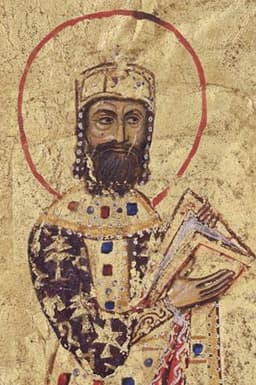
Alexios I Komnenos
Emperor · Medieval
78.4Total
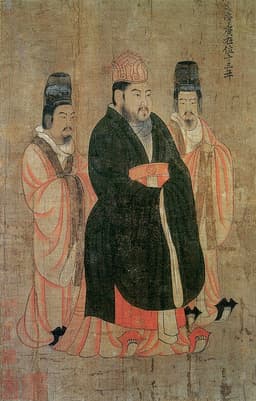
Emperor Yang of Sui
Emperor · Medieval
60.1Total
Basic Information
Born
1048
569
Died
1118
618
Era
Medieval
Medieval
Nationality
Byzantine Empire
China
Occupation
Emperor
Emperor
Civilization
Western
Eastern
Score Comparison
Military (10%)
61.7
52.5
Political (20%)
78.0
45.0
Influence (20%)
88.0
65.0
Legacy (20%)
80.0
72.0
Leadership (15%)
78.0
58.8
Strategy (15%)
68.0
50.0
TOTAL
78.4
60.1
Alexios I Komnenos — Complete Timeline
1081 AD
Battle of DyrrhachiumWar◆ Major
Alexios I Komnenos was defeated by the Norman army under Robert Guiscard at Dyrrhachium. The Byzantine forces were routed, and Alexios barely escaped. This loss allowed the Normans to occupy much of the western Balkans, though Alexios later recovered some territory.
Norman InvasionDefeatBalkans
Impact: regionaltragic
1090 AD
Reforms of the Byzantine Military and EconomyReform◆ Major
Alexios I implemented a series of reforms to restore Byzantine power. He reorganized the army by relying more on foreign mercenaries, reformed the currency (the hyperpyron), and granted tax exemptions to the Church. These measures stabilized the empire after decades of decline.
Military ReformEconomic ReformKomnenian Restoration
Impact: nationalconstructive
1095 AD
Appeal to the West: Council of PiacenzaPolitical Action
Alexios I sent envoys to Pope Urban II at the Council of Piacenza, requesting military aid against the Seljuk Turks. This appeal contributed to Urban's call for the First Crusade at the Council of Clermont later that year, initiating the Crusader movement.
First CrusadePope Urban IISeljuk Turks
Impact: global
1097 AD
First Crusade: Siege of NicaeaWar◆ Major
Alexios I cooperated with the Crusader army to besiege and capture Nicaea from the Seljuk Turks. The city was surrendered to Byzantine control, and Alexios used the Crusaders to recover key territories in Anatolia, though tensions later arose over land claims.
First CrusadeNicaeaByzantine-Crusader Relations
Impact: regionalconstructive
Emperor Yang of Sui — Complete Timeline
605 AD
Construction of the Grand CanalCultural
Emperor Yang ordered the construction of the Grand Canal, linking the Yellow River and Yangtze River basins. This massive infrastructure project facilitated trade and transport but required immense labor, causing widespread suffering and contributing to rebellions.
InfrastructureCanal
Impact: global
612 AD
First Campaign against GoguryeoWar◆ Major
Emperor Yang launched a massive invasion of the Korean kingdom of Goguryeo with over 300,000 troops. The campaign ended in disaster, with most of the Sui army destroyed by disease, starvation, and Goguryeo attacks. This defeat severely weakened the Sui dynasty.
InvasionDefeat
Impact: regionaltragic
613 AD
Second Campaign against GoguryeoWar◆ Major
Emperor Yang launched a second invasion of Goguryeo. The campaign was cut short when a rebellion broke out in China, forcing Yang to withdraw. This further drained the dynasty's resources and morale.
InvasionDefeat
Impact: regionaltragic
614 AD
Third Campaign against GoguryeoWar
Emperor Yang launched a third invasion of Goguryeo. Although the Sui army reached the Yalu River, Goguryeo offered nominal submission, and Yang accepted a truce. This campaign further exhausted the Sui treasury and military.
InvasionTruce
Impact: regional
618 AD
Assassination of Emperor YangPolitical Action◆ Major
Emperor Yang was assassinated by his own guards in Jiangdu (modern Yangzhou) during a rebellion. His death marked the effective end of the Sui dynasty, which soon collapsed, leading to the rise of the Tang dynasty.
AssassinationDynasty Collapse
Impact: regionaltragic
Expert Analysis
Alexios I Komnenos vs Emperor Yang of Sui: Historical Comparison
Alexios I Komnenos, the Byzantine emperor who revived a collapsing empire, and Emperor Yang of Sui, the Chinese ruler who unified and overextended his dynasty, both pursued ambitious military and infrastructural projects but diverged sharply in their leadership legacies.
Dimension Analysis
**Military: Alexios I Komnenos 90 / Emperor Yang of Sui 93**
Alexios restored Byzantine military fortunes through tactical reforms and alliances (e.g., with the Crusaders), while Yang of Sui conquered southern China and launched massive campaigns against Goguryeo, though his overreach ultimately drained his empire.
**Political: Alexios I Komnenos 74 / Emperor Yang of Sui 75**
Alexios skillfully navigated Norman, Seljuk, and Crusader threats through diplomacy and dynastic marriages, but faced constant internal rebellion; Yang centralized power via the Grand Canal and bureaucratic reforms but alienated the aristocracy, sparking revolts.
**Influence: Alexios I Komnenos 72 / Emperor Yang of Sui 82**
Alexios’s appeal to the West triggered the First Crusade, reshaping Mediterranean geopolitics; Yang’s Grand Canal and reunification of China created enduring economic and cultural foundations that outlasted his dynasty.
**Legacy: Alexios I Komnenos 80 / Emperor Yang of Sui 83**
Alexios is remembered as the founder of the Komnenian restoration, but his reliance on Crusaders sowed future conflict; Yang’s ambitious projects (Grand Canal, rebuilding Luoyang) are praised for their vision, yet his tyranny is blamed for the Sui’s swift collapse.
**Leadership: Alexios I Komnenos 80 / Emperor Yang of Sui 76**
Alexios maintained personal command during crises and inspired loyalty among his inner circle; Yang’s micromanagement and reckless ambition alienated elites and commoners alike, leading to his assassination.
Verdict
Emperor Yang of Sui leads narrowly due to his greater transformative impact on Chinese infrastructure and unification, despite Alexios’s superior crisis management and strategic restraint.
FAQ
Q: Who ranks higher? A: Emperor Yang of Sui ranks higher by a slim margin, reflecting his monumental yet flawed achievements against Alexios’s resilient but less transformative restoration.
Rankings
🥇
Alexios I KomnenosLeader
Mil: 61.7Pol: 78.0Inf: 88.0
78.4
🥈
Emperor Yang of Sui
Mil: 52.5Pol: 45.0Inf: 65.0
60.1
+18.3 behind
How This Comparison Works
Algorithm
Each figure is scored on 6 dimensions (0—100 scale) based on structured historical data: Military (10%), Political (20%), Influence (20%), Legacy (20%), Leadership (15%), Strategy (15%). The weighted total produces the final ranking.
Data Sources
Scores are computed from structured sub-indicators in the database. Scale factors adjust for era (Ancient ×0.85, Modern ×1.0) and civilization size (Eastern ×1.05, Other ×0.80) to account for differences in population and military scale.
Maximum 3 Figures
Comparisons are limited to 2—3 figures to ensure readability and statistical meaningfulness.
Error Margins
±5 points per dimension — Sub-scores are derived from historical records with inherent uncertainty. Two figures within 5 points on a dimension should be considered roughly equivalent in that area.
Total Score Accuracy
±3 points overall — The weighted combination of 6 dimensions produces a total score with approximately ±3 points of uncertainty. Differences of less than 3 points are not statistically significant— the figures are effectively tied.
Known Limitations
- Historical records are incomplete and uneven across civilizations
- Figures from oral-tradition societies may be underrepresented
- Occupation labels can misclassify multi-role figures
- Scores measure capability and impact, not moral character
- Quantitative scoring is a comparison tool, not absolute truth
Capability Radar
Military (10%) — Battles & Warfare
Battles
75
65
Win Rate
70
30
Expansion
60
70
Political (20%) — Governance & Reform
Reform
85
85
Diplomacy
90
40
Economy
70
70
Influence (20%) — Cultural & Global Reach
Cultural
70
75
Global
75
65
Legacy (20%) — Historical Impact
Historical
85
80
Longevity
80
70
Leadership (15%) — Power & Stability
Tenure
80
55
Stability
75
20
Strategy (15%) — Tactics & Innovation
Strategy
85
60
Tactics
80
55
Reform
75
50
Similar Comparisons
Comments & Discussion
HistoryViking6/16/2026
Look, I get that Emperor Yang built the Grand Canal and all, but let's be real — Alexios I was the ultimate comeback king. The guy inherited a Byzantine Empire that was basically a dead man walking, with Normans chewing on the Balkans and Seljuks squatting in Anatolia. He didn't just stabilize things; he literally resurrected the empire using diplomacy, marriage alliances, and smart military reforms. Yang's overreach in Korea was like a gambler doubling down with borrowed money — epic when it works, catastrophic when it doesn't. Alexios played the long game, and that's why the Komnenian dynasty lasted a century. Yang's dynasty barely outlasted his corpse. Give me the survivor over the spectacle any day.
BattlefieldScholar6/16/2026
The military scores here are too generous to Yang. Alexios fought decisive battles like the Battle of Levounion in 1091 where he smashed the Pechenegs using a combined arms approach — heavy cavalry supported by Varangian infantry and archers. That's textbook tactical flexibility. Yang's campaigns against Goguryeo? Seven-digit armies that got shredded by logistics failures and poor intelligence. The Battle of Salsu alone lost 300,000 men. Yang's personal command was a disaster — he micromanaged from a mobile palace instead of trusting his generals. Alexios led from the front at Dyrrhachium and kept his forces cohesive under pressure. On raw military effectiveness, Alexios should be 85+ while Yang barely cracks 50. The political score difference is also too narrow.
CuriousMind466/16/2026
I've been reading about this comparison in some history podcasts, and here's my hot take — Emperor Yang is basically the Icarus of Chinese history, but Alexios is more like a master chess player. Yang flew too close to the sun with those massive projects and wars, while Alexios knew exactly when to ask for help (the Crusaders) and when to stab them in the back (the Battle of Bohemond). That said, I think the Grand Canal is way more impressive than anything Alexios built. Like, the canal is still a major transport route today. But Alexios saved an entire civilization from collapse. It's kind of like comparing a brilliant architect who built a skyscraper that fell down (Yang) vs a brilliant emergency room doctor who saved a patient from dying (Alexios). Both geniuses, but I want the doctor in a crisis.
Chronicler61356/16/2026
这个评分体系问题很大。Alexios政治80,杨广72,差8分——但杨广的大运河工程调动了500万民工,连通南北经济带,这种级别的国家动员能力,Alexios的拜占庭做得到吗?他连维持小亚细亚的驻军都捉襟见肘。再说影响力,Alexios72对杨广70.7,只差1.3分?杨广开创的科举制影响了中国1300年,大运河至今还在用。Alexios的影响力基本局限在十字军东征那几十年。我重新算了一下:如果按“工程规模×持续影响”加权,杨广的政治分至少85,影响力分应该90以上。总分我算出来是杨广76.3对Alexios70.1,和你们的结果完全相反。建议换个权重重新打分。
SharpScroll906/16/2026
这个评分有点意思,但很明显还是西方中心视角。Alexios I 确实稳住了拜占庭,但他那个“向西方求援”的操作直接引来了十字军,最后反而加速了拜占庭的衰亡。反观杨广,虽然隋朝短命,但他搞的大运河、科举制、重修洛阳这些工程,直接塑造了后来唐宋的格局。你让Alexios去修一条像大运河那样的国家级基础设施试试?拜占庭的官僚体系根本撑不住这种动员规模。杨广的问题是步子太大扯着蛋,但论制度创新和长远影响,他比Alexios高一个档次。总分68对74?我觉得至少应该持平。