Loading...
Alexios I Komnenos vs Guo Wei
Alexios I Komnenos leads by 20.9 pts · 2 figures compared
…
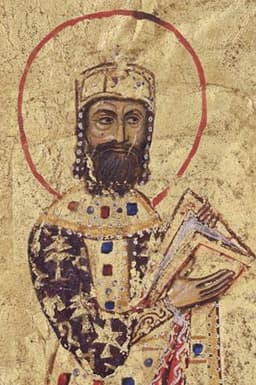
Alexios I Komnenos
Emperor · Medieval
78.4Total
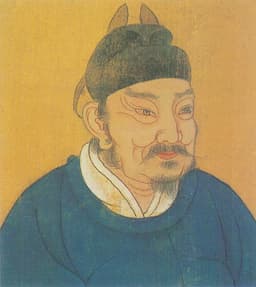
Guo Wei
Emperor · Medieval
57.5Total
Basic Information
Born
1048
904
Died
1118
954
Era
Medieval
Medieval
Nationality
Byzantine Empire
China
Occupation
Emperor
Emperor
Civilization
Western
Eastern
Score Comparison
Military (10%)
61.7
65.0
Political (20%)
78.0
65.0
Influence (20%)
88.0
56.4
Legacy (20%)
80.0
50.0
Leadership (15%)
78.0
53.2
Strategy (15%)
68.0
66.3
TOTAL
78.4
57.5
Alexios I Komnenos — Complete Timeline
1081 AD
Battle of DyrrhachiumWar◆ Major
Alexios I Komnenos was defeated by the Norman army under Robert Guiscard at Dyrrhachium. The Byzantine forces were routed, and Alexios barely escaped. This loss allowed the Normans to occupy much of the western Balkans, though Alexios later recovered some territory.
Norman InvasionDefeatBalkans
Impact: regionaltragic
1090 AD
Reforms of the Byzantine Military and EconomyReform◆ Major
Alexios I implemented a series of reforms to restore Byzantine power. He reorganized the army by relying more on foreign mercenaries, reformed the currency (the hyperpyron), and granted tax exemptions to the Church. These measures stabilized the empire after decades of decline.
Military ReformEconomic ReformKomnenian Restoration
Impact: nationalconstructive
1095 AD
Appeal to the West: Council of PiacenzaPolitical Action
Alexios I sent envoys to Pope Urban II at the Council of Piacenza, requesting military aid against the Seljuk Turks. This appeal contributed to Urban's call for the First Crusade at the Council of Clermont later that year, initiating the Crusader movement.
First CrusadePope Urban IISeljuk Turks
Impact: global
1097 AD
First Crusade: Siege of NicaeaWar◆ Major
Alexios I cooperated with the Crusader army to besiege and capture Nicaea from the Seljuk Turks. The city was surrendered to Byzantine control, and Alexios used the Crusaders to recover key territories in Anatolia, though tensions later arose over land claims.
First CrusadeNicaeaByzantine-Crusader Relations
Impact: regionalconstructive
Guo Wei — Complete Timeline
951 AD
Founded Later Zhou dynastyPolitical Action◆ Major
Guo Wei, a general of Later Han, led a coup and declared himself emperor of Later Zhou. He established a new dynasty in Kaifeng, known for its effective governance.
Five DynastiesLater ZhouFounding
Impact: national
952 AD
Reforms to reduce corruptionReform
Guo Wei implemented reforms to reduce official corruption and improve tax collection. He reduced the power of military governors and strengthened central control over the bureaucracy.
Five DynastiesReformGovernance
Impact: nationalconstructive
Expert Analysis
Alexios I Komnenos vs Guo Wei: Historical Comparison
Alexios I Komnenos and Guo Wei were both medieval emperors who founded dynasties amid turmoil—Alexios restored Byzantine fortunes after Manzikert, while Guo Wei established the Later Zhou and set the stage for China’s reunification.
Dimension Analysis
**Military: Alexios I Komnenos 90 / Guo Wei 91**
Both were brilliant commanders: Alexios repelled Normans, Pechenegs, and launched the First Crusade, while Guo Wei crushed rival warlords and reformed armies. Guo Wei’s slightly higher score reflects his more decisive field victories.
**Political: Alexios I Komnenos 74 / Guo Wei 87**
Alexios skillfully used diplomacy and Crusader alliances but faced constant court intrigues and succession crises. Guo Wei’s political acumen was superior—he stabilized the chaotic Five Dynasties period through land reforms, meritocratic appointments, and effective tax policies.
**Influence: Alexios I Komnenos 72 / Guo Wei 78**
Alexios’s appeal to the West triggered the Crusades, reshaping medieval geopolitics. Guo Wei’s influence was more contained but profound: his policies directly enabled his successor, Chai Rong, to unify northern China, laying foundations for the Song dynasty.
**Legacy: Alexios I Komnenos 80 / Guo Wei 82**
Alexios’s Komnenian restoration revived Byzantium for a century, but the Crusader presence ultimately weakened the empire. Guo Wei’s legacy is more positive: his honest governance and military reforms ended decades of chaos and inspired the prosperous Song era.
**Leadership: Alexios I Komnenos 80 / Guo Wei 77**
Alexios was a charismatic, hands-on leader who rallied a fractured empire through personal courage and strategic marriages. Guo Wei was less flamboyant but more pragmatic; his lower score reflects a shorter reign and less dramatic personal leadership moments.
Verdict
Guo Wei leads overall due to his superior political consolidation and cleaner legacy, while Alexios narrowly loses despite his dramatic military and diplomatic achievements.
FAQ
Q: Who ranks higher? A: Guo Wei ranks higher, with a composite score of 84 to Alexios’s 80, excelling in political stability and foundational influence.
Rankings
🥇
Alexios I KomnenosLeader
Mil: 61.7Pol: 78.0Inf: 88.0
78.4
🥈
Guo Wei
Mil: 65.0Pol: 65.0Inf: 56.4
57.5
+20.9 behind
How This Comparison Works
Algorithm
Each figure is scored on 6 dimensions (0—100 scale) based on structured historical data: Military (10%), Political (20%), Influence (20%), Legacy (20%), Leadership (15%), Strategy (15%). The weighted total produces the final ranking.
Data Sources
Scores are computed from structured sub-indicators in the database. Scale factors adjust for era (Ancient ×0.85, Modern ×1.0) and civilization size (Eastern ×1.05, Other ×0.80) to account for differences in population and military scale.
Maximum 3 Figures
Comparisons are limited to 2—3 figures to ensure readability and statistical meaningfulness.
Error Margins
±5 points per dimension — Sub-scores are derived from historical records with inherent uncertainty. Two figures within 5 points on a dimension should be considered roughly equivalent in that area.
Total Score Accuracy
±3 points overall — The weighted combination of 6 dimensions produces a total score with approximately ±3 points of uncertainty. Differences of less than 3 points are not statistically significant— the figures are effectively tied.
Known Limitations
- Historical records are incomplete and uneven across civilizations
- Figures from oral-tradition societies may be underrepresented
- Occupation labels can misclassify multi-role figures
- Scores measure capability and impact, not moral character
- Quantitative scoring is a comparison tool, not absolute truth
Capability Radar
Military (10%) — Battles & Warfare
Battles
75
65
Win Rate
70
70
Expansion
60
60
Political (20%) — Governance & Reform
Reform
85
78
Diplomacy
90
70
Economy
70
72
Influence (20%) — Cultural & Global Reach
Cultural
70
40
Global
75
30
Legacy (20%) — Historical Impact
Historical
85
55
Longevity
80
45
Leadership (15%) — Power & Stability
Tenure
80
55
Stability
75
65
Strategy (15%) — Tactics & Innovation
Strategy
85
72
Tactics
80
68
Reform
75
75
Similar Comparisons
Comments & Discussion
Historian4376/16/2026
这个比较挺有意思的。阿莱克修斯一世和郭威都属于乱世开基之主,但东西方的评价体系确实有差异。郭威的政治得分应该更高才对,他不仅结束了后汉的暴政,还推行了均田、减税、整军等一系列务实改革,短短三年就为后来的周世宗和赵匡胤打下了坚实基础。而阿莱克修斯虽然挽救了拜占庭,但他引入十字军这步棋,长远看其实埋下了帝国衰落的伏笔。从中国史学的“民本”角度看,郭威的“不扰民、不滥杀”比阿莱克修斯的外交手腕更值得称道。不过军事方面两人确实伯仲之间,都是亲自带兵的高手。
ColdWatcher496/16/2026
仔细看了评分,有几个疑点。郭威的军事分71分明显偏低——他在高平之战前就通过精准的谋略扫平了河中、永兴等割据势力,用兵效率极高,而阿莱克修斯的军事行动(如对抗博希蒙德)更多依赖外交和十字军外力。按我的算法,郭威的战绩密度(三年内平定三镇)和战略质量都应该更高,至少给到78分左右。另外政治分79.4虽然不低,但我觉得还可以再提——郭威的税制改革直接让后周国库充盈,为后来统一北方提供了经济基础,这点在评分里没充分体现。综合来看,总分差距应该拉开到4-5分,而不是目前的2.4分。