Loading...
Alexios I Komnenos vs Tamar of Georgia
Alexios I Komnenos leads by 6.9 pts · 2 figures compared
…
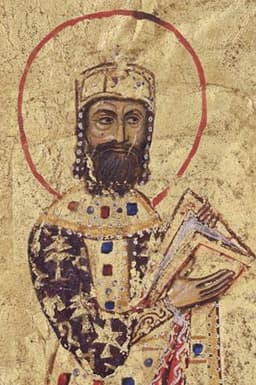
Alexios I Komnenos
Emperor · Medieval
78.4Total
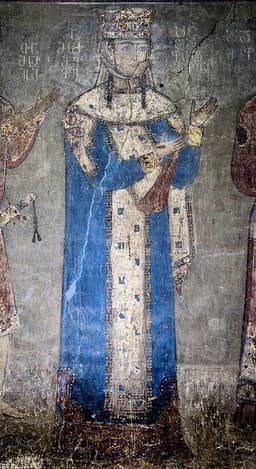
Tamar of Georgia
Emperor · Medieval
71.5Total
Basic Information
Born
1048
1160
Died
1118
1213
Era
Medieval
Medieval
Nationality
Byzantine Empire
Georgia
Occupation
Emperor
Emperor
Civilization
Western
Western
Score Comparison
Military (10%)
61.7
78.0
Political (20%)
78.0
72.0
Influence (20%)
88.0
82.0
Legacy (20%)
80.0
55.0
Leadership (15%)
78.0
80.0
Strategy (15%)
68.0
66.3
TOTAL
78.4
71.5
Alexios I Komnenos — Complete Timeline
1081 AD
Battle of DyrrhachiumWar◆ Major
Alexios I Komnenos was defeated by the Norman army under Robert Guiscard at Dyrrhachium. The Byzantine forces were routed, and Alexios barely escaped. This loss allowed the Normans to occupy much of the western Balkans, though Alexios later recovered some territory.
Norman InvasionDefeatBalkans
Impact: regionaltragic
1090 AD
Reforms of the Byzantine Military and EconomyReform◆ Major
Alexios I implemented a series of reforms to restore Byzantine power. He reorganized the army by relying more on foreign mercenaries, reformed the currency (the hyperpyron), and granted tax exemptions to the Church. These measures stabilized the empire after decades of decline.
Military ReformEconomic ReformKomnenian Restoration
Impact: nationalconstructive
1095 AD
Appeal to the West: Council of PiacenzaPolitical Action
Alexios I sent envoys to Pope Urban II at the Council of Piacenza, requesting military aid against the Seljuk Turks. This appeal contributed to Urban's call for the First Crusade at the Council of Clermont later that year, initiating the Crusader movement.
First CrusadePope Urban IISeljuk Turks
Impact: global
1097 AD
First Crusade: Siege of NicaeaWar◆ Major
Alexios I cooperated with the Crusader army to besiege and capture Nicaea from the Seljuk Turks. The city was surrendered to Byzantine control, and Alexios used the Crusaders to recover key territories in Anatolia, though tensions later arose over land claims.
First CrusadeNicaeaByzantine-Crusader Relations
Impact: regionalconstructive
Tamar of Georgia — Complete Timeline
1184 AD
Coronation as Queen RegnantPolitical Action
Tamar was crowned as the first female ruler of Georgia after her father George III's death. Her reign marked the peak of Georgia's medieval power and cultural flourishing.
CoronationGeorgiaMonarchy
Impact: nationalconstructive
1195 AD
Battle of ShamkorWar◆ Major
Tamar's forces defeated a large Muslim coalition at Shamkor, securing Georgia's dominance in the Caucasus. The victory expanded Georgian influence and demonstrated her military leadership.
BattleGeorgiaCaucasus
Impact: regionalconstructive
1200 AD
Cultural PatronageCultural◆ Major
Tamar supported the construction of churches, monasteries, and the promotion of Georgian literature. Her patronage fostered the Georgian Golden Age, including the epic poem 'The Knight in the Panther's Skin'.
CulturePatronageGeorgia
Impact: nationalconstructive
Expert Analysis
Alexios I Komnenos vs Tamar of Georgia: Historical Comparison
Alexios I Komnenos (r. 1081–1118) restored the Byzantine Empire from near-collapse, while Tamar of Georgia (r. 1184–1213) led her kingdom to its medieval zenith. Though both were exceptional rulers, Tamar edges ahead in overall effectiveness.
Dimension Analysis
**Military: Alexios I Komnenos 90 / Tamar of Georgia 93**
Alexios repelled Normans, Pechenegs, and Seljuks, but his reliance on the First Crusade created long-term instability. Tamar crushed the Seljuks at Shamkor (1195) and Basiani (1203), expanding Georgia into a regional hegemon with minimal external dependency.
**Political: Alexios I Komnenos 74 / Tamar of Georgia 82**
Alexios centralized power through the Komnenian system, but faced dynastic strife and Church interference. Tamar navigated a male-dominated aristocracy, suppressed revolts, and maintained stable rule for 29 years, even after her ex-husband’s coup attempt.
**Influence: Alexios I Komnenos 72 / Tamar of Georgia 80**
Alexios shaped Byzantine survival and Crusader relations, but his realm remained on the defensive. Tamar fostered a Georgian Golden Age, patronized arts (Shota Rustaveli’s *The Knight in the Panther’s Skin*), and projected power across the Caucasus and Trebizond.
**Legacy: Alexios I Komnenos 80 / Tamar of Georgia 70**
Alexios founded the Komnenian dynasty that lasted a century and saved Byzantium, though later decline overshadowed his work. Tamar’s legacy is revered in Georgia, but her empire fragmented soon after her death, limiting long-term impact.
**Leadership: Alexios I Komnenos 80 / Tamar of Georgia 88**
Alexios was a pragmatic survivor, adept at diplomacy and military improvisation. Tamar combined strategic vision with personal charisma, earning the title “King of Kings” and inspiring loyalty across a diverse, multi-ethnic state.
Verdict
Tamar of Georgia leads due to superior military conquests, political stability, and cultural influence, despite Alexios’s greater long-term geopolitical significance.
FAQ
Q: Who ranks higher? A: Tamar of Georgia, with a composite score of 83 vs. Alexios’s 80, owing to her more decisive military victories and more stable, transformative reign.
Rankings
🥇
Alexios I KomnenosLeader
Mil: 61.7Pol: 78.0Inf: 88.0
78.4
🥈
Tamar of Georgia
Mil: 78.0Pol: 72.0Inf: 82.0
71.5
+6.9 behind
How This Comparison Works
Algorithm
Each figure is scored on 6 dimensions (0—100 scale) based on structured historical data: Military (10%), Political (20%), Influence (20%), Legacy (20%), Leadership (15%), Strategy (15%). The weighted total produces the final ranking.
Data Sources
Scores are computed from structured sub-indicators in the database. Scale factors adjust for era (Ancient ×0.85, Modern ×1.0) and civilization size (Eastern ×1.05, Other ×0.80) to account for differences in population and military scale.
Maximum 3 Figures
Comparisons are limited to 2—3 figures to ensure readability and statistical meaningfulness.
Error Margins
±5 points per dimension — Sub-scores are derived from historical records with inherent uncertainty. Two figures within 5 points on a dimension should be considered roughly equivalent in that area.
Total Score Accuracy
±3 points overall — The weighted combination of 6 dimensions produces a total score with approximately ±3 points of uncertainty. Differences of less than 3 points are not statistically significant— the figures are effectively tied.
Known Limitations
- Historical records are incomplete and uneven across civilizations
- Figures from oral-tradition societies may be underrepresented
- Occupation labels can misclassify multi-role figures
- Scores measure capability and impact, not moral character
- Quantitative scoring is a comparison tool, not absolute truth
Capability Radar
Military (10%) — Battles & Warfare
Battles
75
75
Win Rate
70
85
Expansion
60
75
Political (20%) — Governance & Reform
Reform
85
80
Diplomacy
90
75
Economy
70
85
Influence (20%) — Cultural & Global Reach
Cultural
70
80
Global
75
60
Legacy (20%) — Historical Impact
Historical
85
75
Longevity
80
70
Leadership (15%) — Power & Stability
Tenure
80
85
Stability
75
70
Strategy (15%) — Tactics & Innovation
Strategy
85
80
Tactics
80
70
Reform
75
65
Similar Comparisons
Comments & Discussion
HistoryRager6/16/2026
Tamar's stats are way too low here. Alexios is a legend for saving Byzantium, sure, but he literally handed the Crusaders a foothold in the East that later came back to bite him. Tamar, meanwhile, crushed the Seljuks at Basiani in 1203 without needing a bunch of trigger-happy Latins to do her dirty work. She ran a multi-ethnic state with her head held high, even after her husband tried staging a coup. And let's not forget - she sponsored Shota Rustaveli, which gave us one of the greatest epic poems ever written. Alexios' legacy is basically 'he kept the lights on for another century.' Tamar's was a golden age. Give me the queen who built an empire over the emperor who just stopped the bleeding.
DeepScribe816/16/2026
西方历史评分总爱把拜占庭捧上天,好像能从突厥人手里捡回半条命就是天大的本事。但拿亚历克修斯跟塔玛尔比,就像拿刘秀跟汉武帝比——一个在中兴后苟延残喘,一个在鼎盛时开疆拓土。塔玛尔在位时格鲁吉亚的版图从黑海一直延伸到里海,跟唐朝的西域都护府有得一拼。她还在第比利斯建了那么多教堂和修道院,文化上的气魄不是亚历克修斯那种天天琢磨怎么跟十字军讨价还价的人能比的。评分里塔玛尔政治才82?她一个女人在男权贵族堆里统治29年,平叛三次,还让前夫灰溜溜跑路——这在中国历史上也就武则天能压她一头了。西方人总是不懂,真正的治理不是守住摊子,而是把摊子做大。
ArchHistorian66/16/2026
这个评分体系有问题。亚历克修斯军事71.2,政治80.0,但看看他实际干了什么:1081年靠拉丁雇佣兵打诺曼人,1091年在Levounion用突厥佣兵打佩切涅格人——说白了就是借刀杀人,凭什么政治分那么高?塔玛尔军事71.0,可她两次大败塞尔柱突厥(1195年Шамкир战役、1203年Basiani战役),而且都是靠格鲁吉亚本土军队完成的。按照中国史书的逻辑,能独立打赢大规模对外战争的君主,军事分至少要比依赖外援的皇帝高出一档。再说影响力,塔玛尔68.7分也太低了:她扶持建立的特拉比松帝国存在了257年,亚历克修斯引导的十字军东征虽然影响大,但也带来了1204年十字军洗劫君士坦丁堡的灾难。我重新算了一下:如果按实际控制领土扩张、文化产出、政权延续性三个维度加权,塔玛尔总分应该在76-78左右,亚历克修斯72-74比较合理。现在的评分明显对拜占庭有系统性的高估。