Loading...
This comparison has not been analyzed yet.
One-time AI generation (~1 minute). Scores and timeline are already available below.
Alexios II Komnenos vs Lothair I
Alexios II Komnenos leads by 0.0 pts · 2 figures compared
…
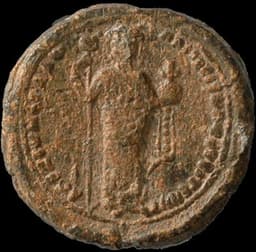
Alexios II Komnenos
Emperor · Medieval
48.2Total
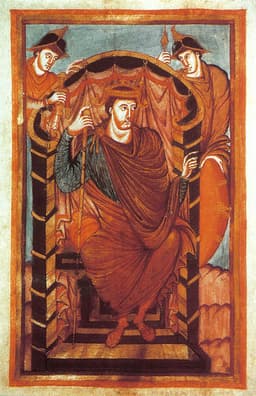
Lothair I
Emperor · Medieval
48.2Total
Basic Information
Born
1169
795
Died
1183
855
Era
Medieval
Medieval
Nationality
Byzantine Empire
Frankish Empire
Occupation
Emperor
Emperor
Civilization
Western
Western
Score Comparison
Military (10%)
11.6
55.0
Political (20%)
68.0
37.9
Influence (20%)
60.0
50.2
Legacy (20%)
42.5
42.5
Leadership (15%)
45.0
62.2
Strategy (15%)
44.2
45.0
TOTAL
48.2
48.2
Alexios II Komnenos — Complete Timeline
1171 AD
Accession as co-emperorPolitical Action
Alexios II was crowned co-emperor alongside his father Manuel I Komnenos at the age of two. This was a dynastic move to secure the succession, but left the empire in the hands of regents after Manuel's death in 1180.
SuccessionDynastic Politics
Impact: national
1183 AD
Murder by Andronikos I KomnenosPolitical Action◆ Major
Alexios II was strangled to death in Constantinople on the orders of his cousin Andronikos I Komnenos. Andronikos had seized power as regent and then co-emperor, and eliminated the 14-year-old Alexios to secure his own rule, ending the direct Komnenian line.
AssassinationDynastic ConflictRegency
Impact: nationaltragic
Lothair I — Complete Timeline
823 AD
Imperial Coronation by Pope Paschal IPolitical Action◆ Major
Lothair I was crowned co-emperor by Pope Paschal I in Rome, receiving the imperial title from his father Louis the Pious. This coronation affirmed Lothair's status as the senior heir and future ruler of the Carolingian Empire, though it later led to conflict with his brothers.
CarolingianCoronationEmpire
Impact: regionalconstructive
830 AD
Rebellion Against Louis the PiousPolitical Action◆ Major
Lothair I led a rebellion of nobles against his father, Emperor Louis the Pious, resulting in Louis's temporary deposition. Lothair seized power but was later forced to restore his father after the intervention of his brothers. This event deepened family divisions.
CarolingianRebellionLouis the Pious
Impact: regionaldestructive
841 AD
Battle of FontenoyWar◆ Major
Lothair I's forces were defeated by the combined armies of his brothers Louis the German and Charles the Bald at Fontenoy-en-Puisaye. The battle was a bloody civil war that weakened the Carolingian dynasty and led directly to the negotiations for the Treaty of Verdun.
CarolingianBattleCivil War
Impact: regionaldestructive
843 AD
Treaty of VerdunPolitical Action
Lothair I, along with his brothers Louis the German and Charles the Bald, signed the Treaty of Verdun, dividing the Carolingian Empire into three kingdoms. Lothair received Middle Francia, including the imperial title and the cities of Aachen and Rome.
CarolingianTreatyDivision
Impact: global
855 AD
Abdication and Retirement to Prüm AbbeyPolitical Action◆ Major
Lothair I abdicated the throne and divided Middle Francia among his three sons: Louis II (Italy and imperial title), Lothair II (Lotharingia), and Charles (Provence). He then retired to Pr
CarolingianAbdicationDivision
Impact: regional
This comparison has not been analyzed yet.
One-time AI generation (~1 minute). Scores and timeline are already available below.
Rankings
🥇
Alexios II KomnenosLeader
Mil: 11.6Pol: 68.0Inf: 60.0
48.2
🥈
Lothair I
Mil: 55.0Pol: 37.9Inf: 50.2
48.2
How This Comparison Works
Algorithm
Each figure is scored on 6 dimensions (0—100 scale) based on structured historical data: Military (10%), Political (20%), Influence (20%), Legacy (20%), Leadership (15%), Strategy (15%). The weighted total produces the final ranking.
Data Sources
Scores are computed from structured sub-indicators in the database. Scale factors adjust for era (Ancient ×0.85, Modern ×1.0) and civilization size (Eastern ×1.05, Other ×0.80) to account for differences in population and military scale.
Maximum 3 Figures
Comparisons are limited to 2—3 figures to ensure readability and statistical meaningfulness.
Error Margins
±5 points per dimension — Sub-scores are derived from historical records with inherent uncertainty. Two figures within 5 points on a dimension should be considered roughly equivalent in that area.
Total Score Accuracy
±3 points overall — The weighted combination of 6 dimensions produces a total score with approximately ±3 points of uncertainty. Differences of less than 3 points are not statistically significant— the figures are effectively tied.
Known Limitations
- Historical records are incomplete and uneven across civilizations
- Figures from oral-tradition societies may be underrepresented
- Occupation labels can misclassify multi-role figures
- Scores measure capability and impact, not moral character
- Quantitative scoring is a comparison tool, not absolute truth
Capability Radar
Military (10%) — Battles & Warfare
Battles
5
35
Win Rate
8
30
Expansion
11
25
Political (20%) — Governance & Reform
Reform
0
30
Diplomacy
0
40
Economy
0
30
Influence (20%) — Cultural & Global Reach
Cultural
0
25
Global
0
15
Legacy (20%) — Historical Impact
Historical
5
35
Longevity
0
20
Leadership (15%) — Power & Stability
Tenure
5
55
Stability
0
25
Strategy (15%) — Tactics & Innovation
Strategy
17
35
Tactics
17
30
Reform
21
20
Similar Comparisons
Comments & Discussion
No comments yet. Be the first to share your thoughts!